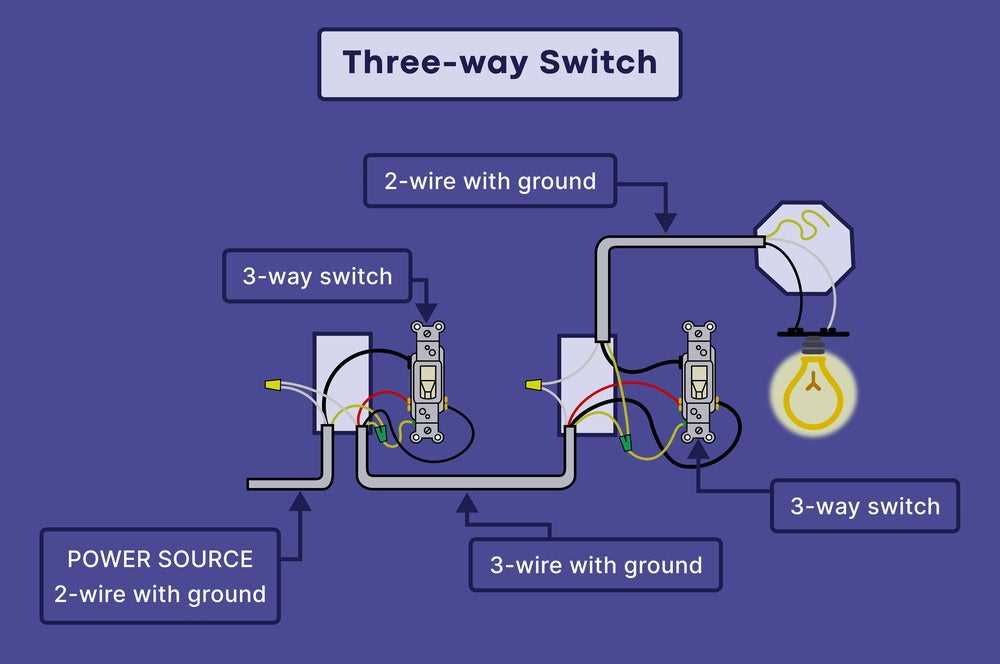
Begin by identifying the main power feed and the two control points. Connect the hot wire from the panel to the first switch terminal, ensuring all screws are tightened securely to prevent loose connections.
Run traveler wires between the two control switches. Use consistent color coding to distinguish each path and reduce the risk of miswiring during installation or maintenance.
Attach the fixture wire to the appropriate terminal on the second switch. Verify insulation along all conductors to avoid contact with metal surfaces or other live wires.
After completing connections, test the system by operating both switches in every position. Confirm that the fixture responds correctly and that no flickering or unexpected behavior occurs under load conditions.
Three Way Light System Guide
Connect the main power feed to the first control switch, ensuring the hot wire is securely fastened. Check all screws and terminals for tightness to prevent loose connections that can cause flickering or overheating.
Run the traveler wires between the two control points. Maintain consistent color coding for each path, and secure them away from sharp edges or heat sources to prevent insulation damage.
Attach the fixture wire to the output terminal of the second switch and test the setup by operating both switches in all positions. Verify proper response at the fixture and ensure there are no unexpected interruptions in the electrical path.
Identifying Switches and Wiring Paths
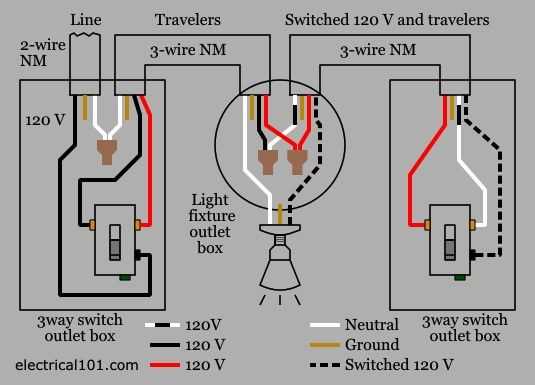
Locate the two control switches and mark each terminal clearly. Label the common, traveler, and load terminals to avoid confusion during connection and future maintenance.
Trace the incoming power wire from the panel to the first switch. Ensure the hot wire is continuous and protected with proper insulation along the entire path to prevent shorts.
Map the traveler paths between switches. Use color-coded conductors to differentiate each connection, and secure wires using staples or clamps without piercing insulation.
Identify the outgoing wire from the second switch to the fixture. Confirm that the wire is rated for the load and that all connections are mechanically tight to maintain stable operation.
Double-check all paths using a multimeter. Measure continuity and resistance to ensure there are no breaks or cross-connections that could interfere with proper switching function.