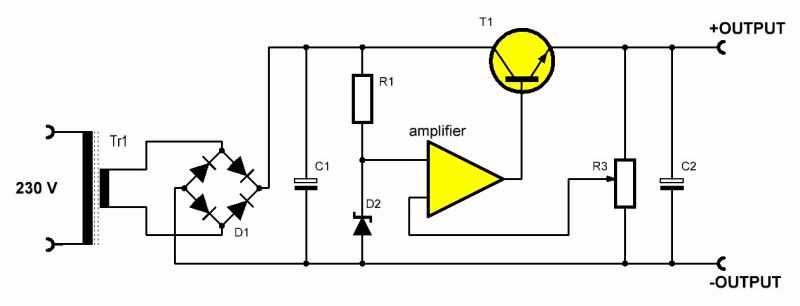
Use a toroidal transformer with a secondary rating of 12 V AC at 2 A to achieve stable low-voltage outputs. Integrate bridge rectifiers with fast-recovery diodes capable of handling 1.5 times the maximum load current to reduce ripple and prevent thermal stress.
Include high-capacitance electrolytic capacitors, at least 2200 µF per ampere of output, positioned close to the rectifier for optimum smoothing. Consider adding metal film resistors in series with input leads to damp inrush currents and minimize voltage spikes.
Incorporate a three-terminal voltage regulator with built-in overcurrent protection and a thermal heat sink rated for continuous dissipation above the anticipated load. Complement this with a small-value ceramic capacitor on the regulator output to suppress high-frequency oscillations.
For additional safety and stability, mount a fuse rated at 1.25× the expected current on the transformer primary and include a bleeder resistor across the filter capacitors to discharge stored energy when idle. Ensure all ground connections are star-pointed to reduce hum and cross-talk in sensitive applications.
Construction Guide for Regulated Transformer Layout
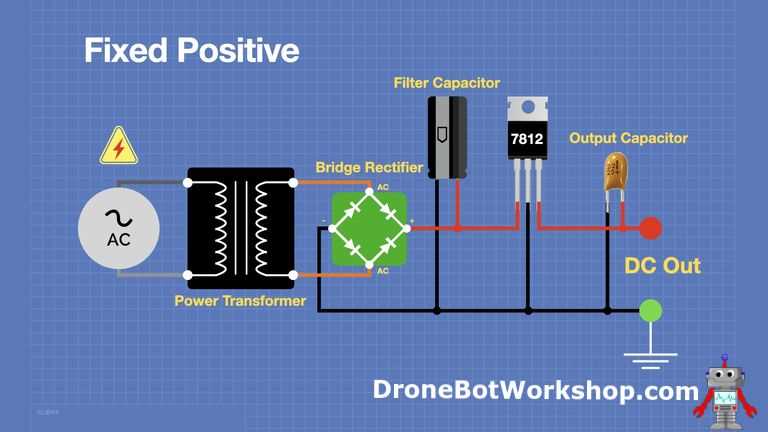
Install a toroidal transformer with a secondary rating of 15 V AC at 3 A, securing it with insulated brackets to reduce vibration. Connect fast-recovery diodes in a bridge arrangement, ensuring each diode exceeds the peak current by 50 %. Place high-capacitance electrolytic filters immediately after the rectifier to smooth voltage fluctuations below 50 mV ripple under full load.
Mount a three-terminal voltage stabilizer on an aluminum heat sink rated for at least 20 W dissipation. Use short, wide tracks for input and output connections to minimize resistance. Include a 0.1 µF ceramic capacitor on the output to suppress high-frequency noise, and a 0.33 µF capacitor on the input for stability under transient loads.
Current Limiting and Safety Measures
Integrate a series resistor of 0.22 Ω, 5 W ahead of the stabilizer to limit inrush current during startup. Install a fuse rated at 1.25× the expected operating current on the primary side of the transformer. Position a bleeder resistor across the filter bank to discharge stored energy when the unit is powered off, maintaining safe handling conditions.
Final Assembly and Testing
Use a star-point grounding configuration to reduce hum and cross-talk. Connect the output terminals using short, heavy-gauge wires and test under incremental loads to verify voltage regulation remains within ±2 % across 0.5–3 A. Confirm thermal stability of the heat sink and ensure no components exceed their rated temperatures during prolonged operation.
Selecting and Preparing Components for Stable Output
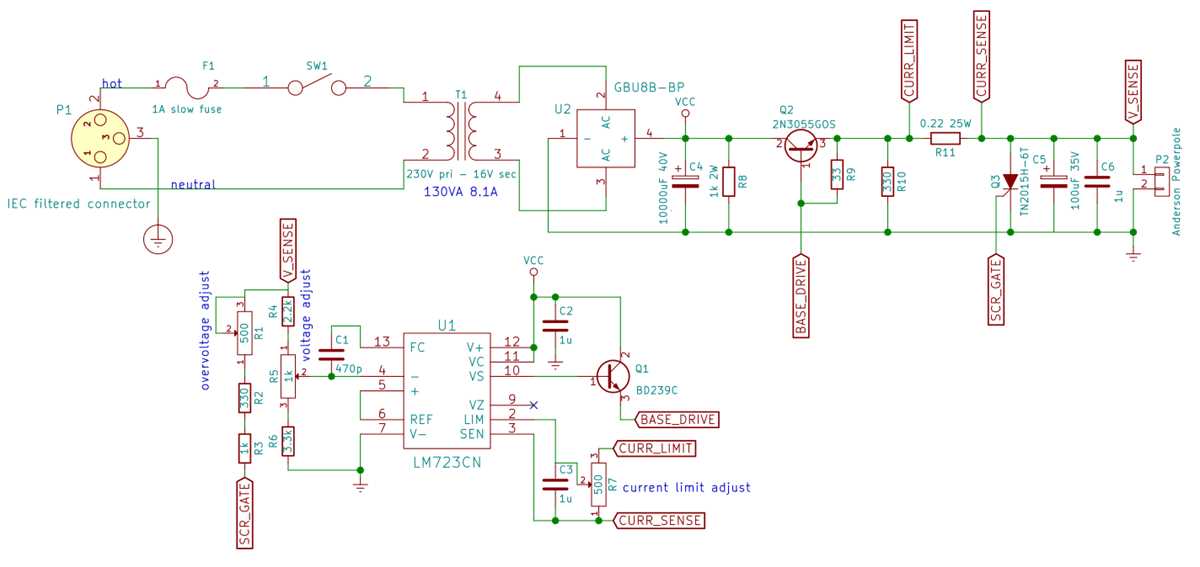
Choose a transformer with a secondary voltage margin of 20–30 % above the intended DC output to reduce regulator stress. Verify current capacity exceeds the maximum load by at least 50 %. Ensure the core type minimizes stray magnetic fields to prevent interference with sensitive loads.
Use a bridge rectifier with diodes rated at least 1.5× peak load current and a reverse voltage tolerance 2× higher than the secondary AC voltage. Mount the rectifier close to the transformer terminals to limit lead resistance and voltage drop. Include thermal pads to improve heat dissipation for sustained operation.
Prepare filter capacitors following these guidelines:
- Electrolytic capacitors: 2200–4700 µF per ampere of load, low ESR type.
- Ceramic bypass capacitors: 0.01–0.1 µF near the regulator input and output.
- Bleeder resistor: 10 Ω, 5 W across large electrolytics to safely discharge stored charge.
Verify all resistors and connectors are rated for continuous operation above the expected current. Use short, thick wires for high-current paths, and secure the stabilizer to a heat sink exceeding 25 % above anticipated thermal dissipation. Test each component individually under load before final assembly to ensure output remains within ±2 % of the target voltage.