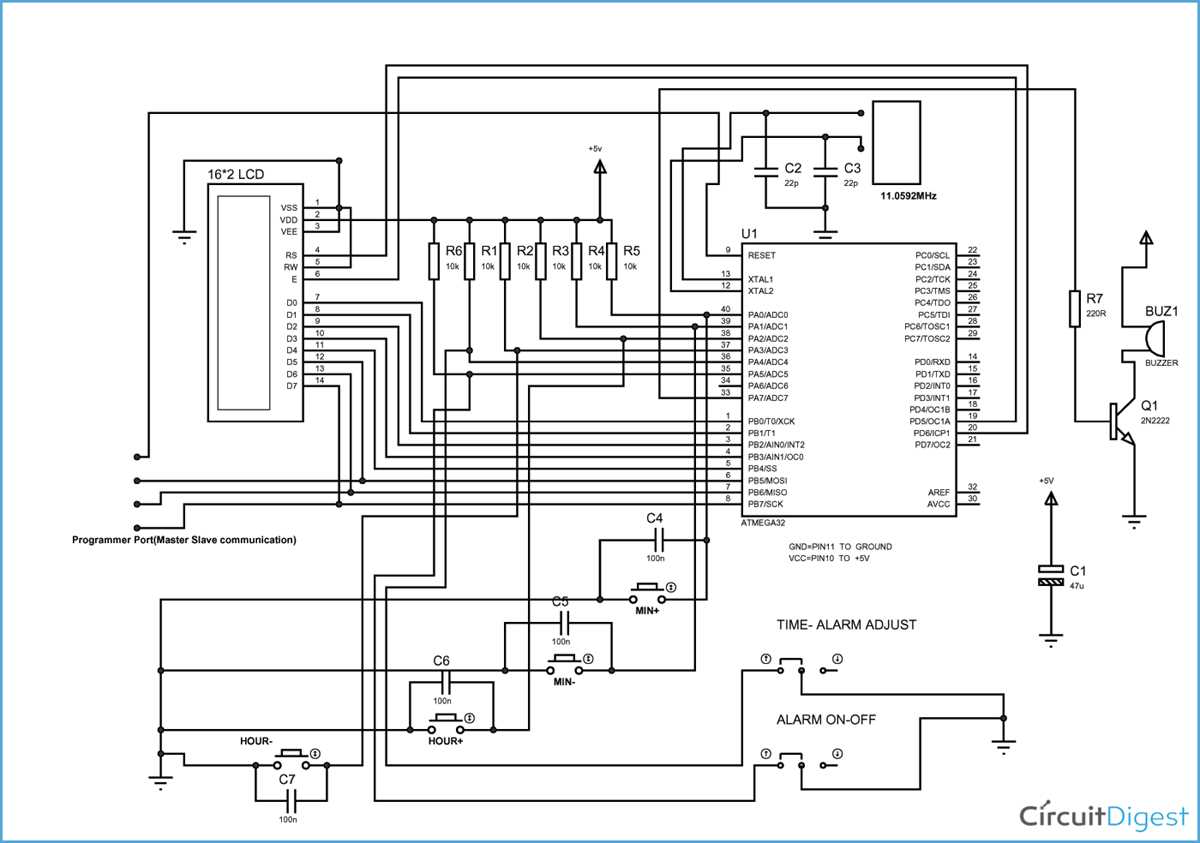
To construct a reliable time display, focus on using a clear connection between the oscillator and the time-keeping unit. A stable frequency source ensures precise counting, crucial for accurate timekeeping. One common approach is using a 555 timer in astable mode as a clock pulse generator. This configuration allows you to control the timing intervals for the display.
Integrating a counting mechanism with a binary-coded decimal (BCD) display offers a practical solution for displaying hours, minutes, and seconds. The IC 4026 decade counter, combined with a seven-segment display, is an ideal choice for this task. It can directly drive the segments based on the binary count, eliminating the need for additional complex circuitry.
To make the setup more robust, use a transistor or a MOSFET to handle the higher current required by the LED displays. This ensures the components operate within their voltage and current limits, improving the longevity and stability of the system.
Key Components for Time Display Circuit Design
The foundation of a time-keeping display is a stable oscillator. A 555 timer is widely used in this role, providing a consistent pulse signal. By adjusting the resistors and capacitors connected to the timer, you can fine-tune the frequency to match the required time intervals. The frequency of this pulse is crucial in ensuring accurate timing and synchronization throughout the system.
After generating the time pulse, it needs to be counted. A binary counter IC, such as the CD4060 or CD4026, is typically used to keep track of the seconds. These ICs convert the incoming pulse into a more manageable count for displaying the time. By connecting multiple counters, you can extend the counting range, allowing the system to display hours and minutes as well as seconds.
For visual display, use a seven-segment display for each time unit. To drive these displays, connect them to the output of the counter ICs. A current-limiting resistor should be placed between the counter IC and the display to avoid damaging the LEDs. These displays are driven directly by the binary count, with each segment lighting up according to the corresponding binary value.
Powering the setup requires attention to voltage and current. A stable power supply, typically 5V, is ideal for the low-voltage ICs and displays used in the system. Ensure that each component receives the proper current by using a voltage regulator if necessary. This prevents fluctuations in power that could lead to inaccuracies in the displayed time or malfunctioning components.
How to Design a Simple Time Display System
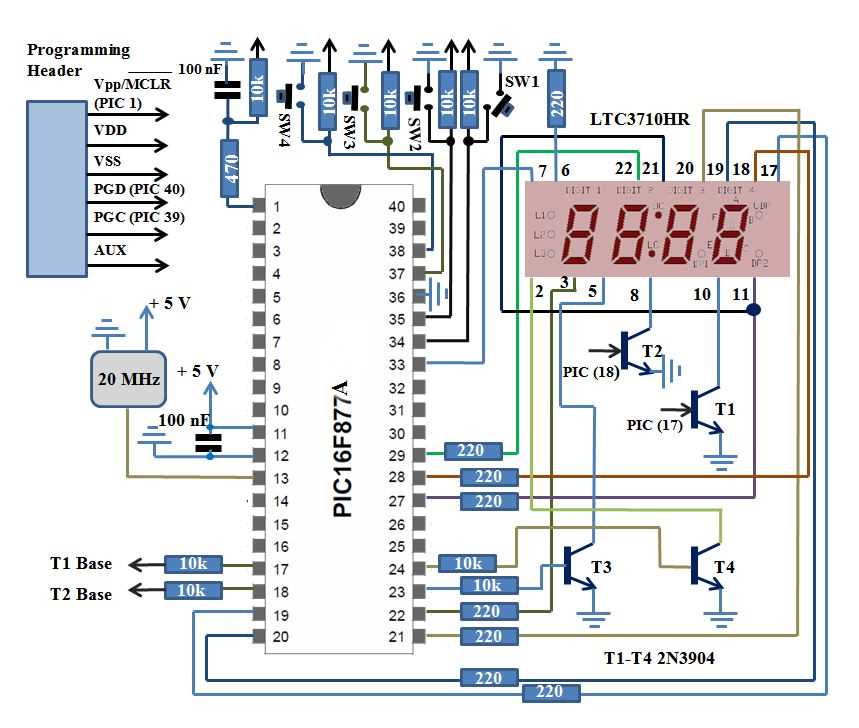
To start, select a stable oscillator as the time base for your project. The 555 timer IC is a popular choice, configured in astable mode to produce a continuous pulse signal. Adjust the resistors and capacitors to achieve a timing pulse that accurately represents seconds. For precision, consider fine-tuning the frequency by calculating the timing constant with the formula f = 1 / (1.1 * R * C).
Next, you’ll need a counter to accumulate the pulses from the oscillator. A BCD (binary-coded decimal) counter, like the CD4026, is suitable for counting and dividing the signal. These counters increment with each pulse, sending output signals to the display components. You can cascade multiple counters to keep track of hours, minutes, and seconds. For simplicity, start with just a minute counter and add more counters as needed for full functionality.
For visual output, use a seven-segment display to show each digit of the time. Connect the outputs of the counters to the corresponding segments of the display. Each segment is controlled by a logic signal that corresponds to the binary value of the current digit. Add current-limiting resistors between the counters and displays to protect the LEDs from excessive current.
Ensure that your power supply can support the components. A stable 5V supply is commonly used for low-power devices like counters and displays. If needed, integrate a voltage regulator to maintain consistent voltage levels. A well-regulated power source prevents fluctuations, which could result in malfunctioning components or inaccurate time displays.