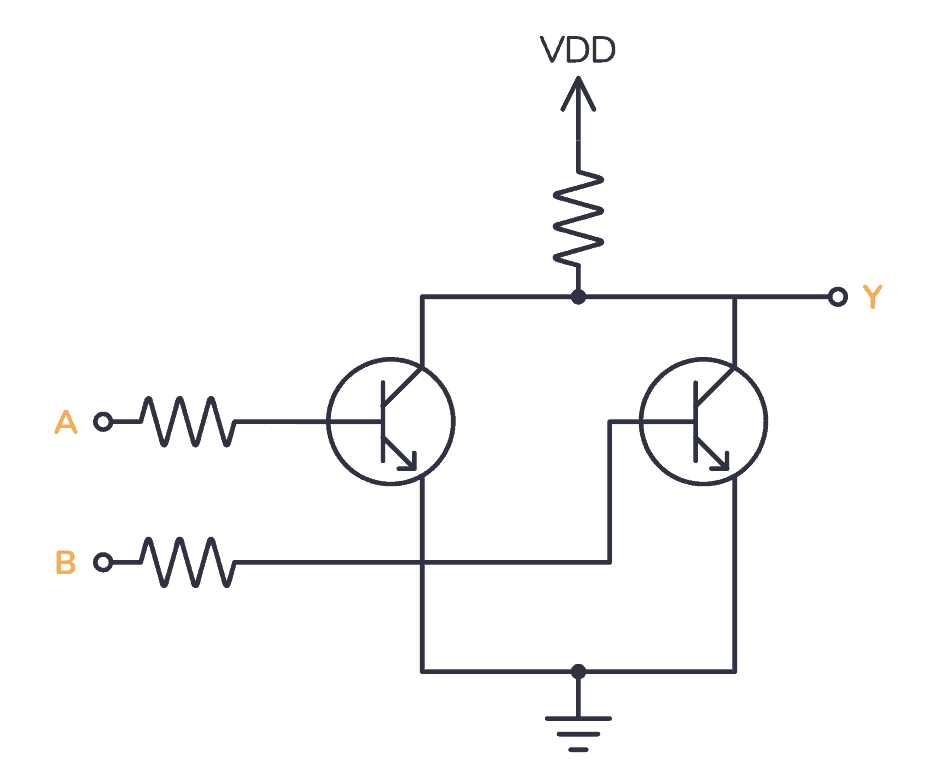
Use a single NPN transistor with two resistors if a simple signal inverter is required. A typical arrangement places a 10 kΩ resistor at the base and a 4.7 kΩ pull-up resistor at the collector. The emitter connects to ground. With this setup, a high input level drives the transistor into conduction, pulling the output node close to 0 V. A low input level switches the transistor off, allowing the collector resistor to raise the output close to the supply voltage.
This switching behavior produces logical inversion. When the input equals logical 1 (usually 5 V in TTL systems), the transistor conducts and the output becomes logical 0. When the input equals logical 0 (0 V), the transistor remains off and the output rises to logical 1 through the pull-up resistor. The same behavior appears in integrated digital components such as the 7404 hex inverter, where several inversion elements are placed in one package.
Choose resistor values based on supply voltage and desired switching speed. With a 5 V supply, a base resistor between 4.7 kΩ and 10 kΩ keeps base current within safe limits while ensuring reliable switching. The collector resistor determines output rise characteristics and load capability; values from 2.2 kΩ to 10 kΩ are common. Lower resistance increases drive strength but raises power dissipation.
Stable voltage levels also depend on load conditions. A digital input from another logic device typically requires only microamp input current, allowing the output node to remain close to the supply rail. When driving LEDs or small relays, add a buffer stage or transistor driver so the inversion stage maintains proper logic levels without distortion.
Transistor and Logic IC Inverter Layout with Signal Inversion Explanation
Use an NPN transistor with a base resistor and collector pull-up resistor to build a simple logic inverter stage. A typical arrangement uses a 5 V supply, a 10 kΩ resistor connected between the input node and transistor base, and a 4.7 kΩ resistor between collector and the positive rail. The emitter connects directly to ground. When the input voltage rises above roughly 0.7 V, the transistor conducts and the output node drops close to 0 V.
This switching behavior produces signal inversion. A high input level saturates the transistor and forces the collector node low. A low input level keeps the transistor in cutoff, allowing the pull-up resistor to raise the output toward the supply rail. In TTL systems powered at 5 V, a logical high typically exceeds 2 V while a logical low remains below 0.8 V. With proper resistor selection, the output remains within these limits and can drive another logic stage without additional buffering.
The same function appears in integrated logic devices such as the 7404 hex inverter, which contains six inversion stages inside one package. Each unit accepts standard TTL or CMOS input levels and produces the opposite logic state at the output pin. These ICs reduce component count and provide consistent switching thresholds, propagation delay near 10–15 ns in typical conditions, and stable operation across wide temperature ranges used in digital control hardware.
Simple Inverter Layout Using NPN Transistor and Resistors
Use a small NPN transistor such as 2N3904 or BC547 with two resistors if a basic logic inverter stage is required. Connect the emitter directly to ground, place a pull-up resistor between collector and the positive rail, and feed the input signal to the base through a limiting resistor. With a 5 V supply, common values are 10 kΩ at the base and 4.7 kΩ at the collector.
Typical Connection Arrangement
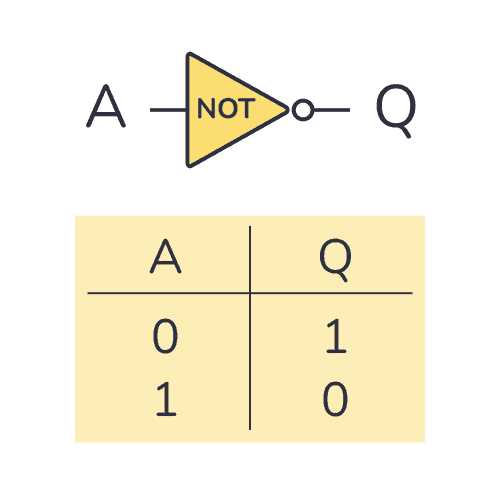
- Emitter connected to ground reference
- Collector connected to the supply rail through a pull-up resistor
- Input signal routed to the base through a limiting resistor
- Output taken from the collector node
This arrangement flips the logic state. A high input voltage above roughly 0.7 V drives the transistor into conduction, which pulls the collector node close to 0 V. A low input keeps the transistor off, allowing the pull-up resistor to raise the collector node near the supply rail. The output therefore becomes the opposite state of the input signal.
Recommended Component Values
- Base resistor between 4.7 kΩ and 10 kΩ to limit base drive
- Collector pull-up resistor between 2.2 kΩ and 10 kΩ depending on load
- Supply voltage commonly 3.3 V or 5 V in digital systems
- General purpose NPN transistor such as BC547, 2N2222, or 2N3904
Lower pull-up resistance increases output drive strength but raises power dissipation in the transistor during saturation. When driving only logic inputs, 4.7 kΩ or 10 kΩ usually keeps voltage levels stable while keeping transistor heating minimal.