Run a direct 12 V power cable from the battery to the amplifier before connecting the low-frequency speaker enclosure. Use oxygen-free copper cable sized between 4 AWG and 8 AWG depending on amplifier power rating. Install a fuse holder within 20–30 cm of the battery terminal to protect the electrical line from short circuits.
The amplifier requires three main connections: positive battery feed, ground connection to the chassis, and a remote turn-on lead from the head unit. The ground cable should attach to bare metal on the vehicle body using a bolt or factory grounding point. Keep this cable short, usually under 50 cm, to reduce resistance and noise.
Audio signal reaches the amplifier through RCA cables from the head unit output labeled “SUB OUT” or “PRE OUT”. These low-level lines carry the bass channel signal that the amplifier boosts before sending it to the large speaker driver inside the enclosure. Route these signal cables on the opposite side of the vehicle from the power cable to prevent interference.
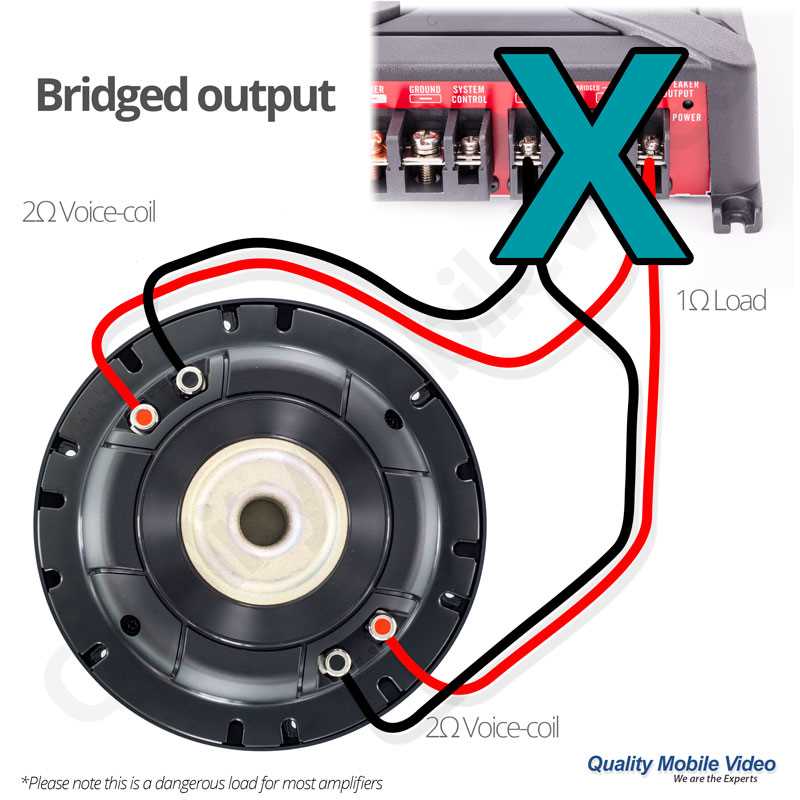
The amplified output connects to the speaker terminals on the enclosure. Pay attention to impedance values such as 2 ohm or 4 ohm loads, especially when using dual voice coil drivers. Correct terminal pairing keeps the amplifier stable and prevents overheating during high bass output.
Car Subwoofer Wiring Diagram With Amplifier Power Ground and Speaker Connections
Connect the amplifier power input directly to the 12 V battery terminal using a thick copper cable sized between 4 AWG and 8 AWG depending on amplifier output rating. Install an inline fuse holder within 30 cm of the battery to protect the electrical line. Route the power cable through a firewall grommet and continue along the vehicle floor toward the amplifier mounting location.
Attach the ground cable to the metal chassis using a short lead with the same gauge as the positive power cable. Remove paint at the contact point and tighten the bolt firmly so the amplifier receives stable current flow. A poor ground connection may cause amplifier shutdown, distortion, or unwanted noise in the audio system.
The head unit sends low level audio through RCA signal cables. These connectors plug into the amplifier input labeled “L” and “R”. Route signal cables along the opposite side of the interior from the battery power line to reduce electromagnetic interference.
The remote turn-on lead from the head unit connects to the amplifier control terminal marked REM. This thin conductor carries a small 12 V signal when the head unit powers on, activating the amplifier without requiring a separate switch.
Speaker output terminals on the amplifier connect to the low-frequency driver enclosure using heavy speaker cable. Match impedance ratings such as 2 ohm or 4 ohm loads with the amplifier specification. Incorrect load values may trigger protection mode or cause excessive heat during high bass output.
Connecting Car Subwoofer to Amplifier Power Battery and Ground Lines
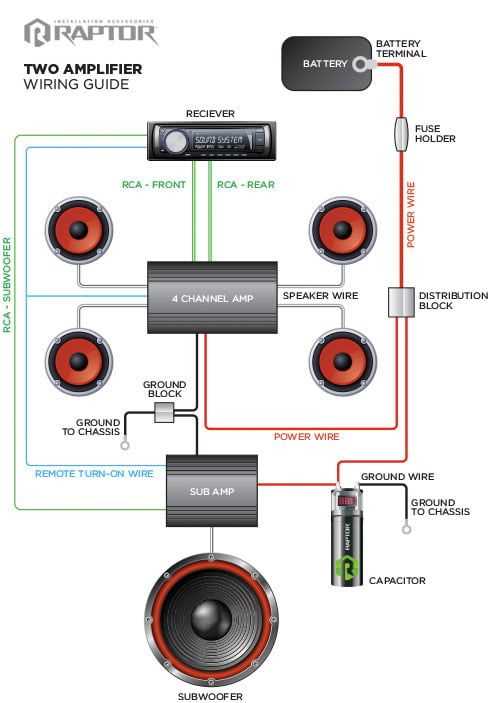
Run a dedicated 12 V power cable from the battery to the amplifier mounted in the trunk or rear compartment. Use oxygen free copper cable sized according to amplifier output rating. Systems around 300–600 watts usually require 8 AWG, while higher output units near 1000 watts often use 4 AWG. Install a fuse holder within 20–30 cm of the battery terminal to protect the power line from short circuits or damaged insulation.
Power and ground connection steps
- Attach the positive cable to the battery terminal through an inline fuse
- Route the cable through a firewall grommet toward the amplifier location
- Connect the cable to the amplifier terminal marked BATT or +12V
- Use a short ground cable of the same gauge for the negative connection
- Secure the ground lead to bare chassis metal using a bolt or factory grounding point
Keep the ground lead under 50 cm to reduce resistance. Clean paint and rust from the mounting surface before tightening the ring terminal. After installation, measure voltage between the amplifier power and ground terminals with a multimeter. A reading close to battery voltage confirms stable supply for the bass amplifier and speaker enclosure.