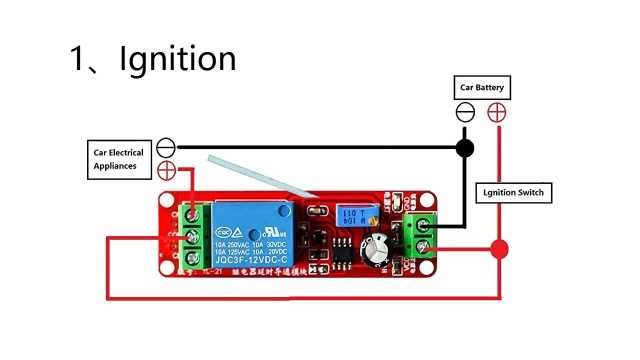
Connect the positive supply directly to the input terminal using 14-gauge stranded wire to maintain stable voltage. Ensure all screw terminals are tight and clean to prevent intermittent operation or incorrect triggering.
Attach the ground wire firmly to the chassis or a dedicated ground point to provide a consistent return path. Remove paint or corrosion at the contact point and secure with a lock washer to reduce resistance.
Route the trigger line from the control switch to the module input, avoiding sharp bends and high-current lines to minimize interference. Use insulated connectors and verify continuity before powering the system.
Label all terminals and wires during installation to simplify future maintenance and prevent misconnection between power, load, and trigger paths. This practice improves safety and reliability.
12V Timing Control Module Guide
Connect the main power lead directly to the input terminal using 14-gauge stranded wire to maintain stable voltage. Tighten terminals securely and inspect for corrosion to prevent intermittent operation or false triggering.
Attach the ground wire to a clean metal surface on the mounting bracket or chassis. Remove paint or oxidation before fastening and use a lock washer to ensure a consistent return path for the current.
Route the trigger line from the control switch to the module input, keeping it away from high-current wiring and sharp bends. Insulate all connections and verify continuity before applying power to prevent signal loss.
Configuring Load Connections
- Connect the output terminals to the load using wires rated for the expected current
- Use inline fuses to protect both the module and the connected device
- Label each connection to simplify future maintenance and troubleshooting
Test the module under simulated load conditions to confirm correct operation. Adjust the control knob or input settings and verify that the output activates according to the expected interval.
Troubleshooting and Verification
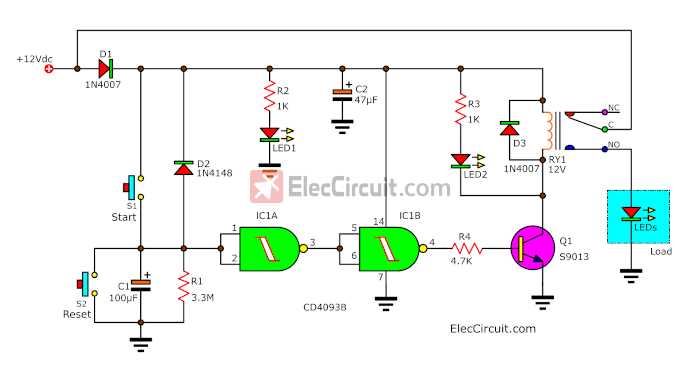
Check all connections with a multimeter to verify voltage at the input and continuity at the output. Ensure that the module responds immediately to trigger signals and that the load is correctly energized.
Inspect for heat buildup or unusual noise during operation. Excessive heat may indicate an overloaded module or poor connections, while clicking or buzzing can reveal mechanical faults inside the unit.
Document all wiring and settings after successful installation. Clear labeling and a reference record help prevent misconnection, simplify repairs, and ensure reliable operation for future adjustments.
Connecting Power and Trigger Inputs
Attach the positive supply directly to the module input using 14-gauge stranded wire to maintain consistent voltage. Ensure the terminal is clean and screws are tightened to prevent intermittent activation.
Connect the negative lead securely to a chassis ground or dedicated grounding point. Remove paint or oxidation at the contact area to guarantee a solid electrical path and reduce resistance that could affect operation.
Route the trigger input from the control switch along the frame or mounting surface, avoiding areas near high-current lines to minimize interference. Keep bends gentle and secure the wire with clips or ties every 4–6 inches.
Use insulated connectors at all junction points to prevent accidental shorts. Crimp or solder the connections and verify that insulation covers exposed metal surfaces to enhance safety and reliability.
Label the positive, negative, and trigger lines during installation. Clear labeling simplifies future maintenance and prevents misconnection when additional modules or loads are added.
Test continuity before applying full power to ensure each line is correctly connected. Use a multimeter to check resistance across terminals and verify that no unintended shorts exist between power and ground.
Install an inline fuse on the positive supply to protect the module and connected loads. Choose a fuse rated slightly above the expected current to prevent nuisance blowing while providing adequate protection.
Perform an initial functional test by activating the control switch and observing the module’s response. Confirm that the output engages correctly, the trigger line responds instantly, and no voltage drop occurs under load conditions.