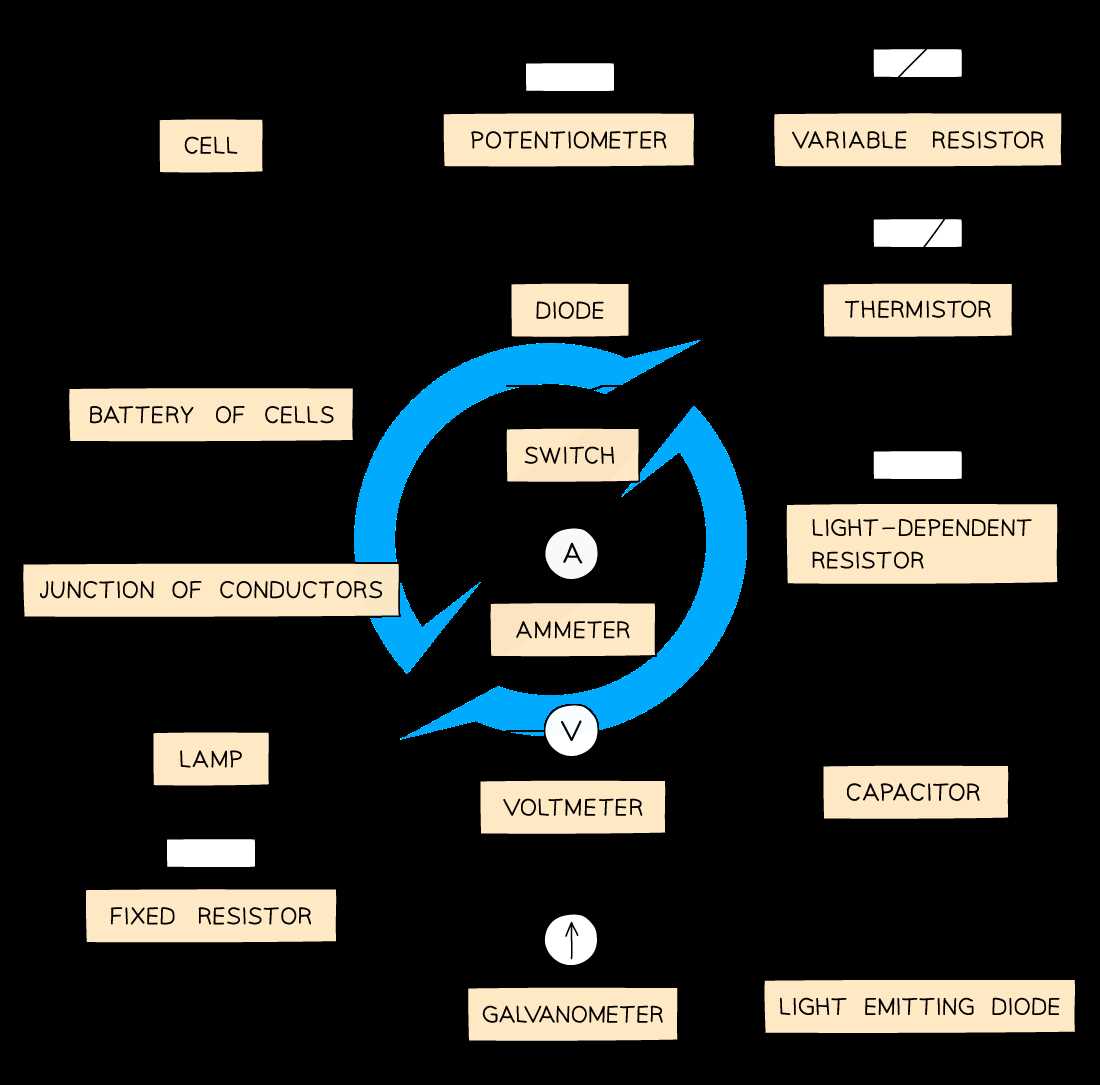
Focus on learning the standard markings for resistors, capacitors, and inductors to ensure precise assembly and troubleshooting of boards. Each element has a unique representation that dictates its placement and orientation in a network.
Understand how switches, relays, and connectors are illustrated to correctly interpret signal paths and control points. Misidentifying these can lead to short circuits or malfunctioning setups.
Identify power sources and grounding notations accurately to prevent damage and maintain voltage stability across the system. Recognizing polarity and terminal connections reduces the risk of reversed connections.
Study component ratings indicated alongside their markings such as resistance, capacitance, or current limits. Applying incorrect values can compromise performance and safety.
Use reference charts to compare visual representations with actual components during assembly. This cross-checking improves accuracy and reduces installation errors in compact or complex networks.
Understanding Common Symbols and Their Functions in Electrical Schematics
Start by identifying resistors and their variations, including fixed, variable, and network types. Each has a distinct representation that indicates how it limits or controls current flow within a layout.
Capacitors should be recognized by their polarity markings when applicable, along with the standard plates and spacing indicators. Knowing these ensures proper placement and prevents damage from reversed connections.
Understand the representation of inductors and coils, which store energy in magnetic fields. Their schematic depiction shows loops or series of arcs, and recognizing these allows accurate signal analysis and filtering design.
Switches and push buttons are drawn with gap and lever indicators, showing open or closed states. Correctly interpreting these elements ensures control lines are correctly connected and operational logic is maintained.
Diodes and light-emitting components have directional arrows that specify current flow. Proper orientation is critical, as reversing them can block current or damage the element.
Relays and connectors often include coil and contact indicators, showing how control signals interact with mechanical switching points. Reading these depictions prevents miswiring in complex assemblies.
Power sources and grounding notations must be clearly understood to maintain stable voltage levels and prevent shorting. Symbols for AC, DC, and ground references guide the proper routing of supply lines across the network.
Identifying Resistors Capacitors and Inductors in Layouts
Resistors are identified by rectangular or zigzag line representations with accompanying value indicators in ohms. Variable resistors include arrows across the element to show adjustable positions.
Capacitors are depicted as parallel lines or plates, sometimes with a curved line indicating polarity. Correct recognition prevents reversed connections that could lead to damage or malfunction.
Inductors are illustrated as coiled loops or series of arcs, showing how magnetic energy is stored. Placement in the layout often follows signal paths or filter sections.
Resistor networks may be shown as multiple elements in series or parallel, each marked with individual values. Understanding these arrangements ensures accurate resistance calculations across the design.
Capacitor types include ceramic, electrolytic, and tantalum, with the schematic lines differing slightly to indicate polarity and dielectric characteristics. Identifying the correct type supports proper voltage handling.
Inductors can include core types like air or ferrite, represented by additional lines or shading. Recognizing these variations aids in predicting inductance and saturation limits in practical assemblies.
Combining resistors, capacitors, and inductors forms filters and timing networks. Reading the layout for correct values and placements ensures the designed frequency response or timing behavior matches specifications.