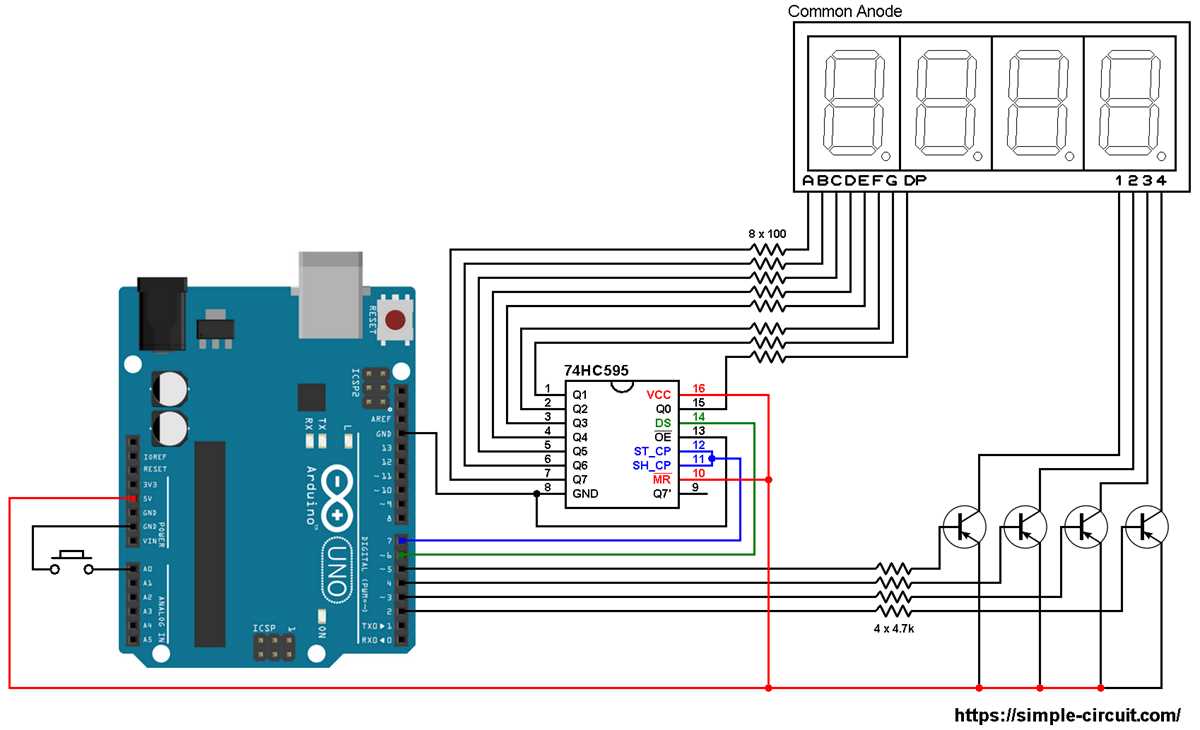
Connect the data input, clock line, and latch control from the microcontroller to the serial shift register before attaching any output devices. This digital component expands the number of available output pins by converting serial data into eight parallel outputs that can drive LEDs, displays, or logic inputs.
The integrated register receives a stream of bits through the data input pin while the clock signal shifts each bit through an internal storage chain. After eight pulses, the stored values transfer to the output stage once the latch control line toggles. This method allows a microcontroller with limited pins to control many outputs using only three control signals.
Use current-limiting resistors on every output line connected to LEDs. Typical values range from 220 to 470 ohms when operating from a 5-volt supply. Without these resistors, the output stage can exceed its safe current level, which may damage the chip or shorten the life of the connected LEDs.
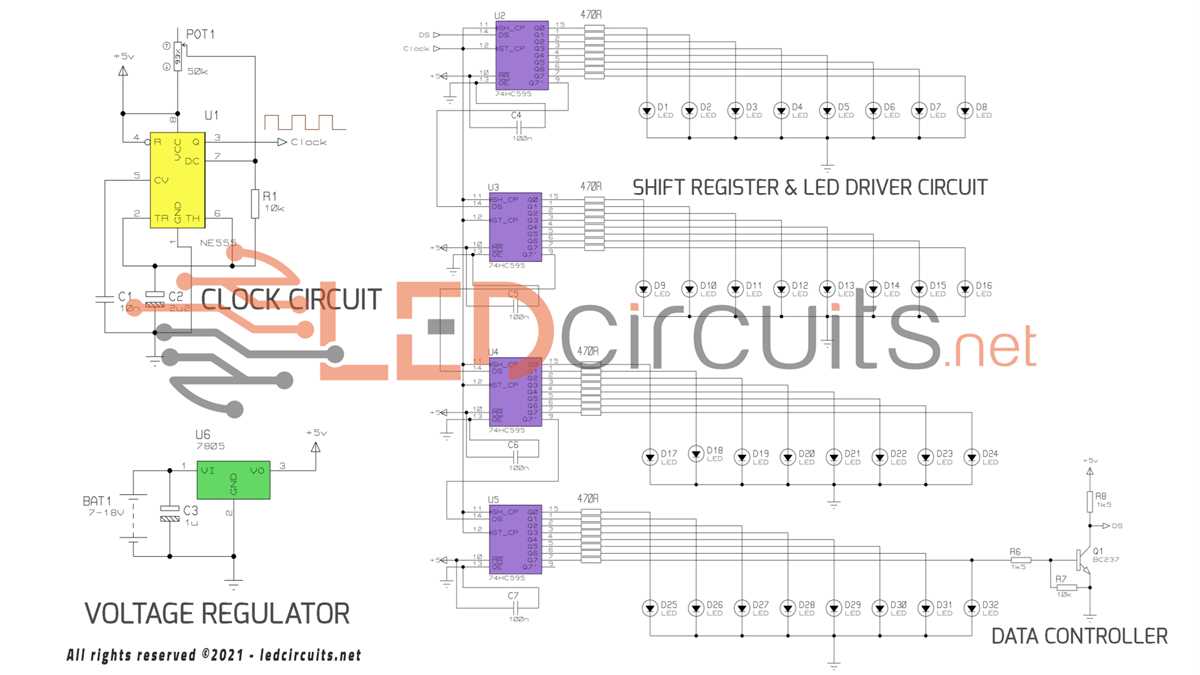
The device also allows multiple registers to connect in series. The serial output pin of the first chip feeds the data input of the next, allowing expansion from eight outputs to sixteen, twenty-four, or more. Each additional register uses the same clock and latch signals, which keeps the control interface simple while increasing the number of controllable outputs.
74HC595 Circuit Diagram With Pin Layout and LED Control Using a Shift Register
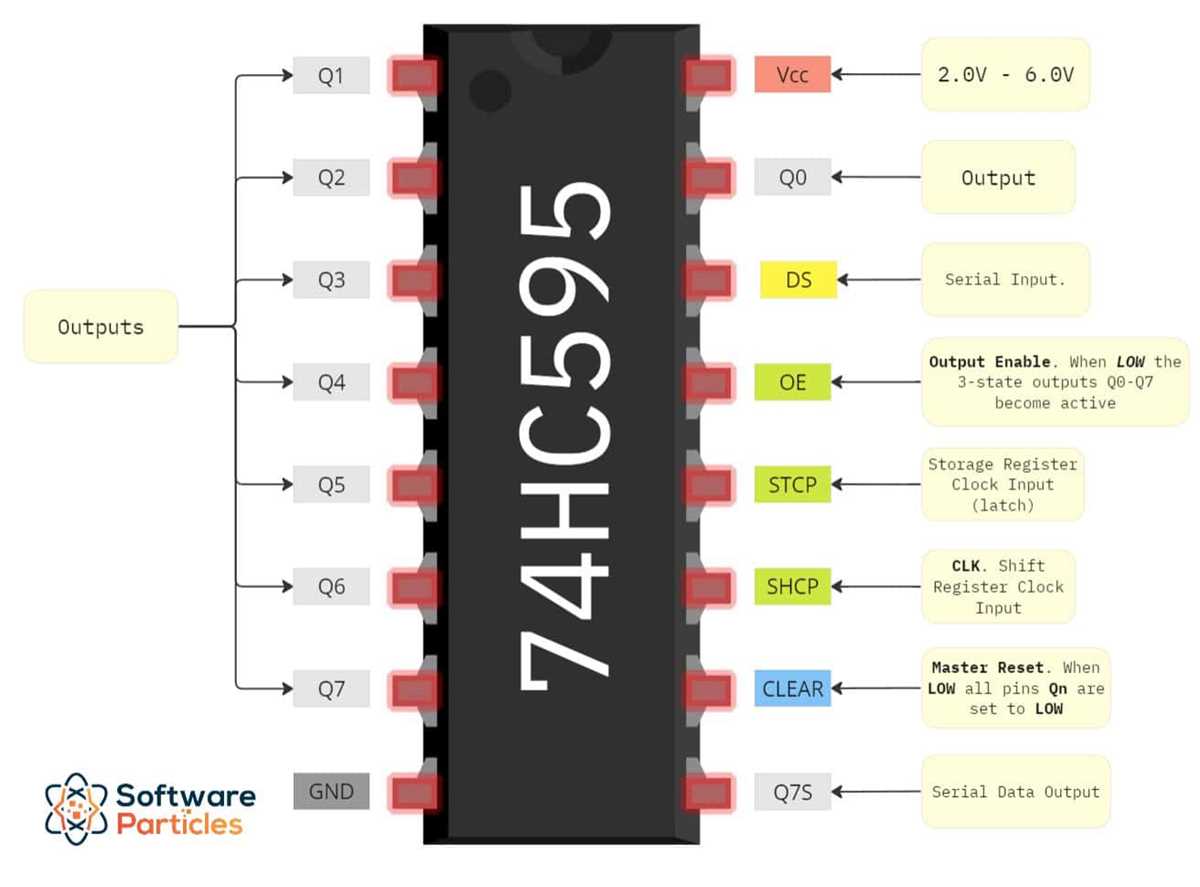
Connect the serial data input, clock signal, and latch control from a microcontroller to the shift register before attaching LED outputs. The device converts incoming serial bits into eight parallel output lines labeled Q0 through Q7. Data enters through the serial input pin, shifts through the internal register with each clock pulse, and transfers to the output stage after the latch signal changes state. This arrangement allows a controller with three signal lines to manage eight digital outputs.
Place a resistor on every LED output line. Typical resistor values range between 220 and 470 ohms when operating from a 5 volt supply. Each LED connects between an output pin and ground or between the output and the supply rail depending on the chosen configuration. The internal output drivers can source or sink current up to about 20 mA per channel, though lower current improves thermal stability.
Pin layout and control signals
The register includes dedicated pins for serial input, shift clock, storage latch, output enable, and reset. Clock pulses move each bit through the internal register chain, while the latch control transfers stored values to the eight output drivers simultaneously. Output enable can disable all outputs without clearing stored data, which allows temporary blanking of connected LEDs while new data shifts into the register.
Pin Connections for 74HC595 Shift Register With Microcontroller Data Clock and Latch Lines
Connect the data pin from the microcontroller to the serial input of the shift register, attach the clock signal to the shift clock pin, and route a control line to the latch input. These three control signals allow the controller to move bits into the internal register and then transfer them to the eight output drivers simultaneously.
The serial input receives one bit at a time from the controller. Each rising clock edge shifts the current bit into the register chain while moving existing bits toward the output stage. After eight clock pulses the register holds one full byte. Triggering the latch input copies that stored byte to the output pins labeled Q0 through Q7.
Power and control pin layout
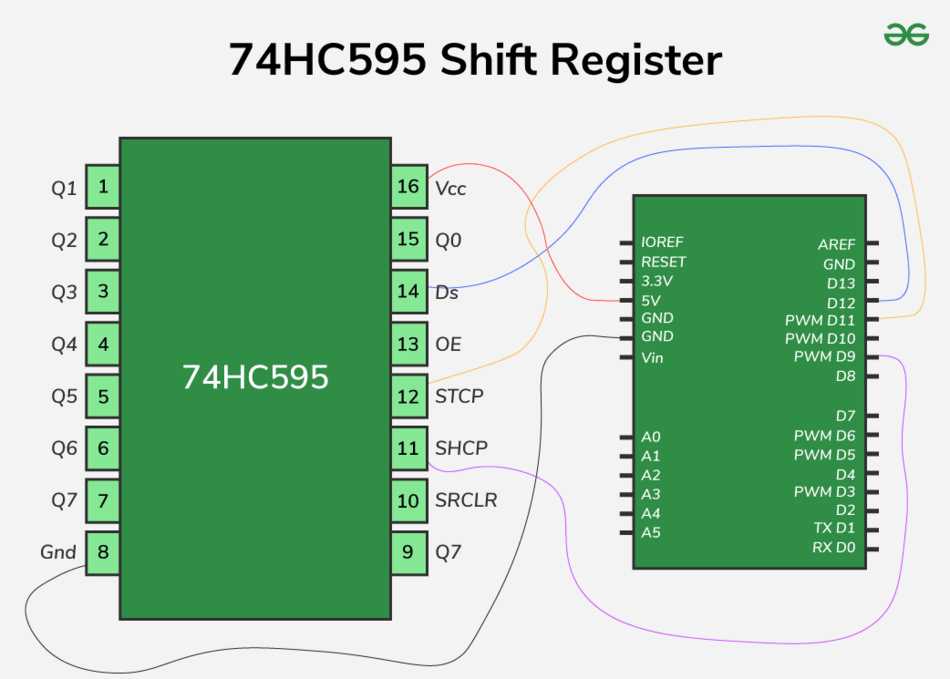
Connect VCC to the logic supply, typically 5 volts, and attach the ground pin to the system ground shared with the controller. Tie the output enable pin to ground if constant output activity is required. Connect the master reset pin to the supply rail through a resistor or directly to VCC so the register remains active during operation.