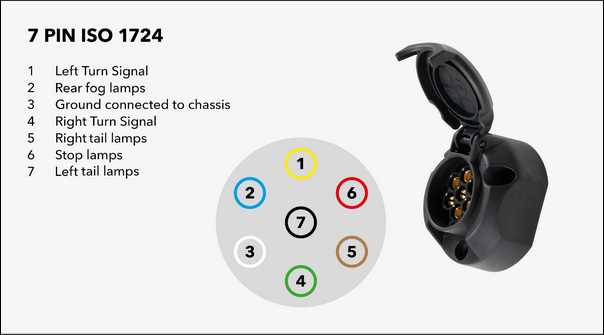
Use a standard color code chart before connecting any tow-vehicle socket to a cargo hauler light system. Brown usually powers rear position lamps, yellow feeds the left indicator, green operates the right indicator, and white serves as ground. A quick check with a multimeter set to 12-volt DC helps confirm each circuit before attaching conductors.
Incorrect color matching causes most lighting failures on cargo carriers and boat haulers. Many connectors follow a four-contact layout that supports tail lamps, brake lights, and turn signals. Larger seven-contact plugs add circuits such as electric brake control, reverse lamp signal, and auxiliary battery feed. Each contact must match the correct conductor color and terminal position inside the vehicle socket.
Use 16-18 AWG copper conductors on light circuits and heavier 10-12 AWG lines on brake or auxiliary power paths. Clean ground contact with bare metal on the frame; paint or rust raises resistance and weakens lamp brightness. Secure each splice with heat-shrink tubing or sealed crimp connectors to prevent moisture entry and corrosion during road use.
Before connecting the harness to the tow vehicle, test every signal: activate left indicator, right indicator, brake pedal, and running lamps while checking voltage at each terminal. Correct signal order and color matching guarantee stable operation of rear lamps, brake magnets, and backup lights on the towed load carrier.
Trailer Wiring Diagram with Color Codes and Pin Layouts for 4 5 6 and 7 Pin Connectors
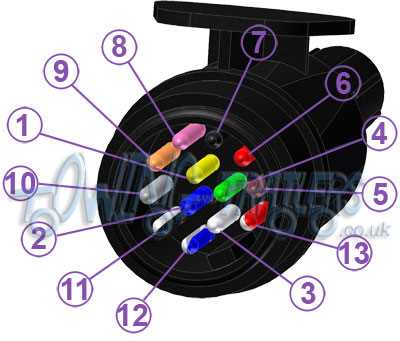
Match each connector contact with the correct conductor color before attaching the harness to a tow vehicle socket. A four-contact plug usually carries brown (rear position lamps), yellow (left indicator and brake), green (right indicator and brake), and white (ground). This layout powers the minimum lighting set required on most light-duty cargo haulers.
Use a voltage tester or multimeter set to 12 V DC while checking signals from the vehicle outlet. Activate tail lamps, brake pedal, and turn signals separately, then verify which terminal receives power. Label each lead with tape during the test stage to avoid confusion once the harness is routed along the frame.
4 and 5 Contact Plug Layout
A four-contact system handles rear illumination and direction signals only. The fifth contact version adds a blue or orange conductor connected to a surge-brake lockout solenoid used on boat carriers. This added line receives power from the reverse signal circuit of the towing vehicle, preventing hydraulic brake engagement while backing.
Use 16-18 AWG copper leads on lighting circuits in these small connectors. Ground connection must attach directly to bare metal on the frame using a stainless bolt or star washer. Paint or oxidation between the ring terminal and steel frame raises resistance and leads to dim lamps.
6 and 7 Contact Plug Layout
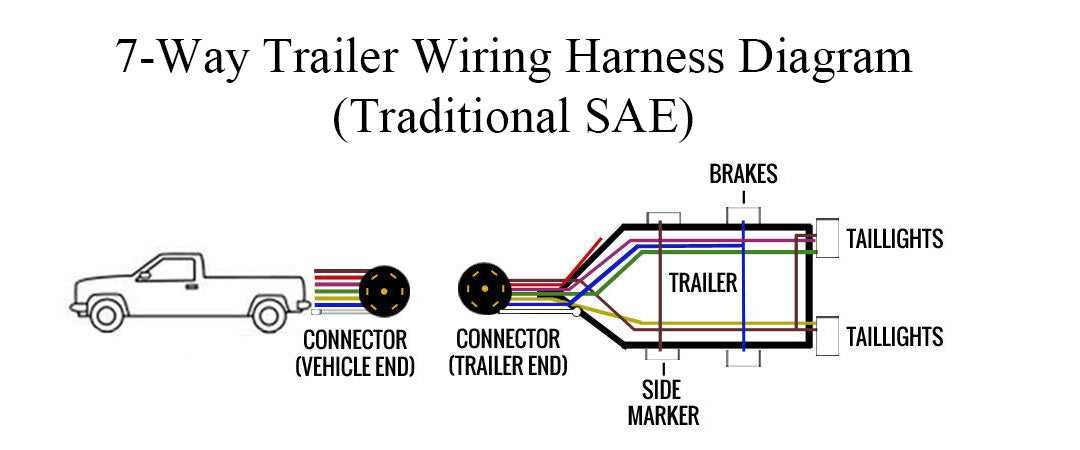
A six-contact round connector adds an auxiliary power feed and electric brake control line. Typical color mapping includes black for battery charge supply, blue connected to brake controller output, brown running lights, green and yellow direction signals, and white ground. Contact arrangement varies slightly between manufacturers, so check the socket marking before inserting terminals.
A seven-contact RV-style plug includes an extra center terminal used by reverse lamps or auxiliary equipment. Heavy loads such as electric brake magnets or interior battery charging require thicker conductors, usually 10-12 AWG, routed through protective loom along the chassis rail.
Secure every splice using sealed crimp connectors or heat-shrink sleeves. Road spray, salt, and vibration damage exposed joints within a few months. After installation, activate each signal and confirm lamp brightness and brake controller response while the tow vehicle engine runs.
Stable signal routing and correct color alignment keep rear lights, brake magnets, and auxiliary circuits operating without flicker or voltage drop during long highway travel.
4 Pin Trailer Wiring Diagram with Color Codes for Tail Brake and Turn Signals
Match the four flat connector contacts with the standard color pattern used on most light cargo haulers. White attaches to chassis ground, brown feeds rear position lamps, yellow powers the left indicator with brake signal, and green powers the right indicator with brake signal. Correct placement keeps stop lamps and direction signals synchronized with the tow vehicle.
Attach the white ground lead directly to bare steel on the frame using a ring terminal and stainless bolt. Poor grounding causes dim lamps or intermittent flashing. Remove paint at the contact point and tighten the fastener with a star washer so the metal teeth bite into the frame surface.
Use 18 AWG copper conductors on lighting circuits and route the harness along the inner frame rail. Secure it every 30–40 cm using insulated clips or zip ties to prevent vibration damage while driving on rough roads.
Check signal output with a multimeter before connecting lamps. Activate the left indicator and verify voltage on the yellow conductor. Repeat with the right indicator and brake pedal while measuring the green and yellow lines. Brown should carry steady 12 V when the vehicle running lights switch is on.
Seal every splice with heat-shrink tubing or weatherproof crimp connectors. Road spray, mud, and winter salt corrode exposed copper within weeks, which leads to signal loss and uneven lamp brightness at the rear light assemblies.