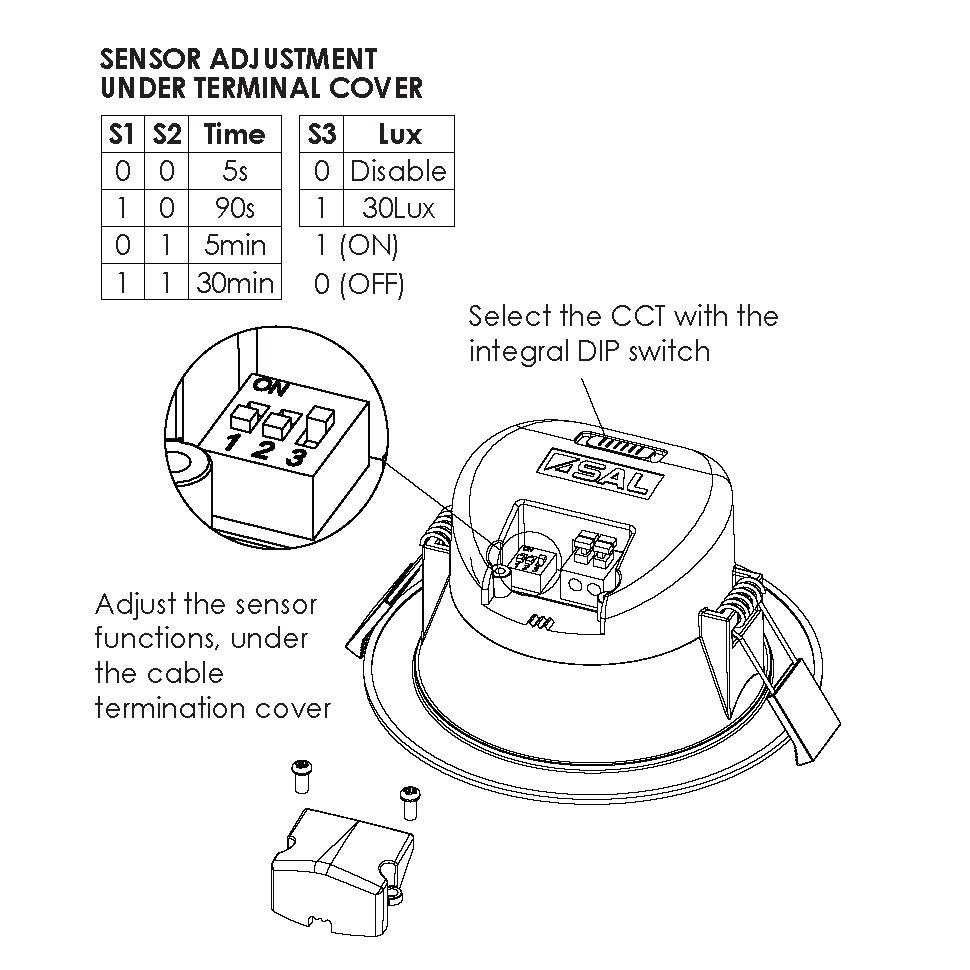
Connect recessed ceiling luminaires in parallel from the mains supply so each fixture receives the same voltage and continues working if another unit fails. Use a standard 220–240 V AC feed from the distribution box, route the live conductor through a wall switch, and connect neutral directly to the driver input. Ground conductors should be tied to the metal housing or grounding terminal of each luminaire.
Each fixture normally includes a constant current LED driver mounted above the ceiling panel. The driver converts high-voltage AC to low-voltage DC, commonly around 18–40 V depending on the LED module. Input terminals accept live and neutral wires from the lighting line, while the output side connects to the LED board through two low-voltage leads marked positive and negative.
For multiple recessed luminaires in one room, run a junction box loop across the ceiling space. From that box distribute cables to each driver input. Typical cable sizes include 1.5 mm² copper for lighting lines in many residential installations. Secure connectors using screw terminals or push-fit blocks rated for at least 250 V.
Check polarity on the driver output and confirm all connections before restoring power. Loose terminals or reversed LED leads may cause flicker, dim output, or driver shutdown. Following a clear wiring layout helps identify supply lines, switching control, and driver placement during installation or troubleshooting.
LED Ceiling Light Wiring Layout With Driver and Switch Connection
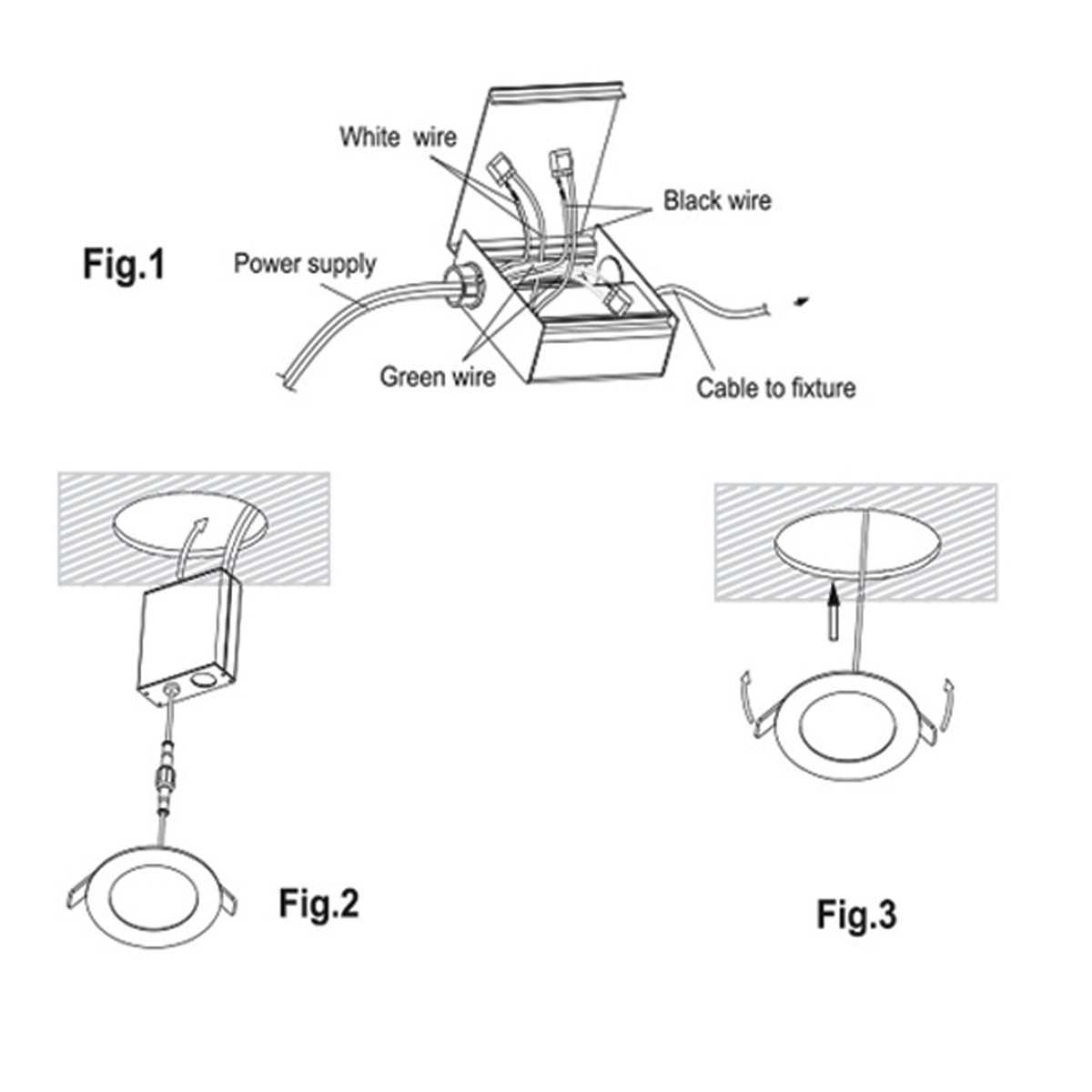
Route the mains supply through a wall switch before it reaches the driver input of each recessed ceiling luminaire. The live conductor passes through the switch terminal, while neutral goes directly to the driver input block. Typical residential supply ranges from 220–240 V AC. Use a junction box above the ceiling panel to distribute power lines toward each lighting unit.
Typical wiring path for recessed LED fixtures
- Distribution board sends live and neutral through a 1.5 mm² copper cable
- Live wire enters the wall switch and exits toward the ceiling junction box
- From the junction box, lines branch to each LED driver input
- Driver output wires connect to the LED module terminals marked + and −
- Ground conductor attaches to the fixture frame if a metal housing is present
The driver converts high-voltage AC into low-voltage DC used by the LED board. Many recessed ceiling luminaires operate with output ranges between 24 V and 40 V DC depending on power rating. Drivers rated from 6 W to 15 W are common for small ceiling fixtures installed in kitchens, hallways, or bathrooms.
Connection checks before restoring power
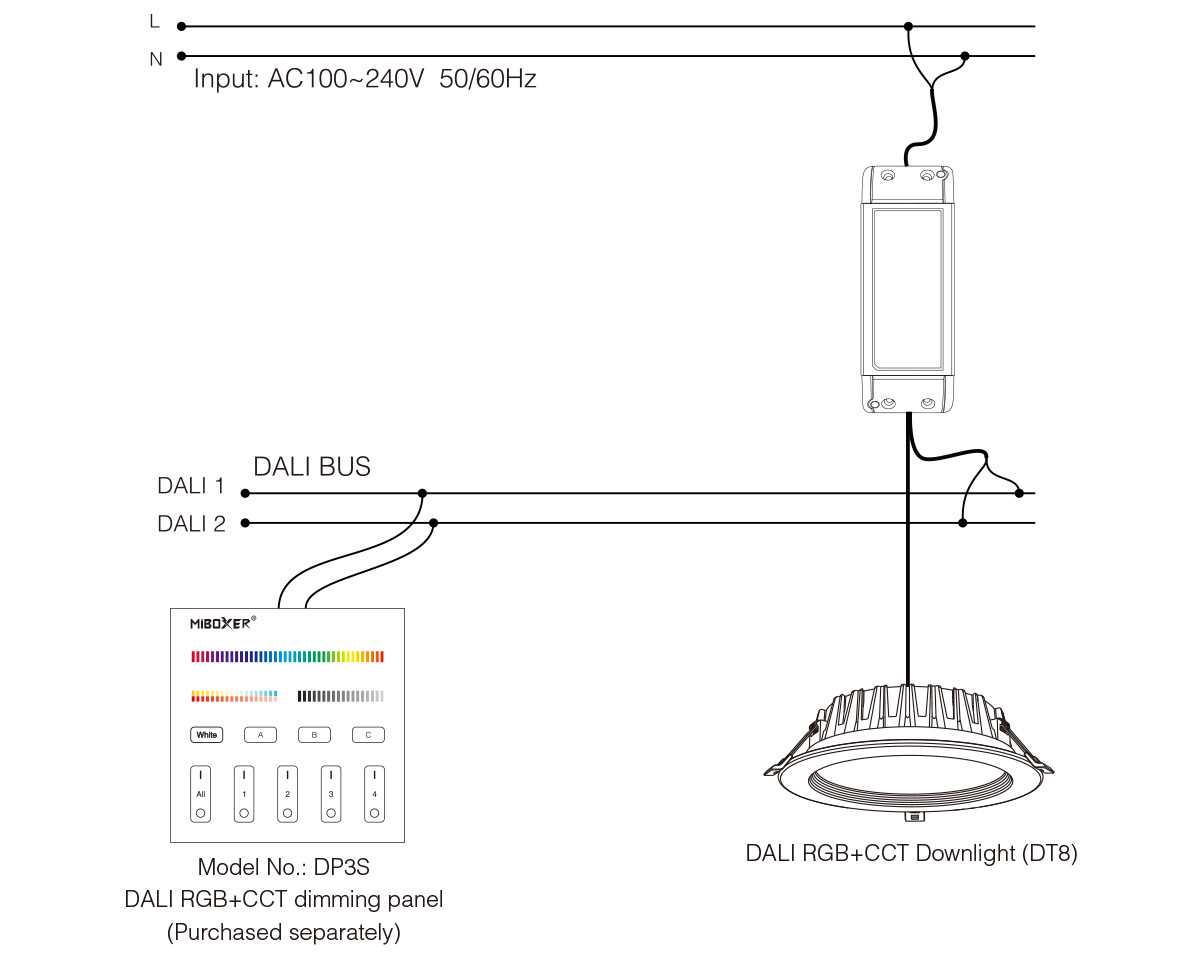
- Confirm live wire enters the switch input terminal
- Check neutral connection continuity from supply line to driver input
- Verify polarity on driver output leads
- Inspect screw terminals for tight contact
- Ensure insulation remains intact inside the ceiling cavity
Correct wiring ensures stable brightness across multiple fixtures connected in parallel. A single driver failure should not affect other luminaires because each unit receives supply directly from the junction distribution line.
Understanding the Wiring Layout of a Downlight Lighting Circuit
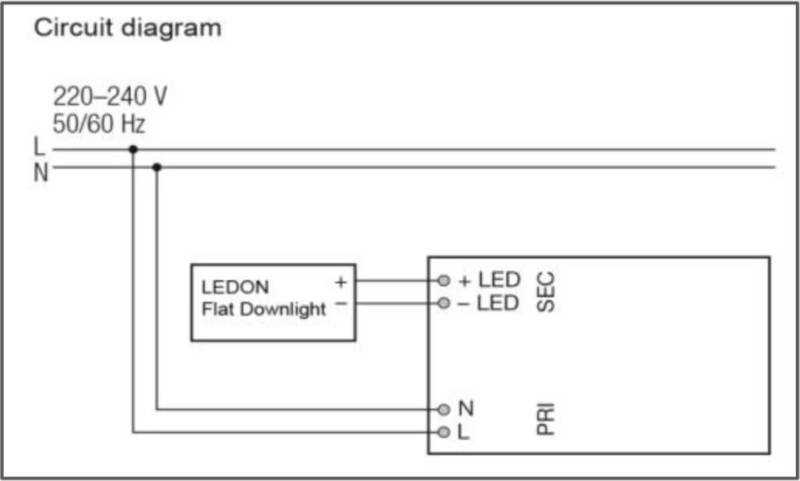
Connect recessed ceiling luminaires in a parallel wiring layout so each fixture receives the same mains voltage. Run a live conductor from the distribution board to a wall switch, then continue that line to a ceiling junction box. From this point, branch cables feed each LED driver input while the neutral conductor links directly from the supply line to every driver.
Use 1.5 mm² copper cable for standard lighting lines in residential installations supplied with 220–240 V AC. This size handles several ceiling luminaires without voltage drop across short distances inside typical rooms. Route cables through protective conduits or plastic trunking above plasterboard ceilings.
Inside the ceiling space, place a junction box where the supply line splits into multiple branches. Each branch runs toward one recessed luminaire driver. This layout allows easy replacement of a single fixture without disconnecting other lighting units.
The LED driver performs AC to DC conversion before current reaches the light module. Many small ceiling luminaires operate with driver outputs between 18 V and 42 V DC. Power ratings often range from 6 W to 12 W per fixture depending on LED array size.
Keep polarity correct on the driver output leads. Positive and negative wires connect directly to the LED board mounted inside the luminaire body. Reversed polarity may prevent illumination or cause driver protection shutdown.
Ground conductors should connect to any metal frame or mounting bracket. This protective earth path routes leakage current safely to the building grounding system and reduces electric shock risk during maintenance.
Install connectors rated for at least 250 V and 10 A. Screw terminals or spring clamp connectors work well in ceiling spaces where vibration or thermal expansion may loosen weak connections.
After completing wiring, measure voltage at the driver input terminals and confirm the switch interrupts the live conductor only. Correct layout ensures each recessed ceiling luminaire receives stable power and operates independently within the lighting line.