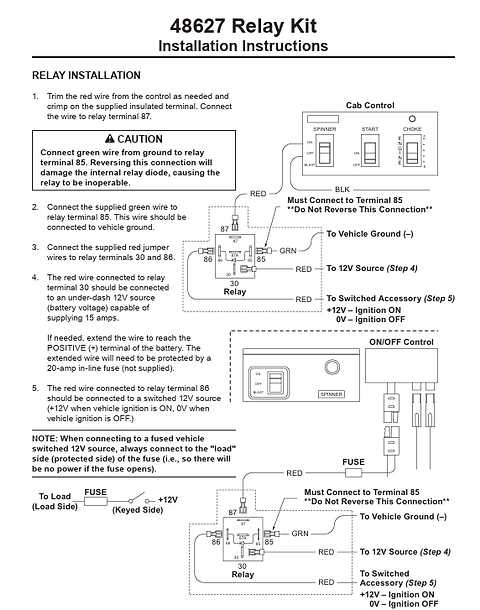
Ensure the main battery is disconnected before connecting any control relay or actuator terminals. This prevents short circuits and protects fuses rated between 30A and 50A.
Locate the dual-terminal actuator on the front frame. Connect the positive feed to the main power bus using 10-gauge insulated cable, and secure the ground wire to a clean chassis point to maintain stable voltage.
Verify control switch polarity before energizing. Reversing connections can cause the actuator to remain engaged, creating mechanical strain and potential overheating of the coil.
Test the relay by manually applying 12V to the activation coil. The actuator should respond with a single, smooth movement. If resistance is high, inspect for corrosion on the terminals or frayed conductors before full operation.
Snow Clearing Actuator Connection Guide
Disconnect the main battery before handling any actuator terminals. Use a 12V multimeter to confirm no residual current is present to avoid sparks or blown fuses.
Identify the dual terminals on the actuator block. The positive feed should be attached with a 10-gauge insulated cable and secured with a lock washer. Ensure the ground wire is fastened to a clean metal point on the frame for stable operation.
Check the relay coil orientation before energizing. Incorrect polarity can cause the actuator to lock or generate heat, reducing lifespan and potentially damaging the mechanical linkage.
Use the control switch to test the actuator’s response. Each pulse should produce a single smooth movement. If the movement is jerky, inspect the terminals for corrosion and clean connections using contact cleaner.
For multiple actuator setups, label each positive and negative terminal to prevent cross-connection. A mix-up can energize two actuators simultaneously, which may overload the power source and blow a fuse.
Install a 30A inline fuse on the main feed line. This provides overcurrent protection without interfering with normal operation. Place the fuse as close to the battery as possible.
Periodically inspect connectors for fraying insulation or loose bolts. Tighten all nuts to 8–10 lb-ft torque and replace any damaged terminals to maintain continuous operation under heavy load conditions.
Document the actuator layout and terminal identification using a simple table. Include terminal type, cable gauge, and fuse rating. This reference ensures quick troubleshooting and safe maintenance for seasonal use.
Identifying Actuator Terminals and Their Functions
Locate the main terminals on the actuator housing and mark them before connecting any cables. The large posts usually carry the main feed, while smaller pins control the trigger signal.
The positive lead should connect to the heavy-duty post closest to the input source. Ensure the cable is fully insulated and secured with a lock washer to prevent accidental contact and voltage drops during operation.
Ground terminals are often smaller and located on the opposite side. Attach them to a clean, bare metal surface on the frame using a ring terminal and tighten to manufacturer torque specifications to maintain consistent conductivity.
Control pins are designed for low-current signals. Use a multimeter to confirm each pin’s function: one may activate upward motion while another triggers downward movement. Misidentifying these can cause erratic actuator behavior.
After connecting all terminals, perform a test cycle without load. Observe movement and listen for unusual clicks or resistance. Document terminal identification and functions for future maintenance and to prevent connection errors during seasonal setup.