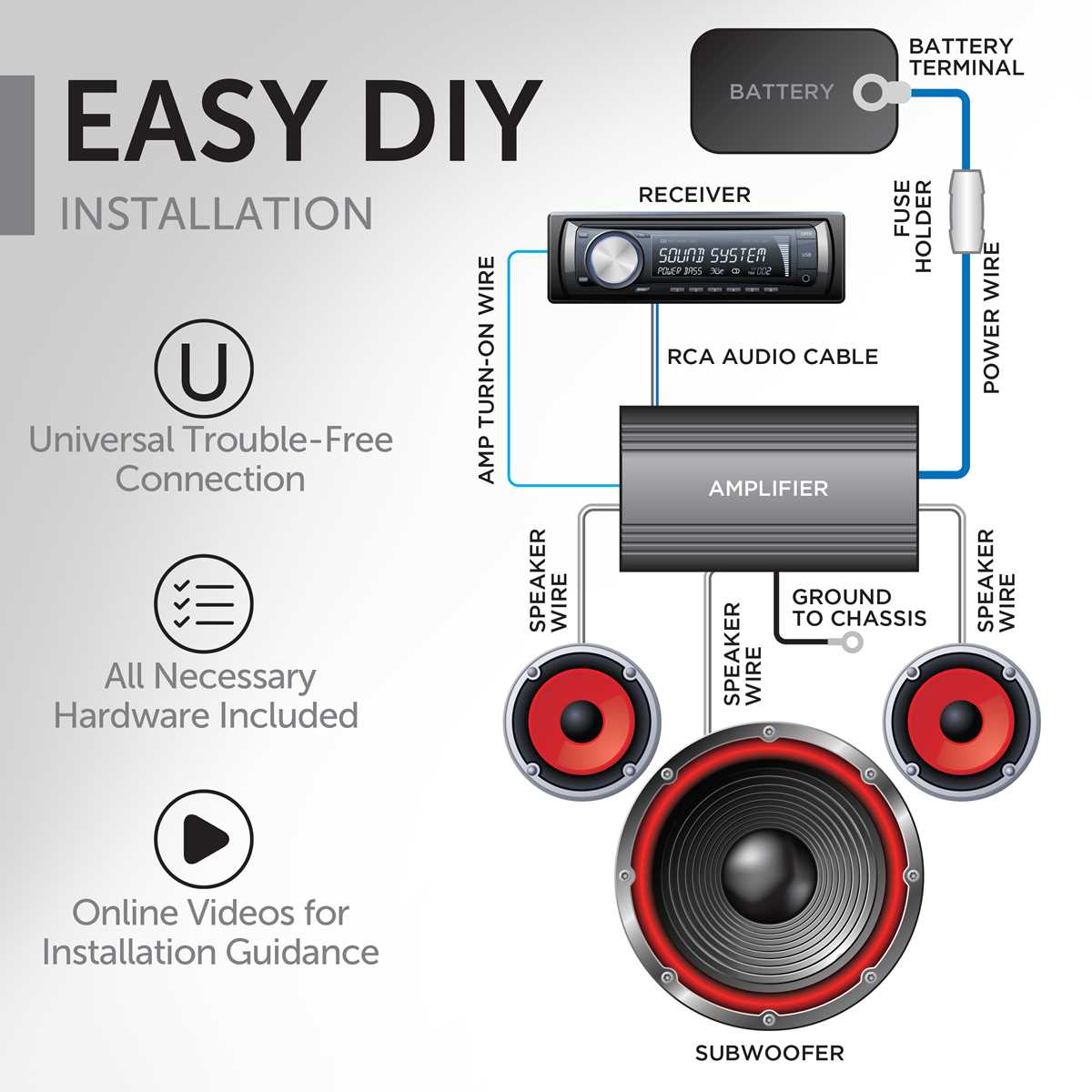
Connect the positive lead directly to a dedicated 12-volt source with an inline fuse rated to match the unit’s maximum current. This prevents voltage drops and protects against overloads. Ensure the fuse is placed within 18 inches of the battery terminal to maintain safety and compliance with electrical standards.
Use a short, thick ground cable attached to a clean metal surface on the chassis to minimize resistance and avoid humming or signal distortion. Sand down paint and debris to ensure solid contact between the connector and frame.
Route input signal cables separately from power leads to prevent interference. Twist signal wires if possible and secure them with non-conductive clips to reduce electromagnetic noise that can degrade sound clarity.
Install the remote turn-on connection from the head unit to the control terminal of the device to ensure it powers up only with the ignition. Use a relay if controlling multiple units to distribute current safely without overloading the switch.
Verify polarity for all speaker connections before securing terminals. Consistent positive-to-positive and negative-to-negative connections maintain phase alignment and prevent cancellation of bass frequencies.
Double-check all fasteners and insulation on every cable to prevent movement or shorting while driving. Apply heat-shrink tubing or protective sheaths on exposed terminals to extend longevity and maintain reliable operation under vibration and temperature changes.
Audio System Power and Signal Connections
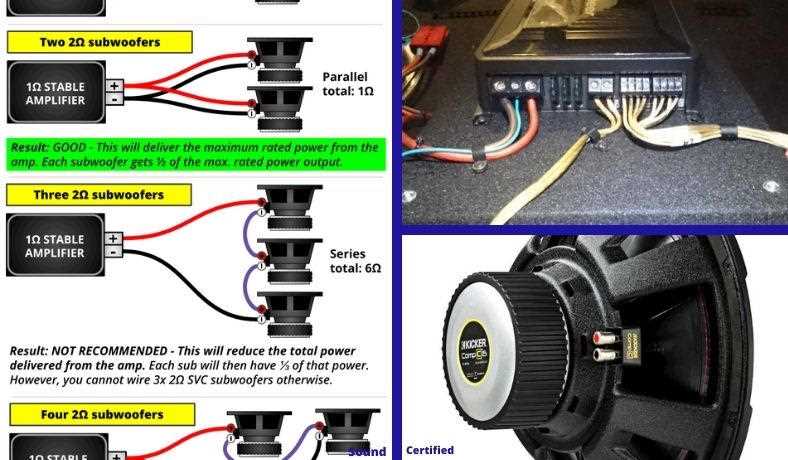
Connect the positive terminal directly to a stable 12-volt source with a fuse rated slightly above the device’s maximum current draw. Position the fuse close to the power source to protect the line from shorts and voltage spikes.
Use a dedicated ground cable attached to bare metal on the chassis to reduce resistance. Ensure the contact point is clean and free of rust or paint to avoid interference or hum in the system.
Route signal leads away from high-current cables to prevent electromagnetic interference. Twist or braid the signal pairs and secure them separately to preserve sound quality and reduce noise pickup.
Connect the remote turn-on lead from the head unit to the control terminal of the device. Include a relay if operating multiple units to prevent excessive current draw from the switch.
Match speaker outputs to input terminals carefully and maintain correct polarity. Positive-to-positive and negative-to-negative alignment ensures proper phase and avoids frequency cancellation.
Inspect all cable terminations and fasteners for tightness and insulation. Apply heat-shrink tubing or protective sleeves to exposed terminals to prevent shorts and corrosion under vibration.
Measure voltage at the control and load terminals after installation. Confirm consistent 12-14 volts under idle and load to ensure stable operation and prevent clipping or damage to connected devices.
Check all connections periodically for looseness or wear. Regular inspection of fuses, cables, and grounding points maintains reliable performance and prevents unexpected system failures.
Choosing the Correct Power and Ground Connections for Reliable Operation
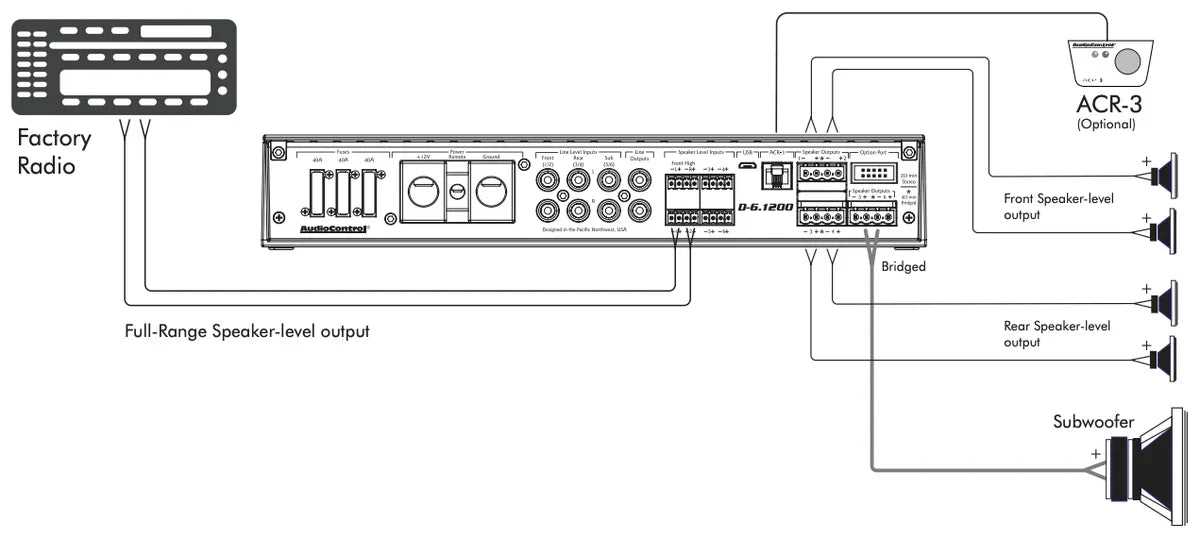
Connect the positive lead to a stable 12-volt source with a fuse rated 10-15% higher than the unit’s peak current. Position the fuse as close to the battery as possible to protect the circuit from sudden surges or short circuits.
Use a dedicated ground cable attached to bare metal on the chassis to minimize resistance and prevent hum. Sand or clean the contact point thoroughly to ensure solid contact and reduce the risk of intermittent faults caused by vibration.
Choose cable gauge based on the total current draw to maintain voltage stability under load. Oversized cables reduce heat buildup and voltage drop, providing consistent performance even during peak output conditions.