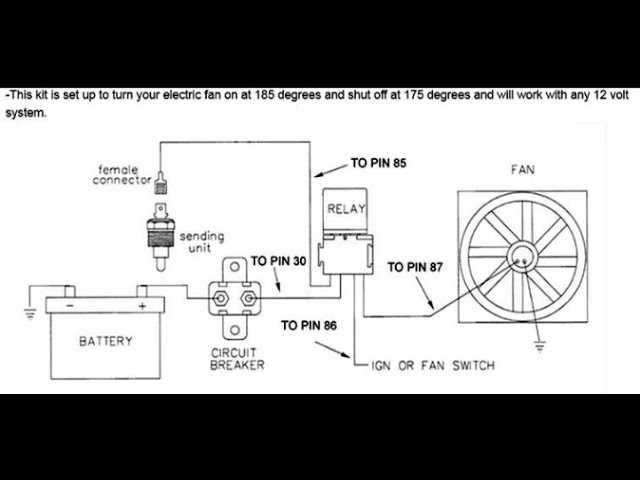
Connect the cooling motor through a 30–40 A relay powered directly from the vehicle battery. Route the supply line through a fuse placed within 20–30 cm of the positive terminal. This layout prevents overheating of dashboard switches and protects the power line from short circuits.
The relay coil should receive control voltage through a temperature switch mounted in the coolant housing. When coolant temperature reaches about 90–95°C, the switch closes and energizes the relay coil, allowing current to flow to the cooling motor.
Use copper conductors sized at least 2.5 mm² (14 AWG) for the power path between the battery, relay contacts, and the motor. Thinner conductors increase resistance and create heat during continuous operation.
The ground connection must be attached to a clean metal point on the chassis using a ring terminal and corrosion-resistant bolt. Poor grounding causes slow blade rotation, unstable relay activation, and higher current draw from the battery.
Verify operation by warming the engine until the temperature switch closes. The relay should click and the cooling propeller should begin pulling air through the heat exchanger, lowering coolant temperature within several minutes.
Radiator Electric Fan Wiring Diagram With Relay Temperature Switch and Fuse Layout
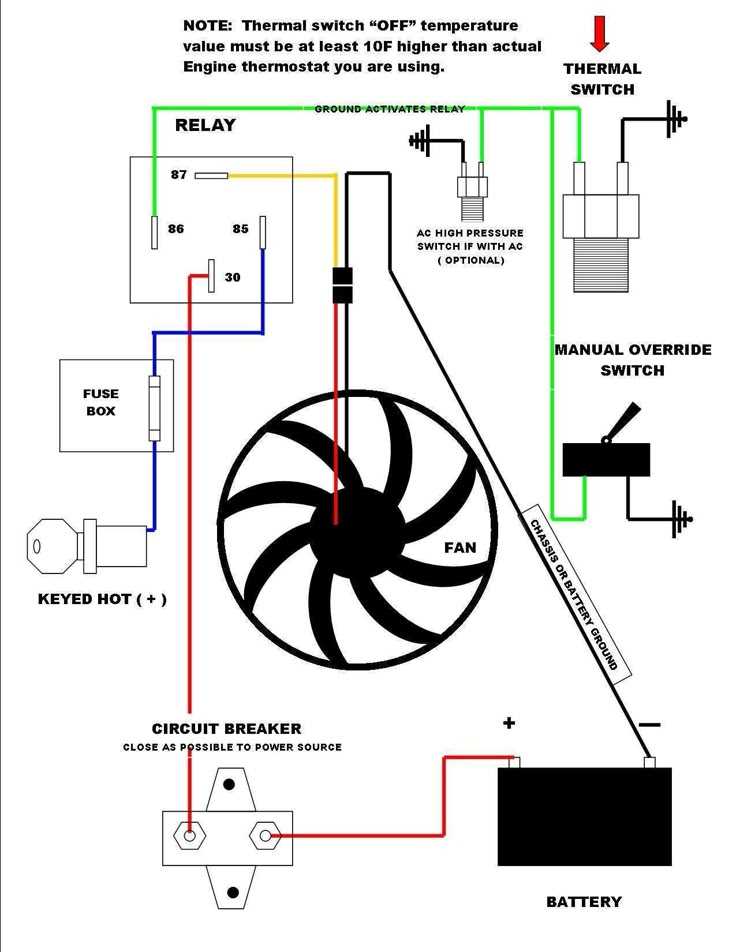
Route battery power to terminal 30 of a 4-pin automotive relay through a 30–40 A fuse. Place the fuse holder close to the positive battery post so that any short along the supply line disconnects power before the conductor overheats.
Connect relay terminal 87 to the cooling motor positive lead using copper cable sized at least 2.5 mm². Motors used for engine cooling commonly draw 15–25 A during startup, and undersized conductors cause voltage drop and heat.
Terminal 85 of the relay connects to chassis ground. Terminal 86 receives control voltage through a coolant temperature switch installed in the engine water outlet or thermostat housing.
Most thermal switches close near 92–98°C and open again around 85–90°C. When coolant reaches the closing point, the switch completes the control path and energizes the relay coil.
The energized relay closes the internal contact between pins 30 and 87, sending battery current directly to the cooling motor. The rotating blade then pulls air through the heat exchanger core.
Install the ground lead from the motor to a clean chassis bolt using a crimped ring terminal. Paint or corrosion under the contact surface increases resistance and reduces motor speed.
Add a manual override switch in parallel with the temperature switch when additional airflow may be required during heavy traffic or towing. This switch simply bridges the control line feeding relay terminal 86.
Check the system using a multimeter and by heating the engine. Voltage should appear at relay terminal 87 only when the thermal switch closes or the manual override is activated, confirming correct power routing and protection from the fuse.
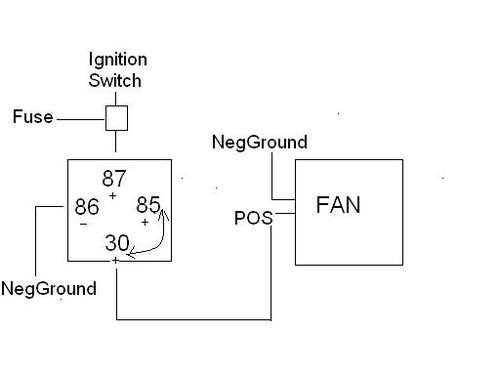
Relay Pin Connections for Radiator Cooling Fan Control
Connect battery positive to relay terminal 30 through a fuse rated between 30 and 40 amps. This terminal feeds the high-current contact that supplies power to the cooling motor once the relay coil activates.
Route terminal 87 directly to the positive lead of the airflow motor mounted near the engine heat exchanger. Use copper cable not smaller than 2.5 mm² to handle startup current that can exceed 20 A.
Attach terminal 85 to chassis ground. The ground point should be bare metal secured with a bolt and star washer to prevent resistance caused by paint or corrosion.
Feed terminal 86 from the temperature switch installed in the coolant outlet. When coolant temperature rises to the switching point, the switch closes and sends voltage to the relay coil.
- Pin 30 – battery supply through fuse
- Pin 87 – output toward cooling motor
- Pin 85 – ground connection for relay coil
- Pin 86 – control voltage from thermal switch
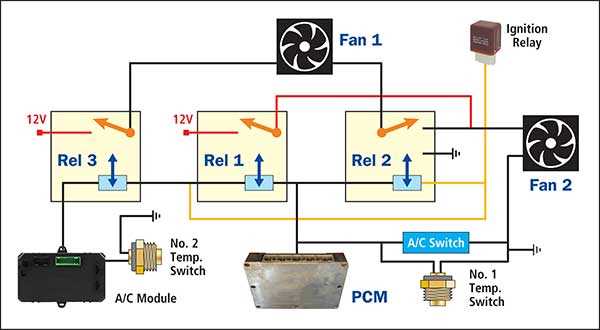
If a manual override is required, install a dashboard switch parallel to the temperature sensor line feeding pin 86. Activating the switch energizes the relay coil and forces the airflow motor to run regardless of coolant temperature.
- Turn ignition on
- Allow engine temperature to rise
- Observe relay click when sensor closes
- Confirm airflow motor begins spinning
Measure voltage between pins 30 and 87 while the relay is energized. A reading close to battery voltage confirms proper contact closure and correct power delivery to the cooling unit.