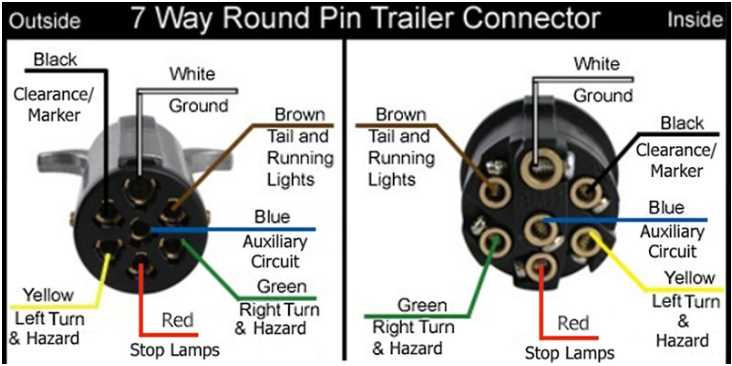
Match each of the six contacts in the vehicle socket with the correct circuit before attaching any cables. A typical setup assigns one line to ground, two to tail and marker lamps, two to turn and stop signals, and one to the electric brake control. Use a multimeter to confirm voltage and polarity at the vehicle outlet before connecting the cable harness.
Color coding helps avoid mistakes. In many North American towing systems, white serves as ground, brown powers tail lamps, yellow controls the left turn and brake signal, green controls the right turn and brake signal, blue carries the brake controller output, and black or red supplies auxiliary 12-volt power. Always verify the vehicle manual, since color assignments sometimes vary between manufacturers.
Use stranded copper conductors rated for outdoor use and secure each terminal with corrosion-resistant screws. Route the cable bundle through protective loom and keep it at least 30–40 mm away from moving suspension parts. After installation, test every circuit: activate tail lights, press the brake pedal, and check both turn signals while measuring voltage at the connector pins. This quick inspection prevents lighting faults and brake controller errors during towing.
6 Plug Trailer Wiring Diagram with Pin Layout Wire Colors and Brake Connection Guide
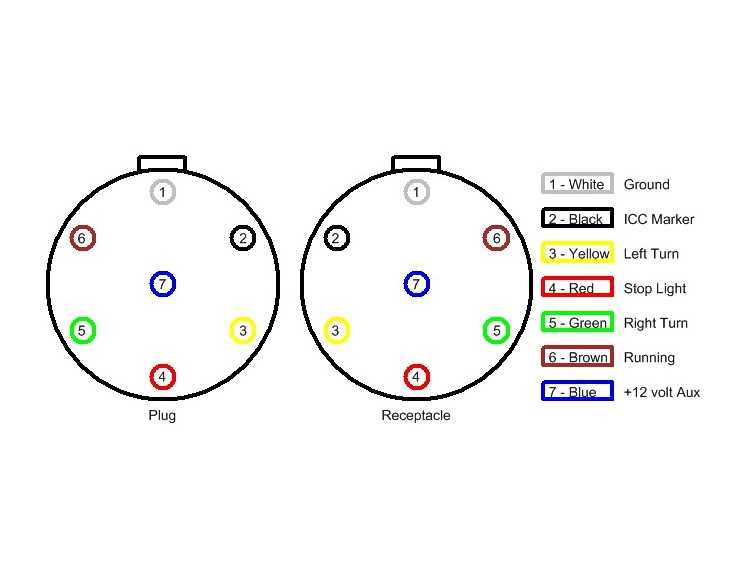
Identify the six terminals on the round vehicle socket before attaching any cable set. Hold the connector with the latch at the top and read the contact positions clockwise. This orientation helps match each circuit correctly and prevents reversed lighting signals or brake controller faults.
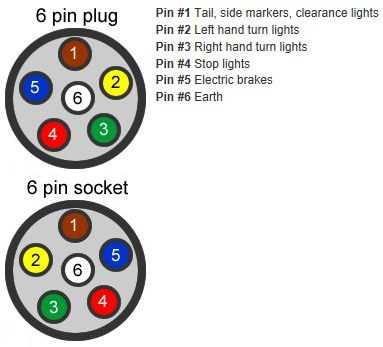
Typical pin layout for a six-contact towing connector distributes circuits across lighting, ground, and brake control lines. Many pickups and SUVs in North America follow a similar pattern.
- Ground return line
- Tail and marker lamps
- Left turn and stop signal
- Right turn and stop signal
- Electric brake controller output
- Auxiliary 12-volt power feed
Color coding simplifies installation and later repairs. Most harness manufacturers use a consistent scheme that matches towing equipment used on light-duty trucks and utility haulers.
- White – ground return to vehicle frame
- Brown – running lights and side markers
- Yellow – left turn signal and brake lamp
- Green – right turn signal and brake lamp
- Blue – electric brake controller line
- Black or red – constant 12-volt auxiliary feed
Brake Controller Circuit
Connect the blue conductor from the vehicle brake controller directly to the brake magnet circuit on the towed unit. Use 12-gauge copper cable for this line. Thinner conductors raise resistance and reduce braking force, especially on tandem axle setups.
Route the brake control line through protective conduit and secure it every 30–40 cm with insulated clamps. Avoid contact with exhaust components or suspension arms. Heat and vibration often damage unprotected conductors.
Pin Verification Before Road Use
Test every contact using a multimeter or test lamp after installation. Activate lighting and brake controls one circuit at a time.
- Turn on vehicle parking lights and confirm voltage on the brown conductor
- Activate left indicator and verify signal on the yellow conductor
- Activate right indicator and verify signal on the green conductor
- Press the brake pedal and confirm both signal lines receive power
- Manually trigger the brake controller and check voltage on the blue conductor
Finish by checking the ground path between the white conductor and the vehicle chassis. Resistance above 1 ohm often indicates corrosion or a loose mounting point, which can cause dim lamps or unstable brake response.
6 Plug Trailer Wiring Diagram Pin Functions and Standard Wire Color Codes
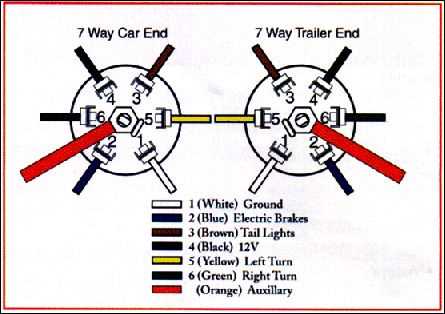
Assign each contact in the six-pin round vehicle connector according to its electrical role before attaching the cable harness. One terminal links to chassis ground, two control rear lighting circuits, two transmit stop and turn signals, and one carries the electric brake controller output. Hold the socket with the locking tab facing upward to identify the pin positions correctly. Use a multimeter to confirm which contact receives power during brake pedal activation, which responds to turn indicators, and which maintains constant 12-volt supply.
Standard conductor colors reduce installation errors and simplify later diagnostics. In many North American towing systems the white conductor connects to chassis ground, brown feeds tail and marker lamps, yellow carries the left stop and turn signal, and green carries the right stop and turn signal. Blue routes the brake controller signal to the braking magnets, while black or red supplies auxiliary battery power used for interior lighting or charging circuits on the towed unit. Choose stranded copper conductors rated for outdoor exposure and match gauge sizes carefully: 12-gauge for brake and power circuits, 14- or 16-gauge for lighting lines. Secure terminals with corrosion-resistant screws and apply dielectric grease to reduce oxidation inside the connector housing.