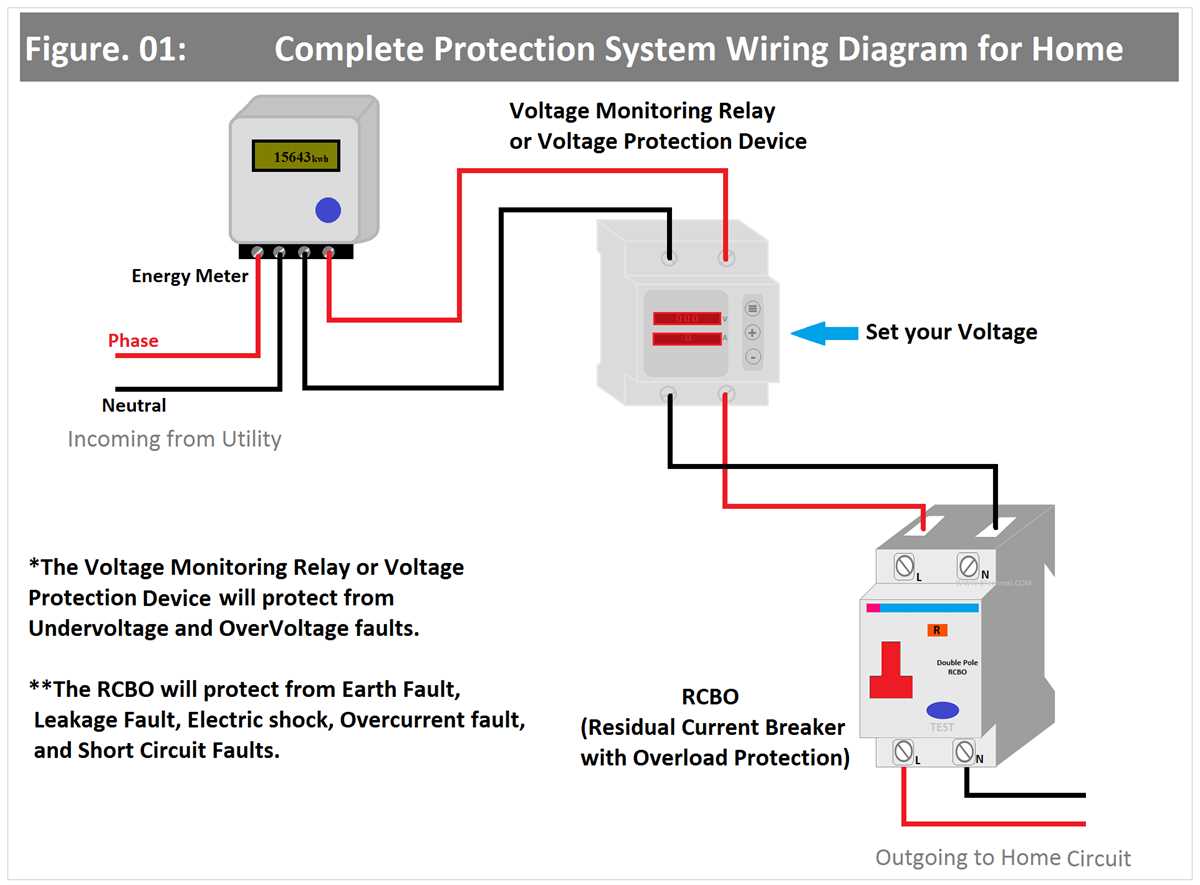
Use a clear circuit layout before installing any cable inside a residential building. Mark the service panel, lighting branches, socket lines, and switching points on paper or in software. A typical dwelling in North America runs on 120/240 V split-phase supply, where lighting and receptacles operate on 120 V while large appliances such as dryers or ranges use 240 V lines.
Plan the power distribution so that each branch line connects to a dedicated breaker in the service panel. Lighting groups commonly use 15-amp breakers with 14-gauge copper conductors, while receptacle groups usually connect to 20-amp protection with 12-gauge conductors. Kitchens, laundry areas, and bathrooms often require separate lines to prevent overload and voltage drop during simultaneous appliance use.
Represent switches, receptacles, junction boxes, and the distribution board with standard symbols. Straight lines indicate conductors, dots mark connections, and parallel lines often represent switches. Clear marking allows a reader to trace power flow from the panel through junction points to lamps or outlets. Accurate circuit mapping reduces installation errors and simplifies later repairs or upgrades.
Include grounding paths for every branch. Copper or green-insulated conductors link outlets, metal boxes, and the service panel grounding bar. Ground-fault and arc-fault protection devices appear on many modern circuits, particularly in wet zones or sleeping areas. A precise layout helps builders, inspectors, and technicians verify load distribution, safety devices, and conductor routing before any cable enters the wall structure.
House Electrical Wiring Diagram Guide with Circuit Layout Symbols and Panel Connections
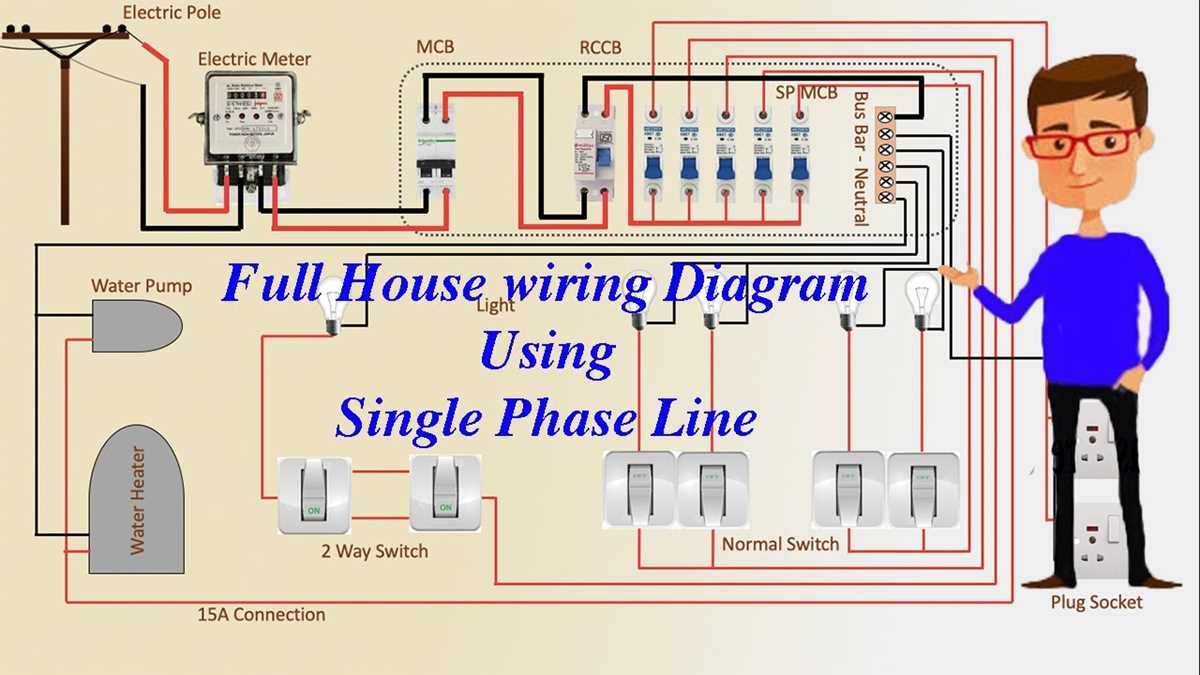
Mark the distribution panel first and trace every branch from this point across the floor plan. Use clear symbols for receptacles, switches, junction boxes, and lighting fixtures. A small circle with two parallel marks often indicates a socket, while an S-shaped mark shows a switch location. Draw conductor paths as straight lines and place connection dots at junction points so that the route from breaker to load can be followed without ambiguity.
Assign breaker ratings and conductor sizes directly on the layout. Lighting circuits usually connect to 15 A protection with 14 AWG copper, while general outlet groups commonly use 20 A breakers with 12 AWG copper conductors. Heavy loads such as electric ranges or central air units run on 240 V lines using 30–50 A breakers depending on equipment demand. Label each branch with its breaker number and load type so that panel identification matches the floor plan.
Include grounding paths and safety devices in the drawing. Each receptacle, metal enclosure, and junction box connects to a grounding conductor that returns to the panel ground bar. Wet locations such as bathrooms, kitchens, garages, and outdoor outlets require GFCI protection, while sleeping areas often use AFCI breakers. Accurate marking of these protection devices allows builders and inspectors to verify safety requirements before cable installation inside walls.
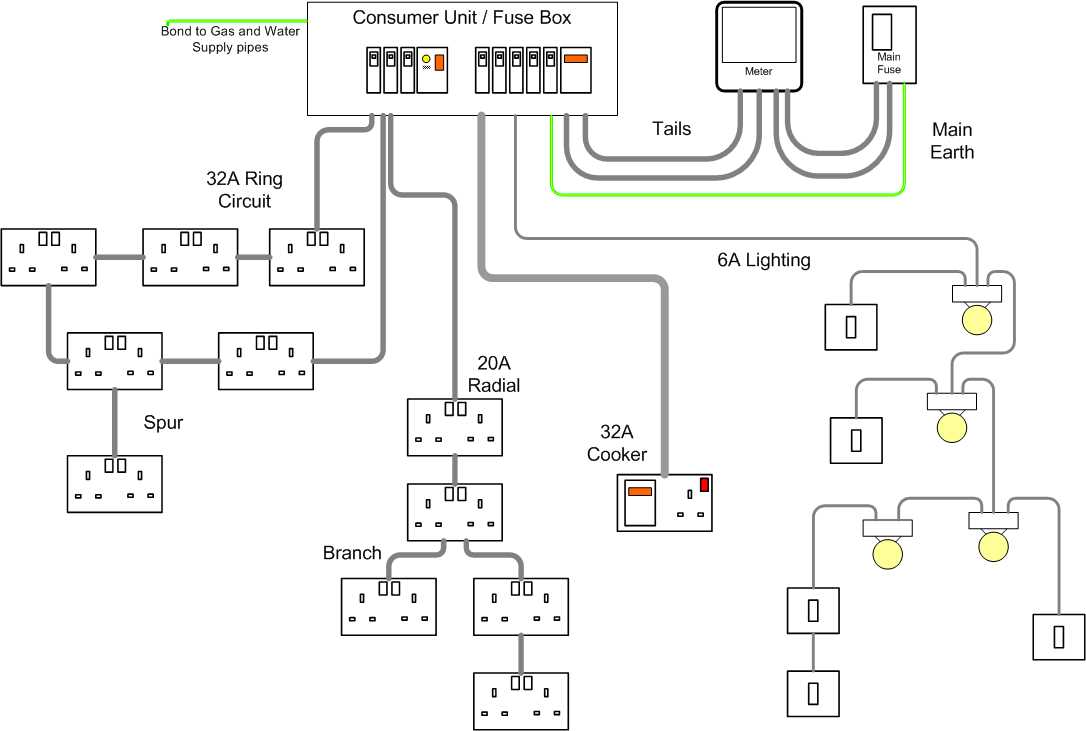
How to Read Symbols and Lines in a House Electrical Wiring Diagram
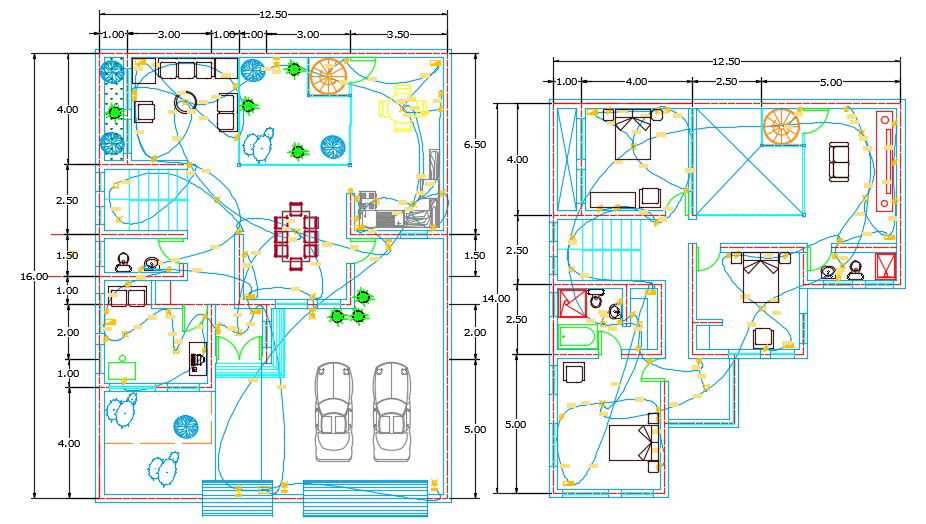
Locate the service panel symbol first and trace each circuit path outward. The panel symbol usually appears as a rectangle with breaker marks and circuit numbers. Every branch leaving this block represents a power path supplying lighting fixtures, receptacles, or appliances.
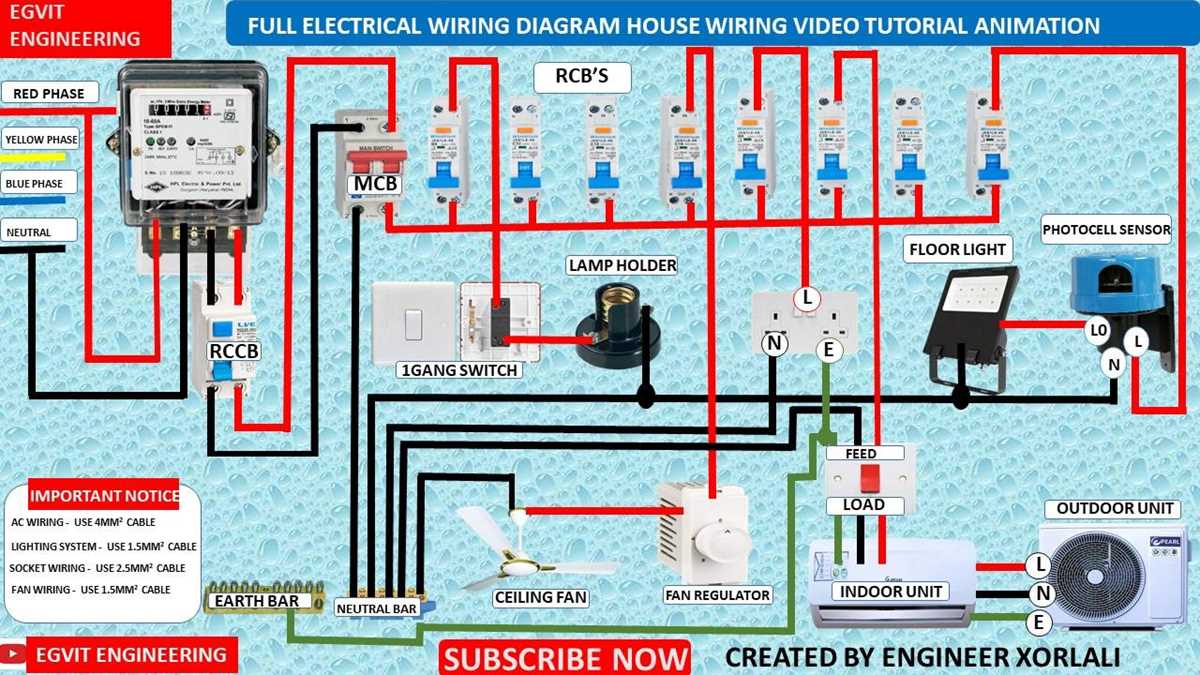
Identify conductor paths by reading straight or angled lines connecting components. A continuous line represents a conductor path between devices. A filled dot at an intersection shows a connection point, while crossing lines without a dot indicate conductors passing without contact.
Recognize common device symbols used in residential power layouts:
- Circle with two parallel lines – receptacle outlet
- Circle with a single letter S – wall switch
- Circle with cross lines – ceiling light fixture
- Small square – junction box
- Rectangle with numbers – breaker panel
Switch symbols often include control paths. A line running from a switch symbol to a lighting symbol shows which fixture the switch operates. Multiple switch marks connected to one light indicate two-way or three-way control.
Follow conductor labeling printed near lines. Many plans show conductor size and cable type such as 14/2, 12/2, or 12/3. The first number indicates American Wire Gauge size, while the second number shows conductor count excluding ground. For example, 14/2 cable contains two insulated conductors plus a grounding conductor.
Check protective device markings near panel circuits. Breaker ratings usually appear beside each branch:
- 15 A – commonly used for lighting groups
- 20 A – general receptacle circuits
- 30–50 A – large appliances such as dryers or ranges
Read the entire layout by tracing energy flow from the panel through conductors, junction points, switches, and finally to the load device. This method prevents confusion when several circuits cross the same area of the floor plan.