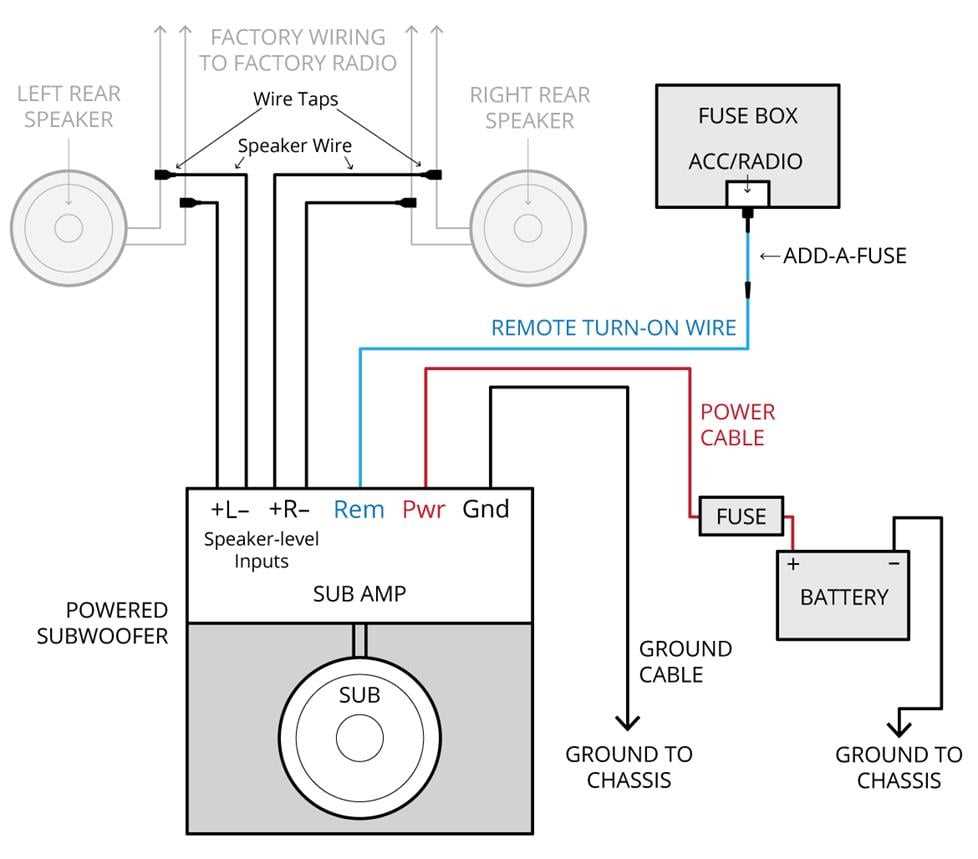
Connect the constant power lead from the vehicle battery, attach the ground line to bare chassis metal, and route speaker pairs to the correct output channels on the head unit. Correct identification of each conductor prevents blown fuses, silent speakers, or noise in the audio system.
Most vehicle audio head units use a standardized color scheme. A yellow lead typically carries constant battery voltage used to retain memory settings. A red lead receives switched power from the ignition key circuit. A black lead connects to chassis ground and completes the electrical return path.
Speaker outputs appear as color pairs. For example, white and white with a black stripe usually serve the front left channel, while gray and gray with a black stripe feed the front right speaker. Green pairs often supply the rear left channel and purple pairs feed the rear right speaker. The striped conductor in each pair acts as the negative terminal.
Use a multimeter set to DC voltage and verify the power leads before connecting the head unit harness. Constant battery supply should read about 12 volts at all times, while the ignition-controlled lead should show voltage only when the key is in the accessory or run position.
Stereo Wiring Diagram With Power Ground and Speaker Connections for Car Audio
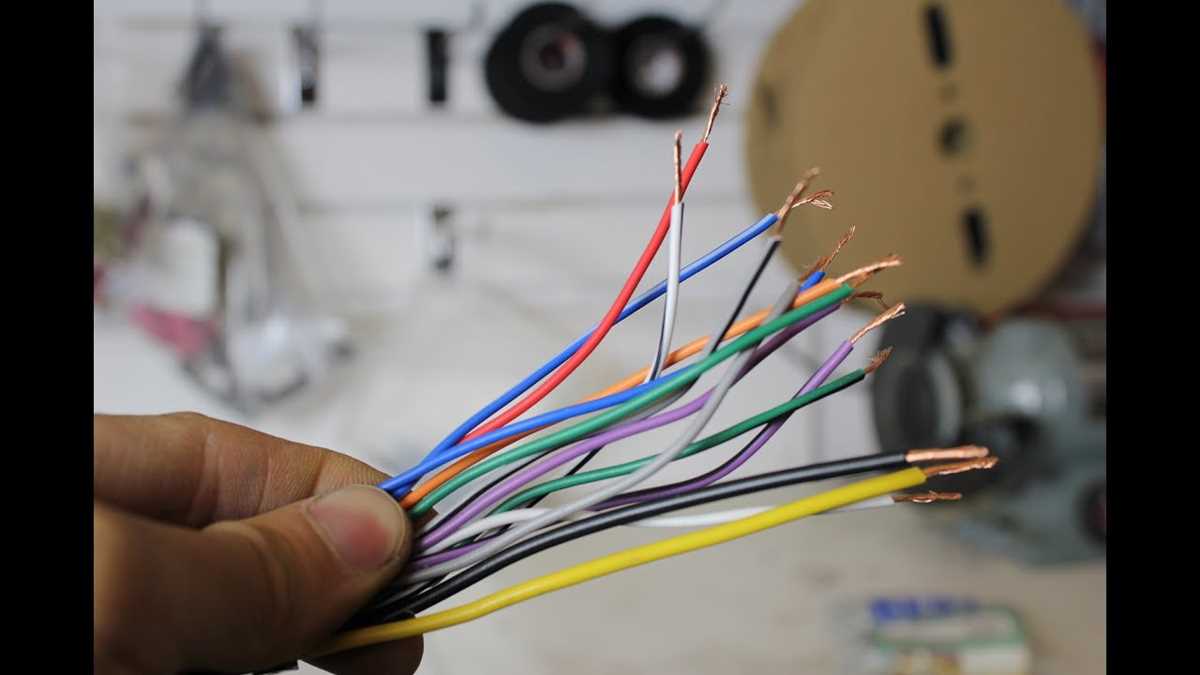
Connect the constant battery lead, ignition-controlled lead, and chassis ground before attaching speaker outputs. The constant supply maintains memory settings in the head unit, while the ignition line activates the receiver when the vehicle key moves to ACC or RUN. A poor ground connection often causes noise, low output level, or sudden resets.
The battery supply conductor usually appears in yellow. This lead runs directly to a fused line connected to the vehicle battery and should measure around 12 volts at all times. The ignition-controlled conductor normally appears in red and receives voltage only when the key position allows accessory power.
Attach the ground conductor to unpainted chassis metal using a ring terminal and a secure bolt. Resistance between this connection and the battery negative terminal should remain close to zero ohms. Loose grounding points create alternator noise that becomes audible through the speakers.
Speaker channel connections
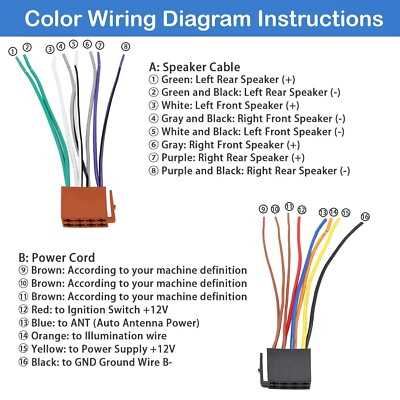
Each speaker channel uses a pair of conductors. The solid color lead carries the positive signal and the same color with a black stripe represents the negative side.
Typical channel color pairs include white lines for the front left speaker, gray lines for the front right speaker, green lines for the rear left speaker, and purple lines for the rear right speaker. Maintaining correct polarity keeps speaker cones moving in the same direction, which preserves bass response.
Route speaker conductors away from high-current vehicle lines such as power cables feeding amplifiers or the alternator harness. Parallel placement with these lines may introduce electrical interference that becomes audible as humming or whine.
Power and antenna connections
Many head units include a blue or blue-white conductor used to activate a powered antenna or external amplifier. This lead supplies a small control voltage once the receiver turns on. Connect it only to devices designed to accept a remote activation signal.
After completing all connections, reconnect the vehicle battery and power the receiver. Verify that each speaker produces sound from the correct channel and confirm that the head unit retains memory settings after the key is removed.
Standard Car Stereo Wire Color Codes for Power Ground and Speaker Channels
Identify each conductor by color before connecting the head unit harness to the vehicle audio system. Most aftermarket receivers follow a common color scheme. A yellow lead carries constant battery supply, a red lead receives ignition-controlled power, and a black lead connects to chassis ground. These three conductors handle the main electrical supply required for the receiver to operate and store memory settings.
Speaker channels appear as color pairs. White and white with a black stripe serve the front left channel, gray and gray with a black stripe feed the front right channel, green and green with a black stripe connect to the rear left speaker, and purple with purple-black pair connect to the rear right speaker. In each pair the solid color acts as the positive signal and the striped conductor carries the negative return.
A blue or blue-white lead usually provides a remote activation signal used by powered antennas or external amplifiers. When the head unit turns on, this line outputs about 12 volts to activate connected equipment. Confirm each color using the harness label or installation manual before attaching connectors.