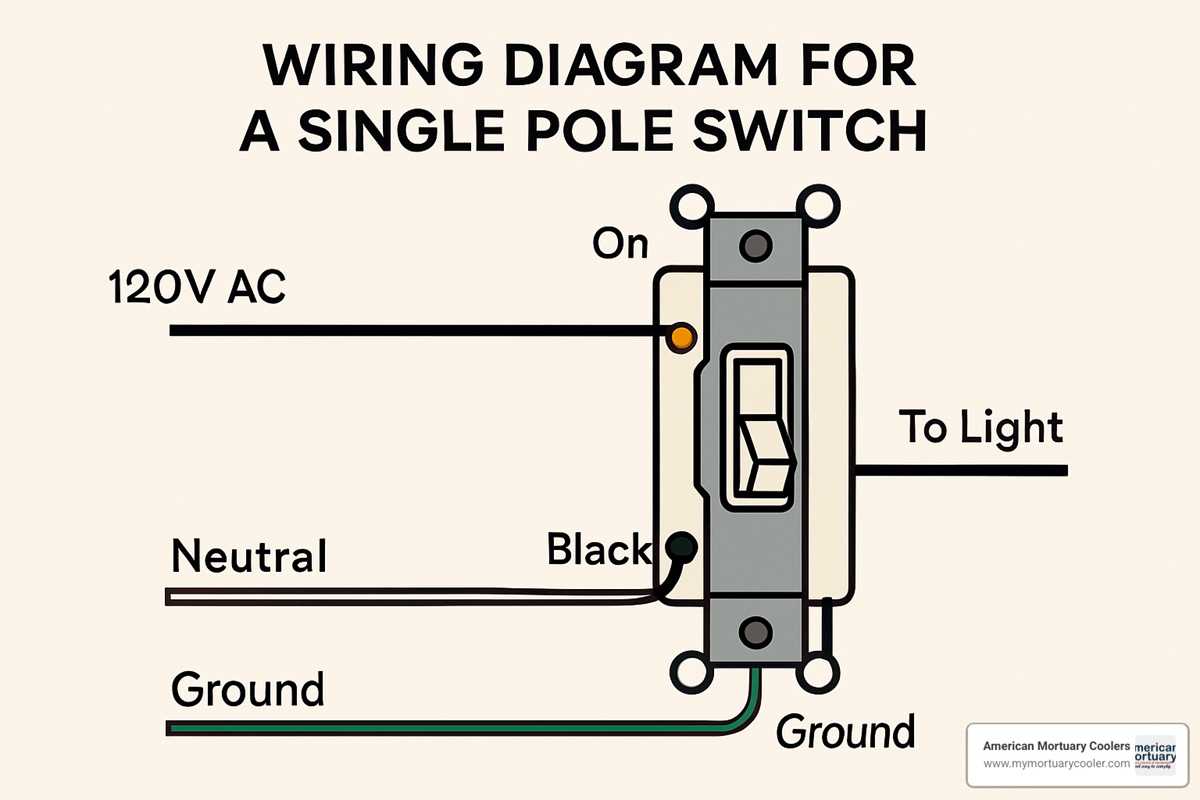
Connect the live conductor to the input terminal and the outgoing line to the load terminal. Ensure proper phase orientation and tighten all screws to manufacturer-specified torque values to maintain stable contact.
Use stranded conductors with crimped ferrules or lugs. This prevents stray strands from shorting and ensures a reliable connection under repeated operation.
Install the device on a firm mounting surface with sufficient clearance. Leave at least 50 mm around the enclosure to allow heat dissipation and access for future adjustments.
Label all terminals and conductors clearly. Include source and destination details to simplify maintenance and avoid confusion when servicing multiple units in the same area.
Test connections using a multimeter before energizing. Verify continuity, phase alignment, and insulation resistance to prevent accidental faults or device damage.
Light Switch Connection Guide
Connect the live conductor to the input terminal and the outgoing wire to the load terminal. Tighten screws to the manufacturer-recommended torque to prevent loose contacts that can cause sparking.
Use stranded cables with crimped ferrules or lugs. This prevents stray strands from touching adjacent terminals and ensures consistent conductivity during repeated operation.
Mount the device on a solid surface with at least 50 mm clearance around it. This allows airflow and makes future adjustments or replacements easier without disturbing other connections.
Label all incoming and outgoing wires clearly.
- Mark source and destination terminals
- Include room or fixture identification
- Note the phase or polarity where applicable
Test all connections before energizing the system. Check for continuity, proper alignment, and insulation integrity to prevent accidental short circuits or equipment damage.
For multiple devices in the same area, maintain consistent orientation and terminal order. This simplifies troubleshooting and ensures uniformity when adding or replacing components in the future.
Selecting the Correct Switch and Cable
Choose a device rated for the expected current load of the room fixture. Exceeding the rating can cause overheating and reduce the lifespan of both the control device and connected components.
Select cable with sufficient cross-sectional area. For standard 10 A circuits, use 1.5 mm² conductor; for 16 A circuits, 2.5 mm² or larger to minimize voltage drop and heat buildup.
Prefer stranded copper conductors for flexibility in tight installations. Solid conductors may break at bends or under repeated handling, especially near terminal screws.
Check insulation type according to the installation environment. Use PVC for dry indoor locations and XLPE or rubber-sheathed conductors in damp areas or where mechanical protection is required.
Match device terminals to conductor size. Overly small terminals may crush or cut the conductor, while oversized terminals may leave poor contact causing arcing or intermittent operation.
Consider the switching mechanism type based on frequency of operation. Toggle or rocker types handle regular daily use, while push-button variants suit low-use or decorative installations.
For multiple control points, choose multi-gang devices and ensure consistent labeling. This reduces installation errors and makes future maintenance straightforward without confusion.
Verify compliance with local standards and ratings. Devices marked with certification labels confirm tested electrical safety, ensuring reliable performance and reducing risk of faults or fire hazards.