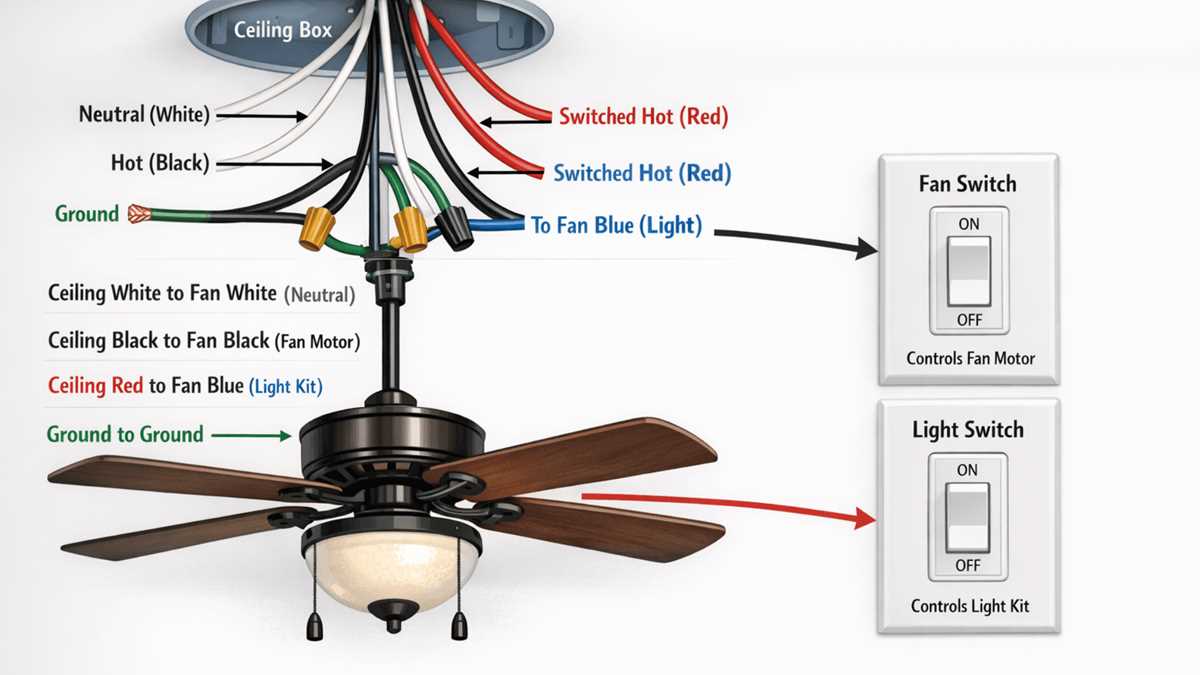
Turn off power at the circuit breaker and check the control unit terminals before reconnecting any conductors. A typical rotary or pull-chain control inside an overhead air mover uses four contact points marked L, 1, 2, and 3. The line conductor from the household power source normally attaches to L, while the remaining contacts route current to different motor speed leads.
Color identification helps prevent connection errors. In many residential installations, the incoming live conductor appears black, while speed leads from the motor housing may appear gray, brown, or purple. The neutral return path is commonly white and connects directly through the junction box rather than the pull-chain control. Grounding conductors are usually green or bare copper and must stay bonded to the metal mounting bracket.
A small plastic module with a pull chain often fails after several thousand operating cycles. Replacement units rated 3A–6A at 125V or 250V match most residential air circulators with three speed levels. Matching terminal numbers with the motor leads ensures the correct sequence of low, medium, and high rotation without overheating the windings.
Before reconnecting conductors, photograph the existing layout and label each lead with tape. This step prevents confusion if multiple colored leads exit the motor housing. Tight screw terminals or push-in contacts secure each conductor; loose connections can cause heat buildup or irregular speed control.
Ceiling Fan Switch Wiring Diagram With Terminal Layout and Wire Color Guide
Disconnect power at the breaker and identify the contact points on the pull-chain control before attaching conductors. Most units inside an overhead air circulator contain four terminals marked L, 1, 2, and 3. The incoming live conductor from the house supply attaches to L, while the remaining contacts route current to motor speed leads.
Check the terminal markings stamped into the plastic housing. The contact labeled L acts as the power input. Terminals 1, 2, and 3 connect to separate windings that control rotation speed. The pull-chain mechanism changes internal contact positions each time the chain is pulled.
Typical conductor color identification found in residential air movers:
- Black – incoming live conductor from the branch circuit
- Blue – lighting kit lead if the fixture includes a lamp
- Gray or Purple – medium speed motor lead
- Brown – low speed motor lead
- White – neutral return path connected in the junction box
- Green or bare copper – grounding conductor attached to the mounting bracket
Correct terminal placement prevents reversed speed order. Many three-speed air movers use the following contact arrangement:
- Power line conductor → terminal L
- High speed lead → terminal 1
- Medium speed lead → terminal 2
- Low speed lead → terminal 3
Pull-chain controls used in residential installations usually carry ratings between 3A and 6A at 125V or 250V AC. A device with lower current capacity can overheat during extended motor operation. Match the rating printed on the replacement unit with the original component removed from the canopy housing.
Label each conductor with masking tape before removal and photograph the terminal layout inside the mounting cup. Air circulation units often contain multiple similar colored leads exiting the motor casing; clear labeling prevents misplacement during reassembly and avoids irregular speed selection.
How to Identify Ceiling Fan Switch Terminals L 1 2 3 and Match Them With Fan Wires
Turn off the breaker and inspect the pull-chain control module inside the canopy before disconnecting any conductors. Most rotary chain controllers used in overhead air circulators contain four contacts labeled L, 1, 2, and 3. The contact marked L receives the incoming live conductor from the branch circuit.
Understanding the terminal markings
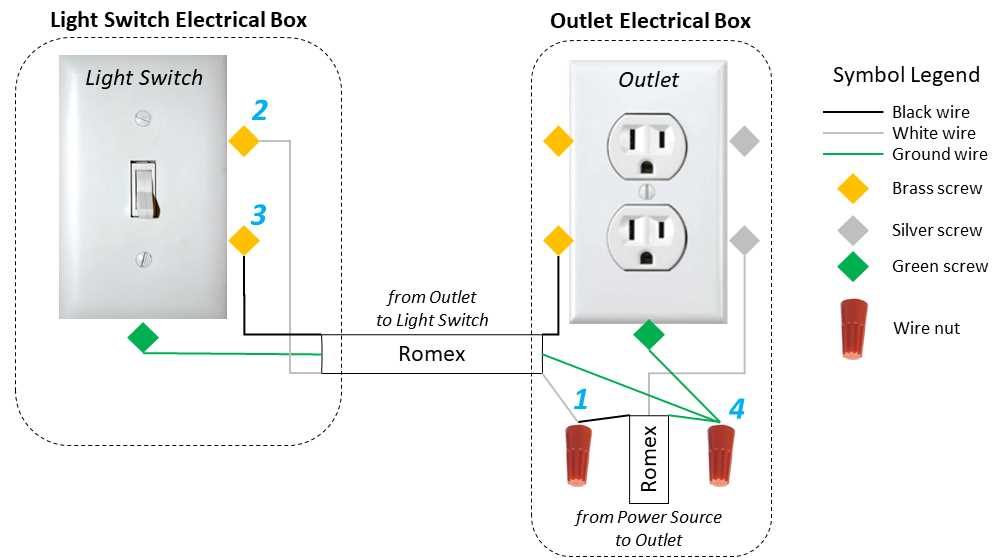
The remaining three contacts distribute current to separate motor windings that produce different rotation speeds. Each pull of the chain rotates the internal cam and changes which winding receives power. Standard layout in many residential units follows this order:
L – power input from the household supply
1 – high speed motor lead
2 – medium speed motor lead
3 – low speed motor lead
Matching conductors from the motor assembly
Several colored leads exit the motor housing and must align with the numbered contacts. Typical color combinations used by many manufacturers include black, gray, brown, and purple. The incoming line conductor from the building supply is usually black and connects to terminal L.
Speed conductors from the motor assembly normally follow this pattern:
Black or red → high rotation lead connected to terminal 1
Gray or purple → medium rotation lead connected to terminal 2
Brown → low rotation lead connected to terminal 3
Before removing the old control unit, photograph the contact layout and attach small labels to each conductor. Motor housings often contain several similar colored leads, and clear identification prevents reversed speed order after installing the replacement pull-chain controller.