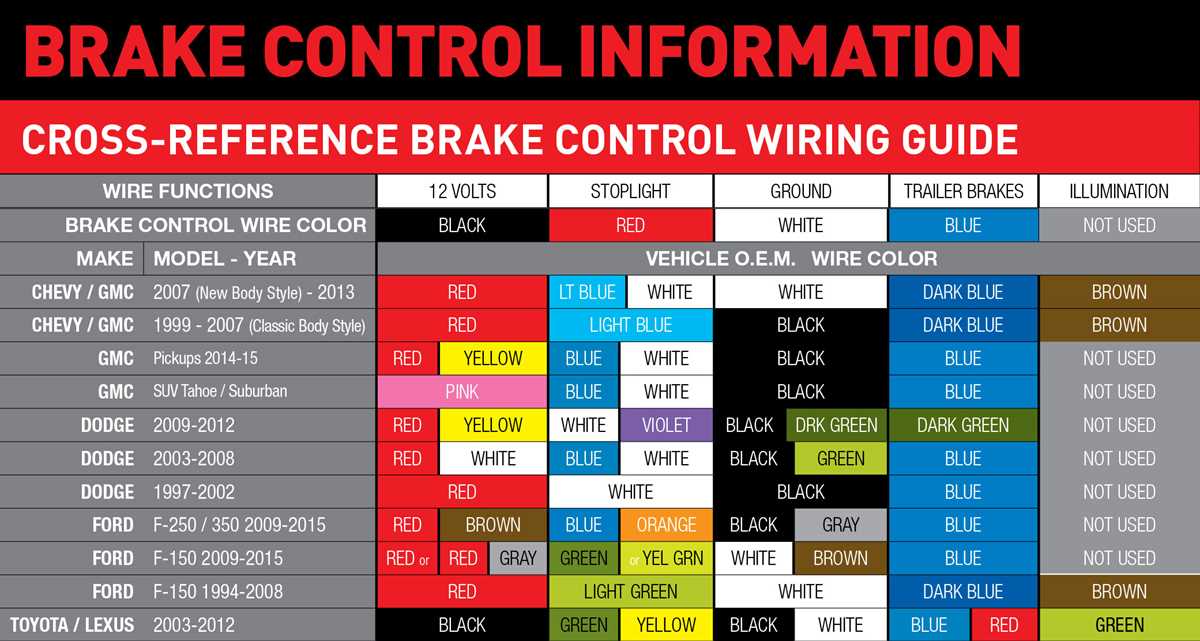
Connect the brake control unit directly to a fused battery line and a solid chassis ground. This setup supplies steady power for the braking module that regulates electric brake magnets on a towed vehicle. A dedicated 12-gauge conductor from the battery through a 20–30 amp circuit breaker is commonly used in many towing systems.
The braking module inside the vehicle receives a signal from the stop-lamp circuit. When the driver presses the brake pedal, this signal triggers the unit to send controlled current toward the electric brake magnets located on the axles of the towed load. The amount of current varies according to gain settings and vehicle deceleration.
Use a seven-pin connector at the rear of the vehicle for most modern towing setups. One pin carries brake output, another supplies auxiliary battery power, while separate pins handle ground, running lights, and turn signals. The brake output line normally uses blue insulation, the ground path white, and the battery feed black.
A clear connection plan helps trace each conductor from the dashboard braking unit to the rear connector socket. Lines on this plan represent conductors linking the battery, brake pedal signal source, chassis ground, and the plug that feeds the electric brake magnets on the towed load.
Trailer Controller Wiring Diagram With Brake Signal Power and Ground Connections
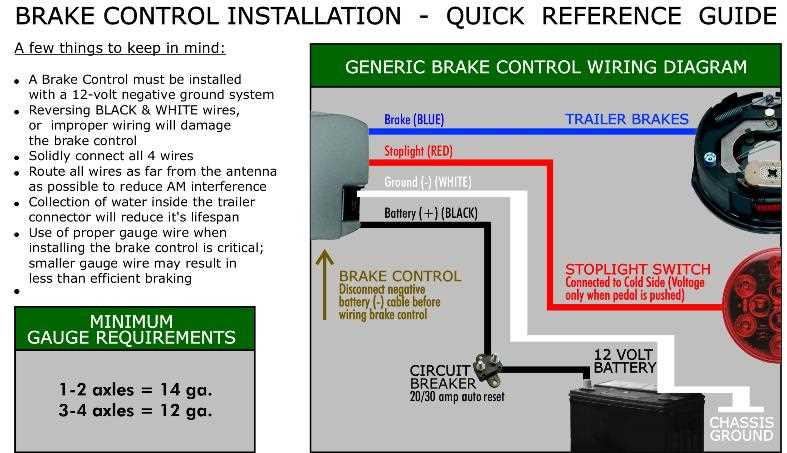
Run a dedicated power line from the vehicle battery through a 20–30 amp circuit breaker to the cab-mounted brake control unit. Use 10 or 12 gauge copper conductors so the module can supply stable current to electric brake magnets on the towed load. The ground path should attach directly to a clean chassis point using a short white conductor and a bolted connection.
Brake Signal Input
Tap into the stop-lamp circuit near the brake pedal assembly. This line sends a trigger signal whenever the pedal is pressed. The braking module reads that signal and sends proportional current toward the rear connector. The output conductor often uses blue insulation and travels from the cab unit to the rear plug where it connects to the electric brake magnets.
Rear Connector Layout
Use a seven-pin socket at the rear bumper so multiple signals reach the towed load through one harness. Typical pin roles include ground, brake output, auxiliary battery feed, left and right turn lamps, tail lamps, and reverse lights. The brake output line links the cab module with the magnet assemblies mounted on the axle hubs, allowing braking force to match pedal pressure.
How to Connect Brake Controller Power Ground and Stop Light Signal
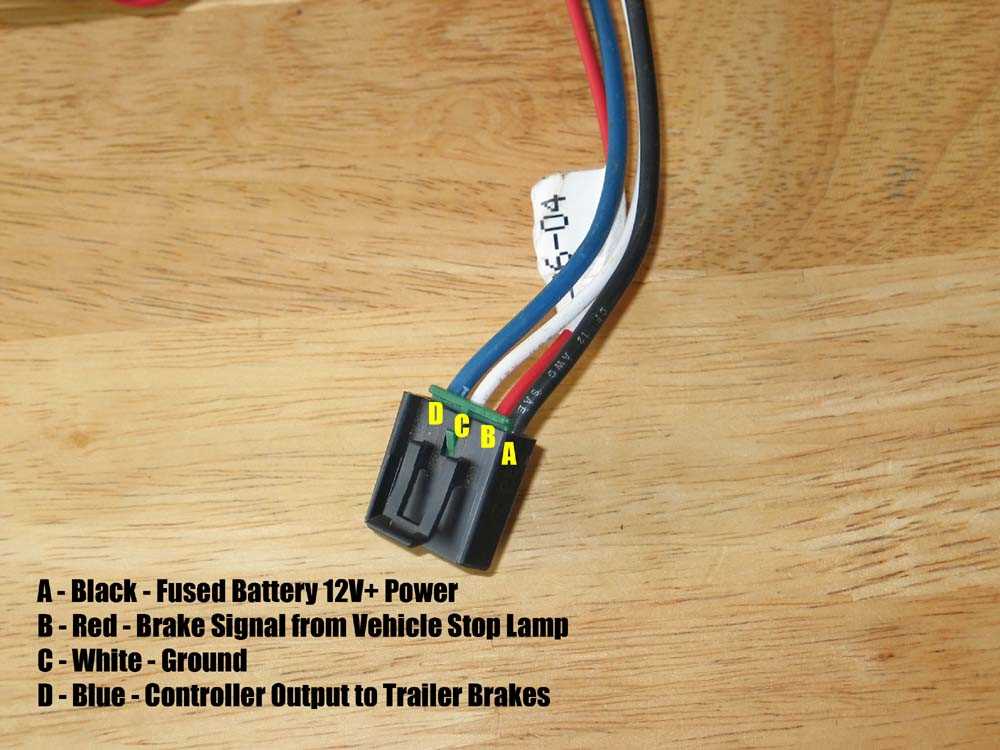
Run a direct power feed from the vehicle battery to the cab brake module through a 20–30 amp circuit breaker. Use 10 or 12 gauge copper conductors so the unit can deliver enough current to the electric brake magnets mounted on the towed load axles. Route the conductor through protective loom and avoid sharp metal edges under the dashboard and along the firewall.
Ground Connection
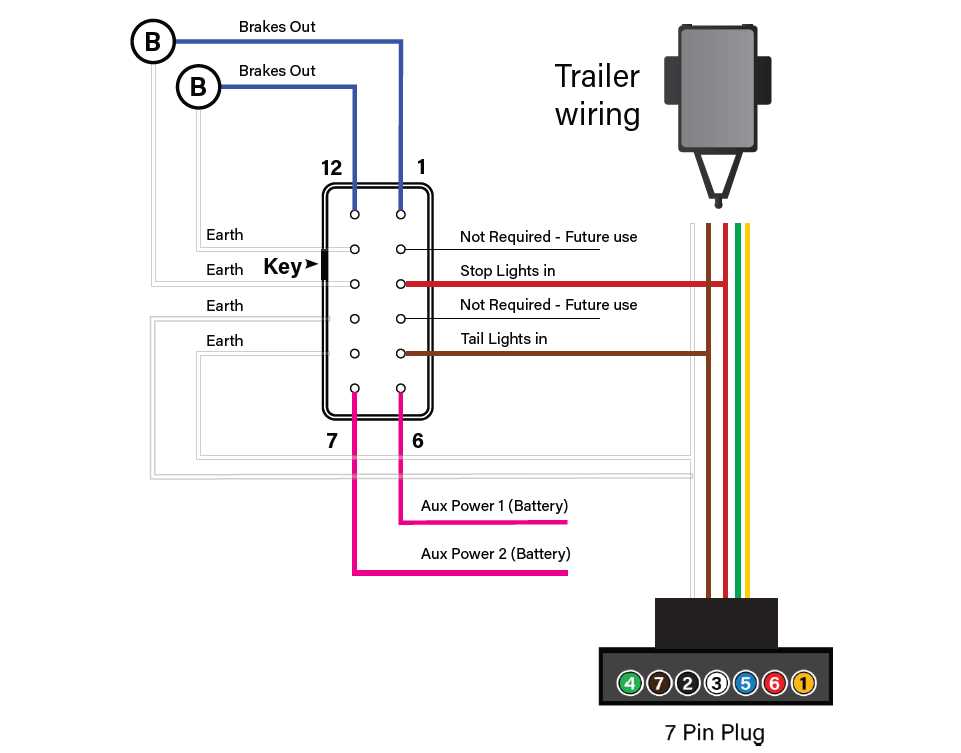
Attach the ground lead to a clean chassis point close to the brake module. Remove paint or rust from the metal surface, then secure the ring terminal with a bolt and star washer. A poor ground path causes weak braking response and unstable current output to the axle brake magnets.
Stop Light Signal Connection
Locate the brake pedal light circuit under the dashboard and connect the trigger lead from the cab brake module to this conductor. This line becomes active when the brake pedal is pressed. The module detects this signal and sends proportional current toward the rear connector.
Route the brake output conductor from the cab module to the rear socket used by the towed load harness. Blue insulation commonly marks this line in many towing installations. The conductor carries regulated current that activates the brake magnets mounted inside the wheel hubs.
Test the system with a multimeter after installation. Confirm battery voltage reaches the cab module, check continuity through the ground path, and verify that the brake output line sends variable voltage when the pedal is pressed.