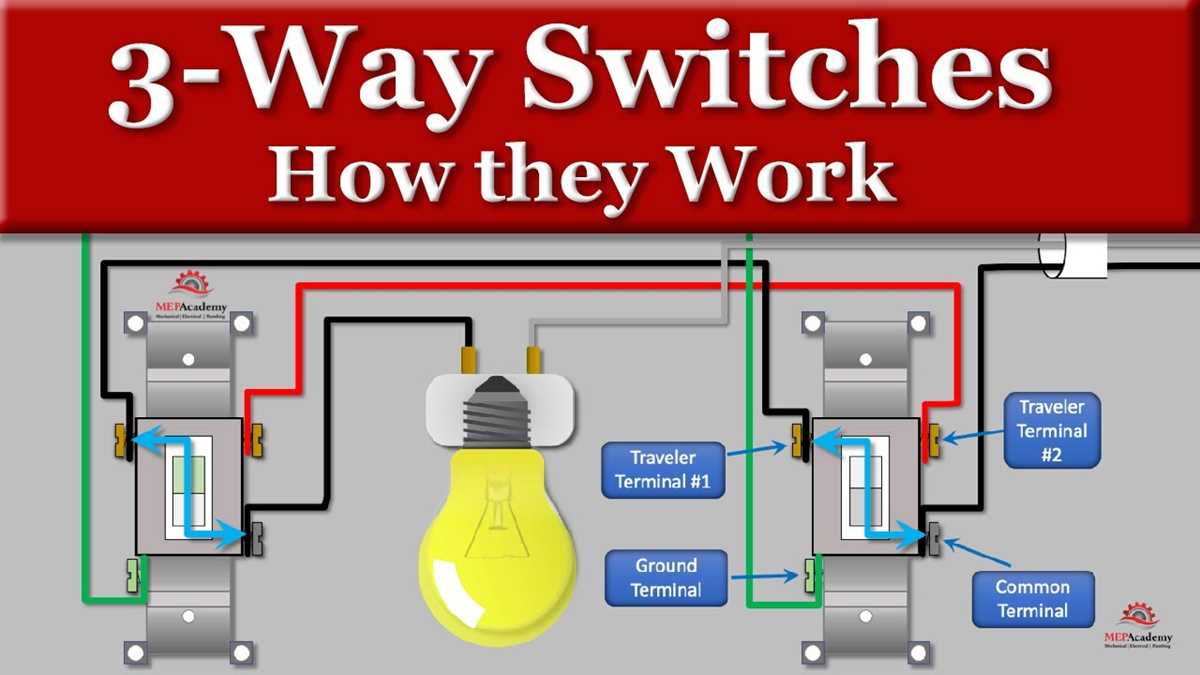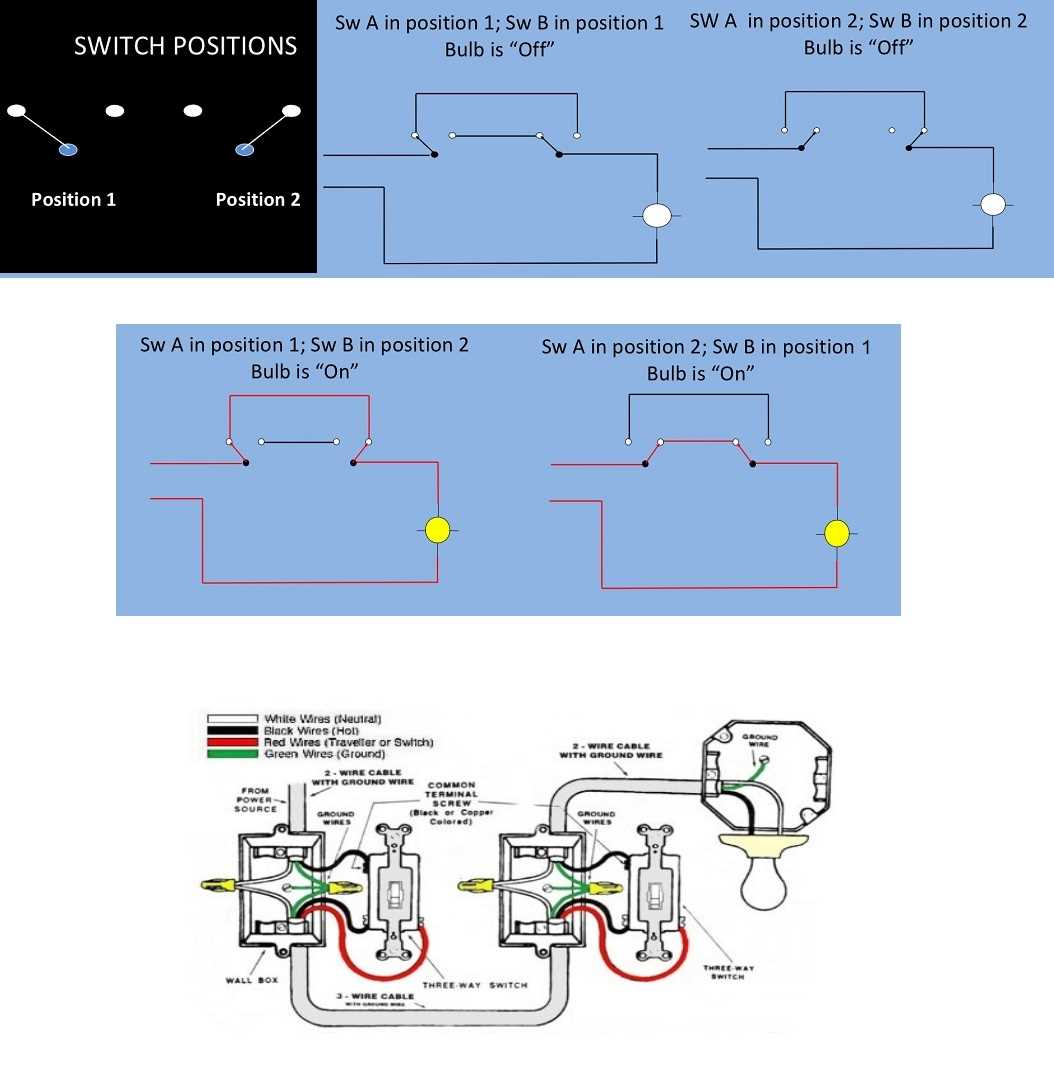
Use a two-location lighting control circuit whenever a lamp must be operated from separate spots such as the bottom and top of a staircase or at both ends of a corridor. The recommended arrangement connects a line conductor to the common terminal of the first control unit, routes two traveler conductors between both control units, and sends the load conductor from the second unit to the luminaire. This configuration lets either control point change the state of the lamp without affecting the physical position of the other lever.
A reliable connection scheme typically uses 14/3 or 12/3 cable in North American installations: black for line or load, red and white for traveler conductors, plus a bare or green grounding conductor. The white conductor must be re-identified with colored tape if it functions as a traveler rather than a neutral. Inside each device box, traveler wires attach to the paired brass terminals, while the darker screw marks the common contact. Ground conductors should be bonded to the metal box and device yoke.
Careful conductor routing reduces confusion during installation. Feed power into the first control box, connect travelers between the two devices, and route the load conductor toward the lamp fitting. This layout keeps splices minimal and simplifies troubleshooting. If voltage supply is 120 V, verify continuity and grounding before energizing the circuit, and label conductors clearly to avoid misidentifying the common contact during maintenance.
Dual-Location Light Control Circuit Layout
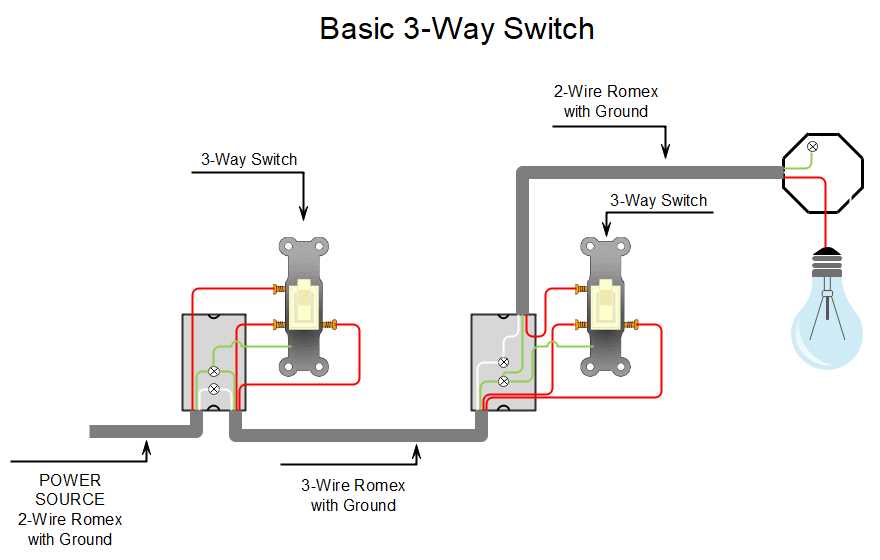
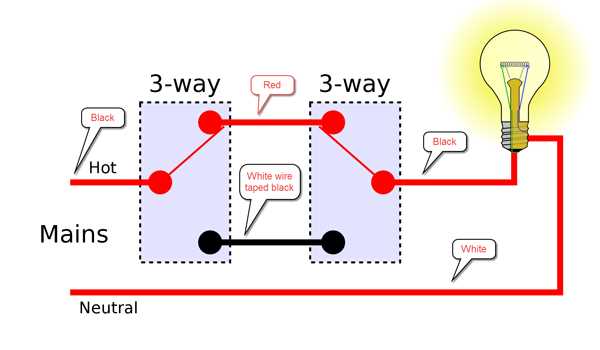
Connect the phase conductor to the common terminal on the first control unit, then route two traveler conductors between both control units and attach them to the paired traveler terminals. The lamp lead connects to the common terminal of the second control unit, while neutral runs directly to the luminaire. Use 14/3 or 12/3 cable (line, neutral, ground plus two travelers) and maintain consistent color logic–black for line feed, red for traveler, white for neutral, bare or green for ground.
- Power feed (black) → common terminal on control unit A
- Traveler 1 (red) → traveler terminal A1 → traveler terminal B1
- Traveler 2 (re-identified white or black) → traveler terminal A2 → traveler terminal B2
- Common terminal on control unit B → lamp hot lead
- Neutral conductor → directly to lamp neutral
- Ground conductors → bonded to both device boxes and terminals
Use screw terminals rather than push-in contacts; torque typically 14–18 in-lb depending on manufacturer specifications. Cable runs longer than 20 m benefit from 12-gauge copper to reduce voltage drop when the luminaire load exceeds 200 W. Inside each device box, keep at least 15 cm of free conductor length for maintenance access. If a white conductor functions as a traveler rather than neutral, mark both exposed ends with red or black electrical tape to prevent misidentification during service. Mount the first control unit close to the supply entry point to minimize conductor splices, and place the second near the luminaire route to shorten the hot lead segment. Ground continuity must pass through the metal box using a bonded pigtail secured with a #10-32 green screw. Continuous testing with a multimeter–checking continuity between traveler terminals while toggling each control unit–confirms proper alternating current path selection for the luminaire.
How to Identify Traveler, Common, and Ground Terminals in a Three Way Switch Wiring Diagram
Locate the terminal with a darker screw; it marks the common connection that carries the line feed or the conductor leading to the lamp. On most control devices this screw is black or dark bronze, positioned slightly apart from the two brass screws used for traveler conductors. Inspect the body of the device: manufacturers often emboss “COM” near this terminal. The pair of lighter brass screws sit on the opposite side and connect the two traveler conductors that alternate current paths between the paired control units. If the device was removed earlier and conductor colors are unclear, trace the cable: the wire tied to the dark screw usually connects to either the power source cable or the cable going to the lighting load.
The ground terminal appears as a green screw attached to the metal strap or frame of the device. A bare copper or green-insulated conductor connects here and never shares a terminal with current-carrying wires. When inspecting an installation drawing, the grounding conductor is shown attached to the device frame rather than to the traveler pair or the common node. Traveler terminals typically appear in a mirrored pair on one side of the device body, each accepting a brass screw; these carry alternating continuity between the two control units depending on lever position. Use a continuity tester when identification is uncertain: toggling the control will shift continuity between the two brass terminals while the dark screw remains isolated from that pair except through the internal mechanism.