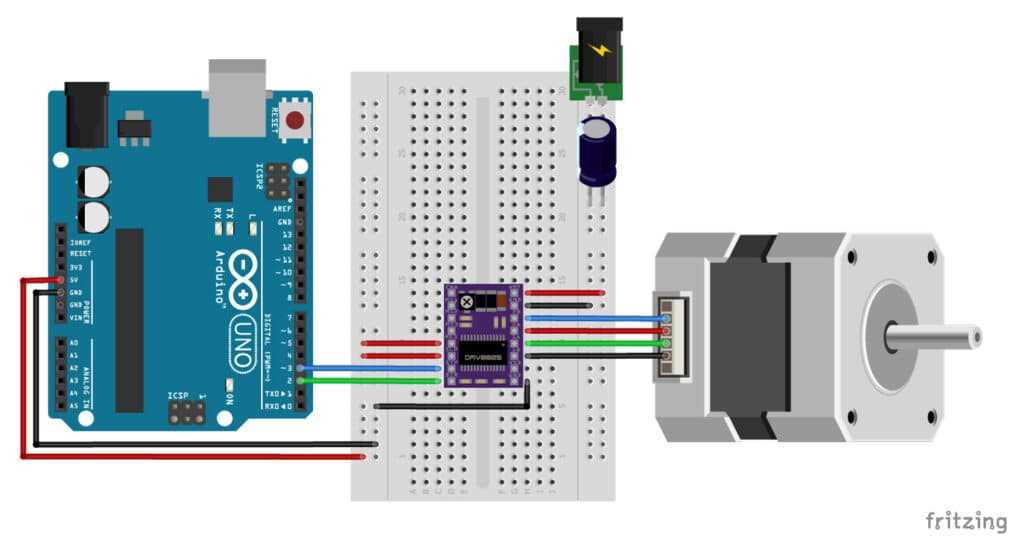
Identify each coil carefully before attaching leads to the driver. Use a multimeter to measure resistance and confirm which wires belong to the same phase, preventing short circuits and incorrect sequencing.
Separate unipolar and bipolar connections. Unipolar motors have a center tap on each coil, while bipolar types do not. Connect the center taps or omit them according to the motor type to ensure proper current flow and step accuracy.
Label each lead with colored tape or markers. This avoids misconnection during installation or maintenance and helps maintain correct phase order for precise rotation.
Check insulation and wire condition before applying voltage. Replace damaged or frayed conductors to prevent arcing or overheating, which can damage both the motor and driver circuitry.
Test each phase individually with low voltage before full operation. Energize one coil at a time and observe rotor movement to confirm proper connection and sequence before integrating with control software or drivers.
Motor Connection Guide
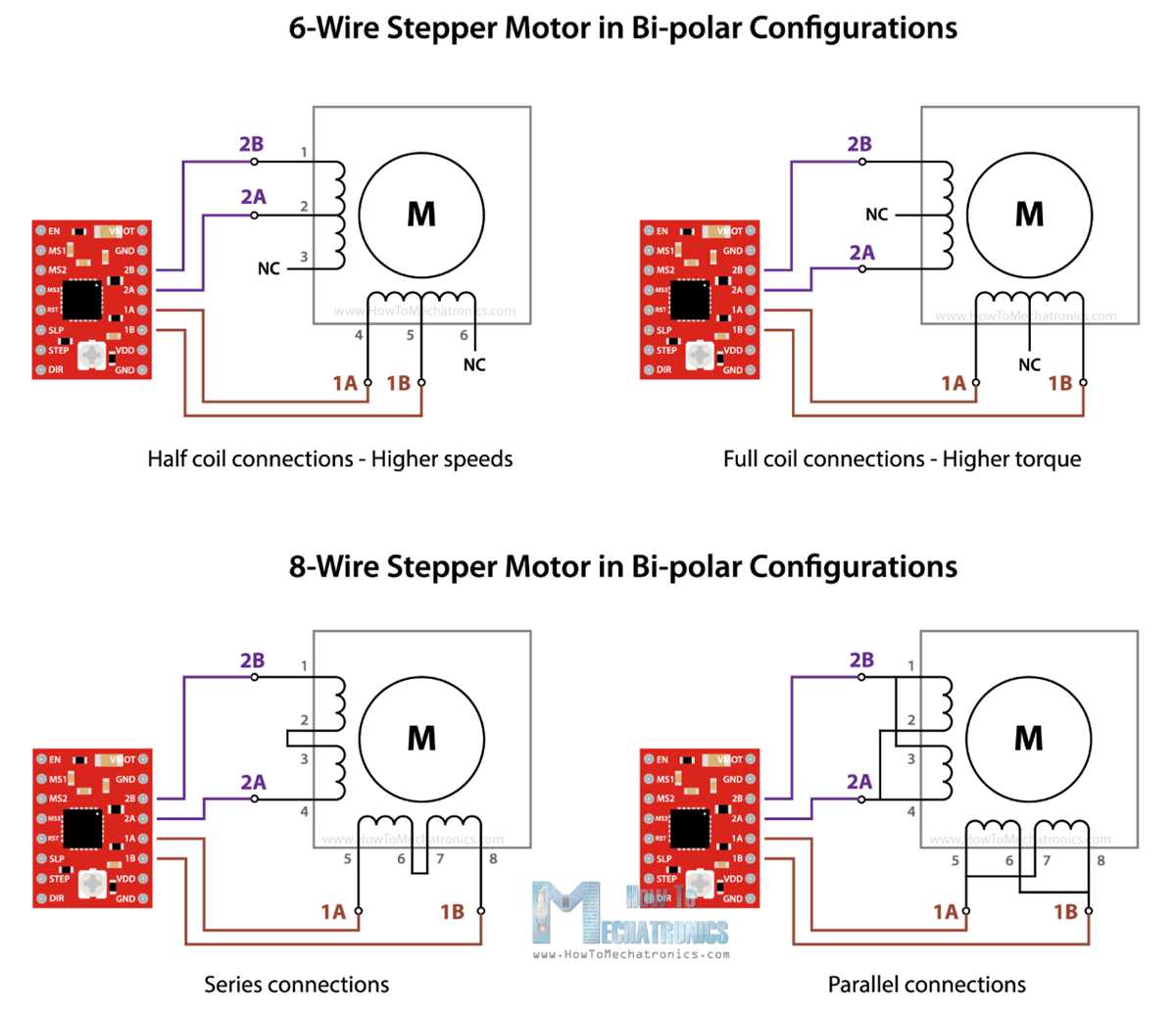
Identify each coil before connecting to ensure correct phase order. Measure resistance between leads to determine pairs that belong to the same coil and avoid incorrect sequencing that can reverse rotation.
Separate unipolar and bipolar types based on the presence of center taps. For unipolar motors, connect center tap wires to the designated supply, while bipolar motors require only the two ends of each coil. Correct identification prevents overheating and skipped steps.
Step-by-Step Connection
- Label each wire using colored tape to match coil pairs.
- Connect one coil at a time to the driver output and verify rotor response.
- Repeat for remaining coils, maintaining phase order as indicated by resistance measurements.
- Secure all connections with terminal screws or solder to prevent loose contacts during operation.
- Double-check polarity and continuity with a multimeter before applying full voltage.
Test rotation carefully with low current first. Observe full range of motion and adjust phase sequence if the rotor turns backward or vibrates. This ensures precise control for subsequent automated movement.
Maintenance and Safety
- Inspect insulation for wear and replace damaged wires.
- Keep leads organized and strain-free to prevent mechanical stress.
- Apply dielectric grease to prevent corrosion on exposed terminals.
- Label phases permanently for future maintenance and troubleshooting.
Proper connections maintain accuracy, prevent driver faults, and extend motor life.
Identifying Coils and Phase Terminals
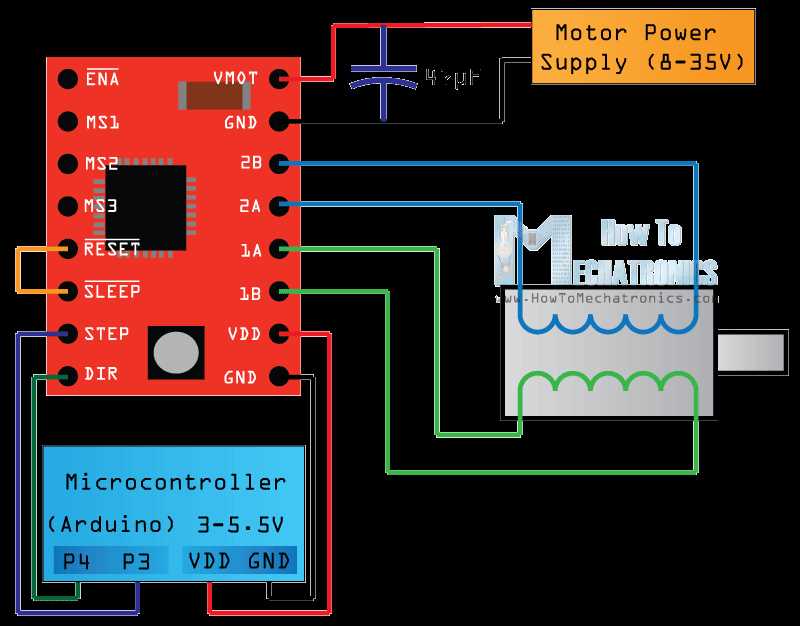
Measure resistance between leads to determine which wires belong to the same coil. Leads with low resistance between them form one coil, while higher resistance indicates separate phases. Correct identification ensures proper rotation and prevents phase mismatch.
Label each coil pair immediately after identification using colored tape or markers. This preserves phase order during installation and simplifies troubleshooting for multi-phase motors with multiple coils.
Verify continuity and polarity before connecting to the driver. Use a multimeter to confirm that each terminal pair completes a circuit without shorts. Ensuring accurate phase connections prevents skipped steps and maintains precise control during operation.