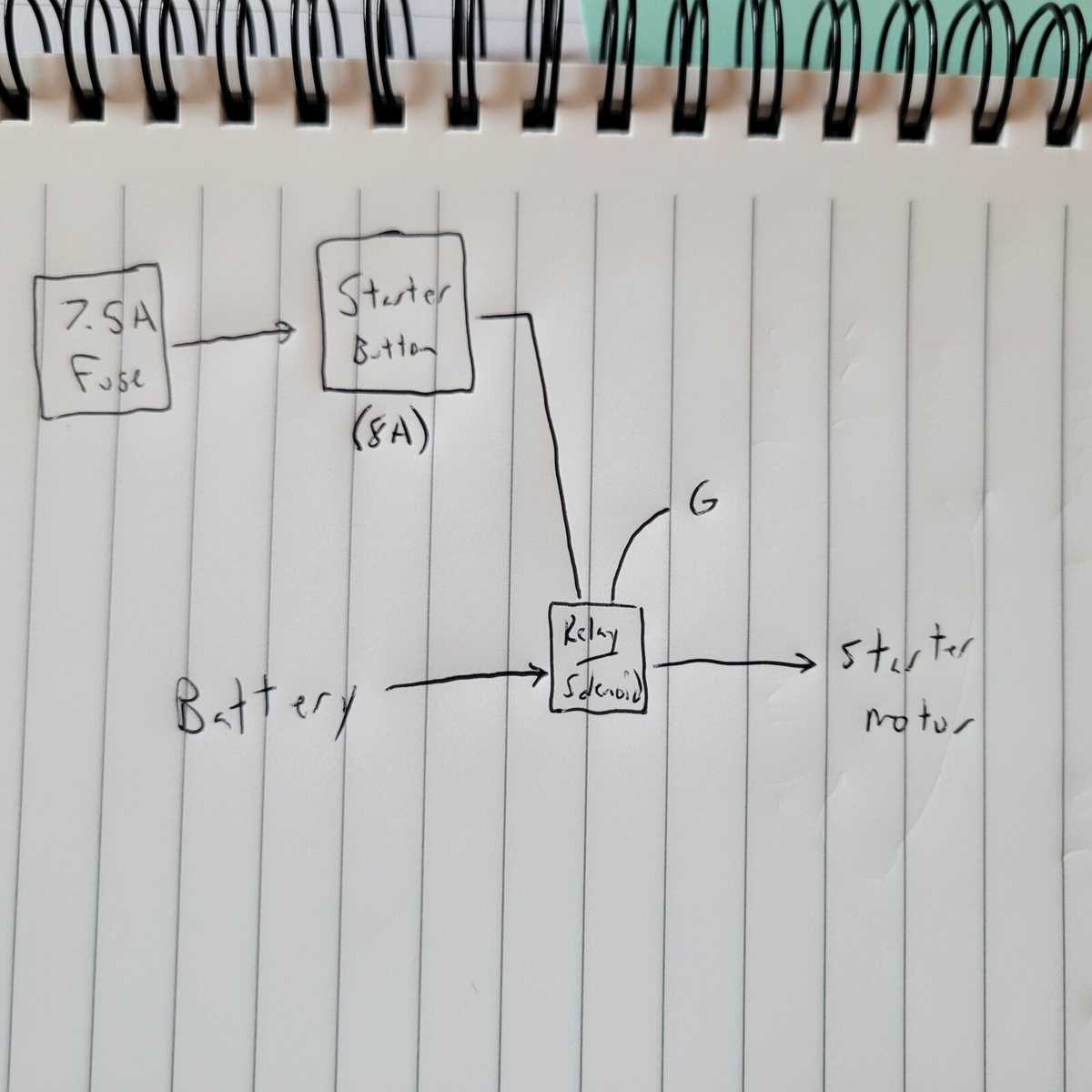
Ensure power flow is consistent by verifying all terminal points are clean and secure. Use a multimeter to check continuity before linking the main activation lines to the control unit. Loose contacts can prevent the engine from engaging properly and may cause intermittent failures.
Label each line according to function to prevent misconnection between power, ground, and signal paths. Modern ignition modules often have multiple feed inputs; keeping these organized avoids damage to the solenoid or control electronics. Use color-coded sleeves or tags for clarity.
Maintain proper distance between high-current paths and sensitive signal wires. Crossed or closely packed cables can induce voltage spikes or electromagnetic interference, leading to false triggering or delayed engine engagement. Routing lines along separate channels reduces risk.
Test the activation sequence under controlled conditions before full operation. Apply momentary voltage to the control terminals and monitor the engine’s response. Confirm that the solenoid actuates and disengages as expected to prevent premature wear or starter coil overheating.
Starter Relay Electrical Connections and Layouts for Vehicle Systems
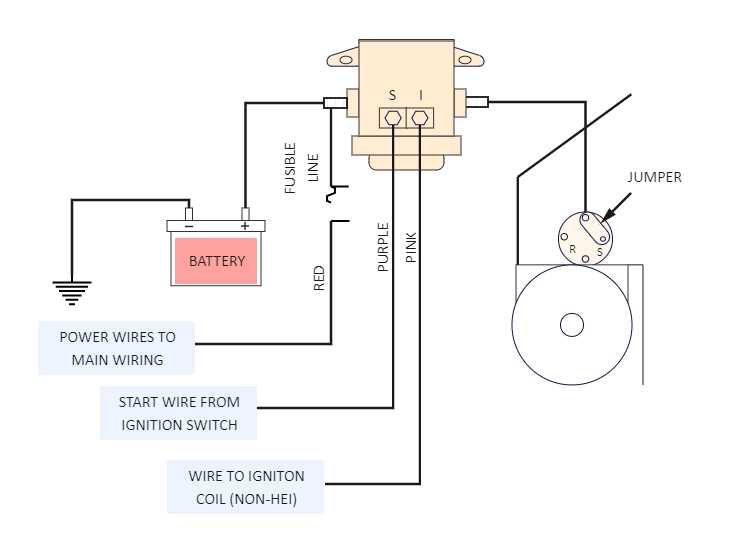
Connect the main power feed directly to the control unit using heavy-gauge cable. Ensure the ground path is short and secure to prevent voltage drop during engine activation. Loose terminals or corroded contacts can lead to inconsistent engagement of the solenoid.
Organize signal and actuation lines separately from high-current paths. Use insulated routing channels to prevent electromagnetic interference. A recommended layout includes:
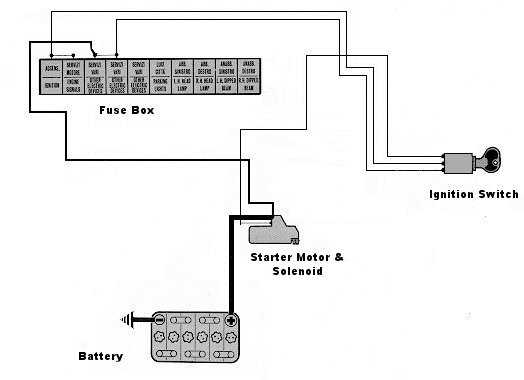
- Main battery input to solenoid terminal
- Ignition switch signal to coil input
- Accessory line isolation for safety circuits
This configuration minimizes cross-talk and improves reliability during repeated engine starts.
Test each connection individually before final assembly. Apply momentary voltage to the activation terminals and verify solenoid movement. Measure resistance across all terminals to confirm proper continuity and ensure that the control module receives accurate feedback from each line.
Identifying Relay Terminals and Their Functions
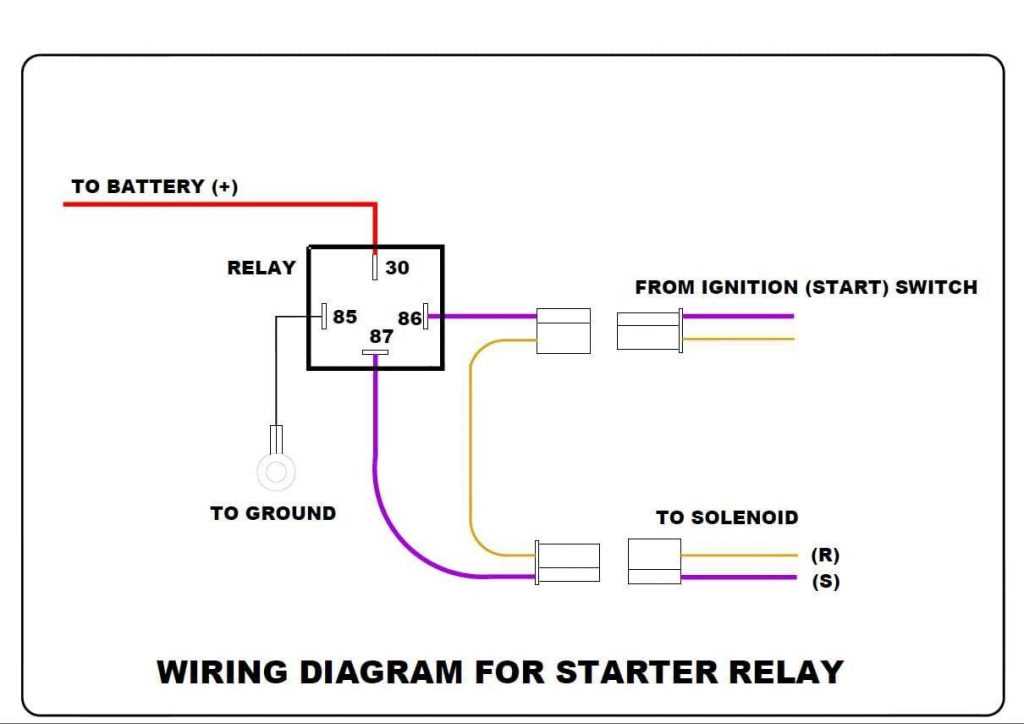
Begin by locating the coil terminals, typically marked as 85 and 86 on most automotive units. Connect a low-voltage source to these points to test activation; a clicking sound confirms the internal switch movement. These terminals control the electromagnetic field that closes the high-current path.
High-current terminals are usually numbered 30 and 87. Terminal 30 serves as the input from the battery or main power source, while 87 delivers current to the actuator or load. Ensure connections are secured with corrosion-resistant connectors to prevent voltage loss during repeated use.
Some designs include a secondary output marked 87a, which provides a normally closed path. This terminal allows circuits to maintain continuity when the coil is not energized. Verify its function by measuring voltage when the control signal is absent.
Inspect the physical layout of terminals before installation. Identify spacing, pin thickness, and any isolating barriers to prevent accidental shorting. Manufacturers often include a molded base indicating terminal function, which can prevent misconnection during assembly.
Use a multimeter to confirm each terminal’s resistance and connectivity. The coil terminals should show low resistance, while the high-current terminals are open until the coil is activated. This ensures the internal contacts are functioning correctly before integration into the vehicle system.
Label all connections with heat-shrink markers or color-coded sleeves. Terminal 85 often receives the ground signal, 86 the control voltage, 30 the main feed, and 87 the output to the actuator. This practice avoids confusion during troubleshooting or maintenance.
Test the assembled unit under load conditions. Apply the rated voltage to the control terminals and measure output at 87 or 87a. Confirm the expected switching behavior and that the contacts can handle the intended current without heating or arcing.
Finally, document terminal identification in a compact reference sheet for future repairs. Include pin numbers, function, and typical voltage levels. This ensures accurate reconnection and reduces errors during diagnostics or system upgrades.