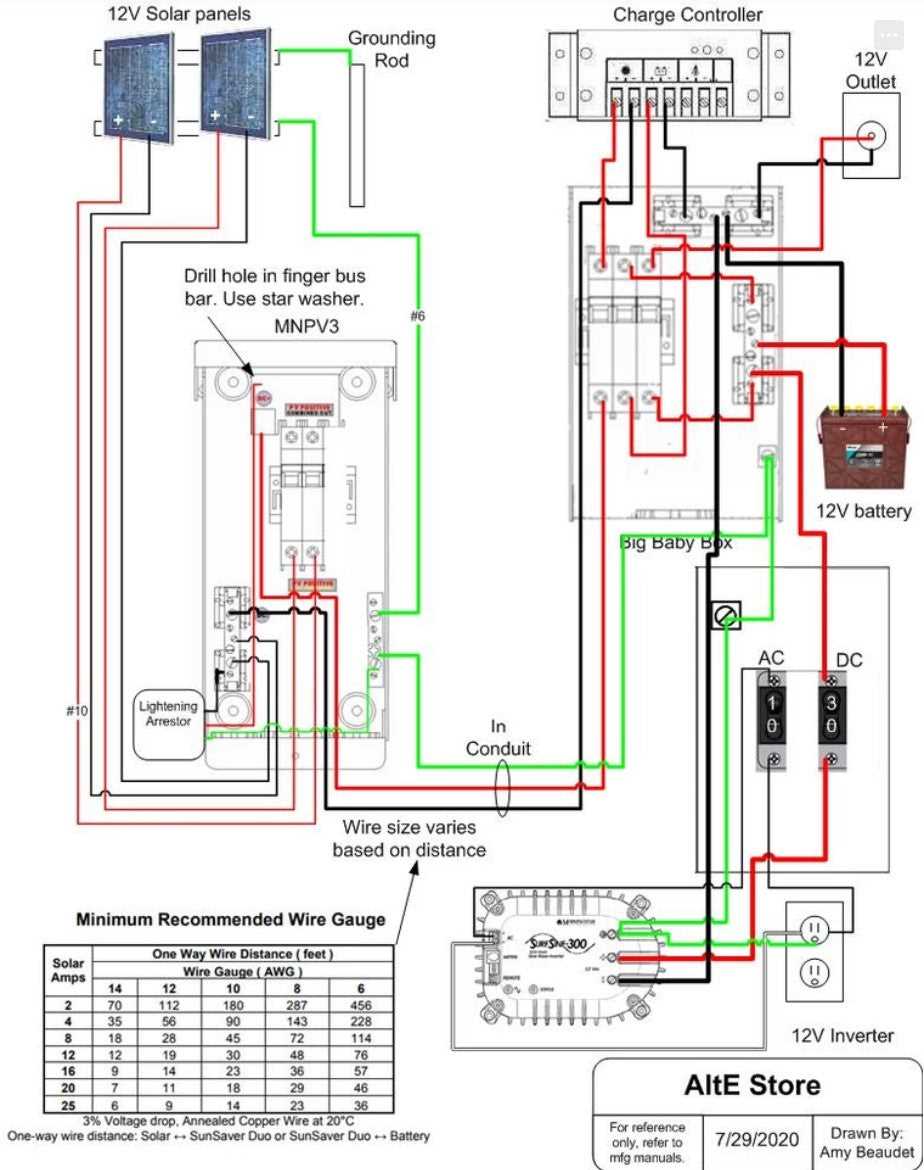
Connect photovoltaic modules in series strings when higher system voltage is required for an inverter or charge controller. For example, four modules rated at 40 V open circuit produce roughly 160 V DC when linked in series. The current remains the same as a single module, typically around 10–12 A depending on the panel model.
Use parallel string connections when higher current is needed while keeping voltage within the input limits of the inverter or charge controller. Two identical strings connected through a combiner box double the current while voltage stays unchanged. For instance, two strings producing 160 V and 11 A each will supply 160 V at about 22 A to the DC input stage.
Install a combiner box with string fuses between module groups and the inverter. Each string normally uses a fuse rated slightly above its short-circuit current, often 15 A for many residential modules. This device prevents reverse current flow if one string becomes shaded or damaged.
Route DC conductors using UV-resistant PV cable or USE-2 wire with connectors rated for outdoor exposure. Typical residential installations use 10 AWG copper leads for string currents up to 30 A. Long cable runs may require thicker conductors to limit voltage drop below about 2–3 percent.
Grounding all module frames and mounting rails through a continuous equipment grounding conductor reduces shock risk and helps stabilize the DC system during lightning or electrical faults.
Solar Array Wiring Diagram With Panel Series Parallel and Inverter Connections
Connect photovoltaic modules in series strings when the inverter requires higher DC input voltage. A common residential module produces about 38–42 V open circuit. Linking five units in sequence creates roughly 190–210 V DC at the string output while current remains equal to one module.
Use parallel connections between identical strings when higher current capacity is required for the inverter input stage. Two strings each producing 200 V at 11 A will supply about 200 V and 22 A after merging in the combiner box.
Route the positive conductor from every string through individual protection fuses inside the combiner enclosure. This prevents reverse current flow if one string becomes shaded or damaged.
- Typical string fuse rating ranges from 10 A to 15 A for many residential modules
- Each string connects to a dedicated fuse holder
- Outputs merge onto a common positive bus inside the combiner box
- The negative conductors usually terminate on a shared negative bus bar
Run the combined DC output from the combiner box to the inverter using outdoor rated PV cable such as USE-2 or PV wire. Copper conductors sized at 10 AWG handle currents up to roughly 30 A under common installation conditions.
Voltage drop increases with cable length. Long roof-to-inverter runs exceeding about 30–35 meters often require thicker conductors such as 8 AWG to keep losses below roughly 2–3 percent.
- Modules connect into series strings on the mounting structure
- String leads enter the combiner enclosure
- Positive conductors pass through individual fuses
- Combined DC output travels to the inverter DC input terminals
- The inverter converts high-voltage DC into AC for building circuits or grid export
Bond module frames, mounting rails, and combiner enclosure to a continuous equipment grounding conductor. This conductor usually connects to the building grounding electrode system, reducing shock risk and stabilizing the electrical installation during lightning events.
Series connection layout for solar panels to increase system voltage
Connect the positive terminal of one photovoltaic module to the negative terminal of the next module to build a series string. This configuration raises voltage while current remains equal to the rating of one module. For example, four units rated at 40 V each will produce about 160 V DC at the string output.
Verify the maximum DC input voltage allowed by the inverter or charge controller before selecting the number of modules in a string. Many residential inverters accept between 300 V and 600 V DC. Cold temperatures raise module voltage, so calculations must include the lowest expected ambient temperature.
Voltage Calculation for Series Strings
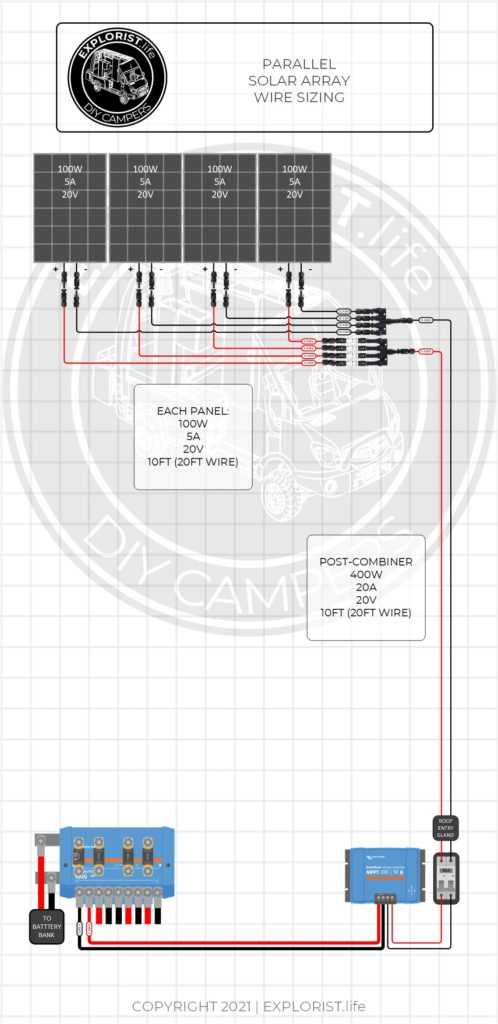
Multiply the open circuit voltage of one module by the number of units connected in sequence. A module rated at 41 V open circuit connected in a chain of eight produces about 328 V DC. Designers often keep the final value below the inverter limit by a safety margin of roughly 10–15 percent.
Use identical modules in the same string. Mixing different voltage ratings forces weaker modules to limit current flow through the entire chain. Output power drops because the lowest current module determines the current for the entire sequence.
Connection Path and Cable Routing
Most photovoltaic modules use MC4 connectors that allow quick linking between units. The output from the final module in the chain becomes the positive string lead, while the unused negative connector on the first module becomes the negative lead.
Route these two conductors along mounting rails using UV-resistant clips. Outdoor rated PV cable such as 10 AWG copper PV wire is common for strings carrying currents around 10–15 A.
Long strings installed across multiple roof sections should maintain clear cable paths away from sharp metal edges, roof flashing, and areas where water collects. Mechanical damage to insulation may create ground faults or intermittent voltage loss.