When connecting components in an electrical system, knowing how the components are arranged impacts performance and functionality. One basic setup involves linking the parts in a straightforward sequence, where the current flows through each element one after another. This setup contrasts with another method, where connections form branches, allowing the current to split across multiple paths. Understanding these arrangements is crucial for troubleshooting, calculating voltage drops, and managing power distribution efficiently.
Each connection method impacts the overall behavior of the system. In the first arrangement, if one part fails, the entire system shuts down, as the current can’t bypass the broken component. In the second arrangement, however, each path works independently, so the failure of one element does not disrupt the others. This characteristic makes the branching system more reliable in certain applications, but it also requires careful planning to ensure that the current is evenly distributed across each branch.
In practice, choosing between these configurations depends on the specific requirements of the device or system in question. Whether optimizing for simplicity, reliability, or specific electrical requirements, understanding how each setup operates allows for smarter decisions when designing or modifying electrical systems. From home lighting installations to more complex industrial setups, these principles are fundamental to creating efficient and safe systems.
Understanding Series and Parallel Circuit Configurations
When connecting electrical components, understanding the two basic types of arrangements is vital. In the first configuration, components are linked in a continuous line, so the current flows through each component in order. A key characteristic of this setup is that if one component fails, the entire system stops working. This makes the setup simple, but also less reliable for systems where continuous operation is necessary.
In contrast, the second configuration involves multiple pathways, where components are connected in branches. Each branch operates independently, allowing the current to flow through different paths simultaneously. This configuration is more reliable because the failure of one component does not affect the others. It’s especially useful in applications that require uninterrupted power, like home lighting systems.
The two configurations also behave differently when it comes to voltage and current distribution. In the first case, the voltage is divided among the components, while the current remains constant. In the second case, the voltage stays the same across all branches, but the current is split according to the resistance of each path. Understanding these differences is crucial for designing circuits that meet specific voltage and current requirements.
When choosing between these two arrangements, consider factors like reliability, complexity, and the type of load you are working with. For example, if you need a system where failure of one component does not affect others, a branched configuration is the better choice. On the other hand, for simpler setups where all components must share the same current, the sequential arrangement may be appropriate.
Both configurations have specific use cases where they excel. Sequential arrangements are often used in applications like string lights, where each component operates as part of the whole. Branched systems are more commonly found in household wiring and other systems that require higher reliability and flexibility. By understanding the characteristics of each setup, you can make better choices for your electrical projects.
Key Differences Between Series and Parallel Circuits
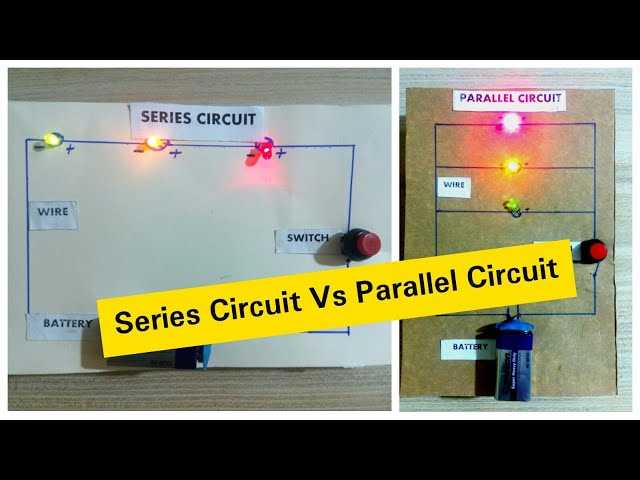
The first major difference lies in how components are connected. In the first type, all components are connected end-to-end, forming a single path for current flow. In the second arrangement, components are connected across multiple branches, creating several paths for the current to travel.
Another key distinction is how the current behaves. In the first setup, the same current flows through all components because they share a single path. Conversely, in the second configuration, the current is divided across each branch according to the resistance of each path.
Voltage distribution is another difference. In the first type, the total voltage is divided among all the components, which results in each component receiving a portion of the total voltage. In the second configuration, each branch receives the same voltage as the source, making it more efficient for systems requiring a consistent voltage supply.
Reliability is often higher in the second arrangement. If one component fails in the first setup, the entire system is interrupted because of the shared path. However, in the second setup, a failure in one branch does not affect the other branches, ensuring that the rest of the system continues to function.
Efficiency in power usage also differs between the two. Since the first arrangement requires components to share the same current, it tends to have higher energy loss as the current passes through multiple components. In the second arrangement, energy loss is lower because the current is divided and flows independently through each branch.
In terms of complexity, the first system is simpler because it only requires a single path for the current to flow. The second system, while offering more benefits in terms of reliability and efficiency, is more complex to set up due to the need for multiple branches and connections.
Cost can also be impacted by the type of setup chosen. The first arrangement typically requires fewer materials since it uses fewer paths and connections. The second arrangement requires more wiring and components to set up the multiple branches, which may result in higher initial costs.
Each configuration has specific use cases depending on the needs of the system. The first setup is often used in applications where all components need to share the same current, such as in Christmas lights or simple battery-powered devices. The second is used for more complex systems like household lighting or electronics, where reliability and consistent voltage are more important.