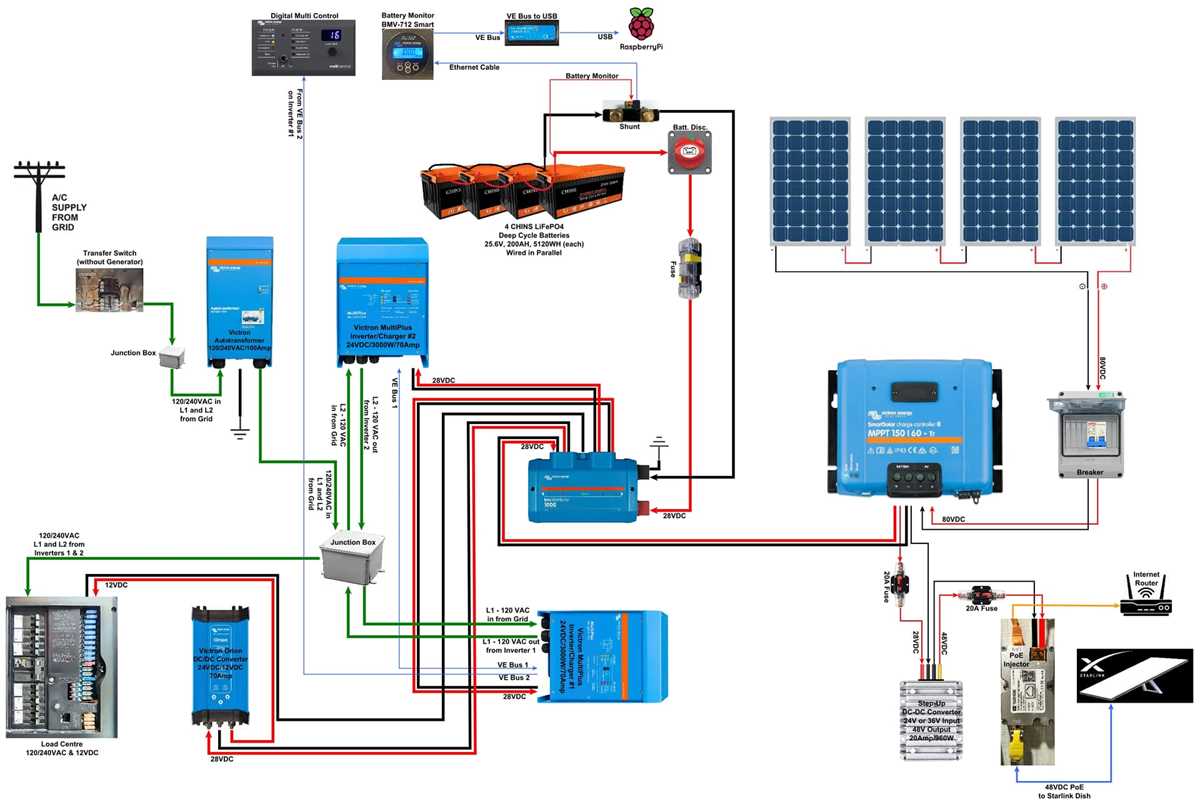
Use correctly rated cables for connecting panels to your battery bank to avoid overheating and voltage drops. For a 12V system, 10 AWG copper wire is recommended for runs under 15 feet, while 8 AWG should be used for longer distances.
Install a charge controller between the collectors and the batteries to regulate current and prevent overcharging. A maximum power point tracking (MPPT) controller can improve energy collection by up to 30% compared to a basic PWM model.
Integrate the inverter close to the battery bank to minimize energy loss. Ensure all negative and positive connections are secured with marine-grade terminals and tightened to the specified torque values.
Include fuses or circuit breakers at every major connection point to protect the system from shorts or surges. Use a fuse rated at 125% of the maximum continuous current of the connected device for safety.
Label all connections clearly and keep a schematic chart in your RV. This makes troubleshooting easier and prevents accidental cross-connections during maintenance or upgrades.
RV Electrical Layout for Battery and Panel Connections
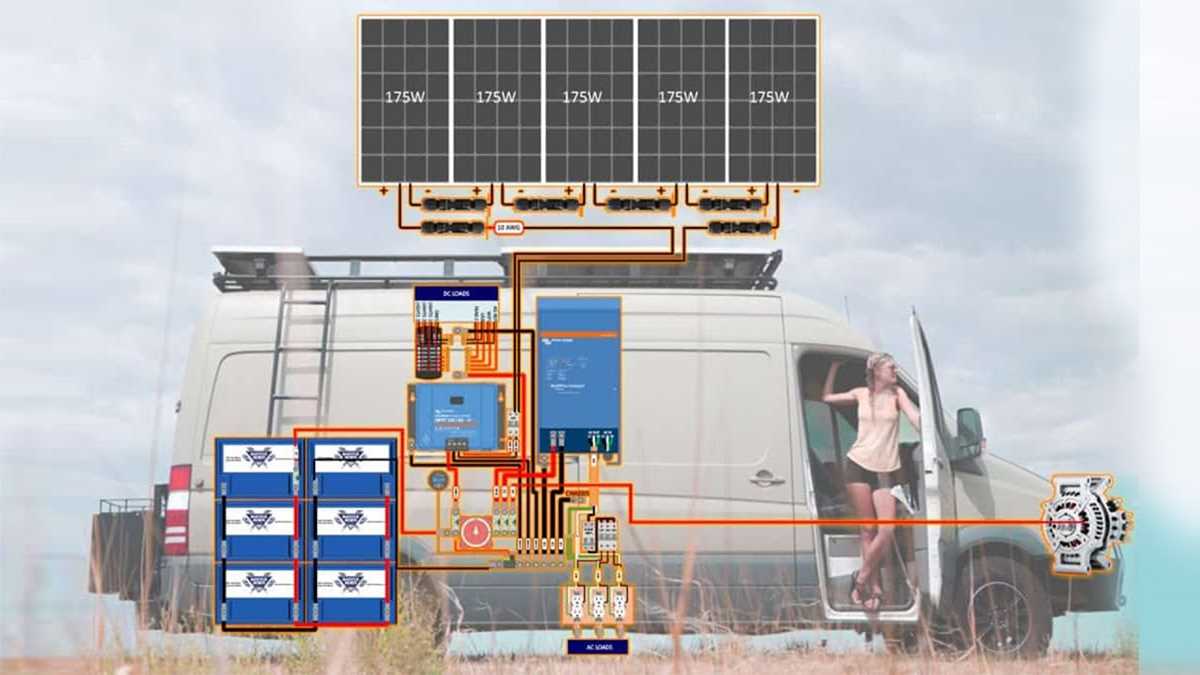
Route conductors carefully from roof-mounted collectors to the controller. Avoid sharp bends and exposure to heat sources. Use UV-resistant insulation for outdoor sections to prevent degradation.
Choose correct fuses for each run. For a 100Ah battery bank at 12V, a 30A fuse between panels and controller and a 50A fuse between controller and batteries provide adequate protection. Place fuses as close as possible to the source.
Balance positive and negative leads to minimize voltage drop. Parallel strings of modules should have identical lengths to prevent uneven charging. Always measure voltage at battery terminals under load to verify efficiency.
- Use crimped ring terminals and heat-shrink tubing at every connection.
- Secure cables with clamps or wire ties to prevent vibration damage.
- Keep cables separated from fuel lines and water pipes to avoid hazards.
Integrate an inverter near the battery array. Connect directly to positive and negative terminals with heavy-gauge cables. Install a disconnect switch on the positive line to allow safe maintenance.
For larger setups, consider a combiner box to merge multiple collectors. Include a diode or blocking mechanism to prevent backflow current during low-light conditions.
- Label all lines clearly for easy identification during troubleshooting.
- Document fuse ratings, breaker sizes, and conductor gauges in a reference sheet inside the RV.
- Periodically inspect connections for corrosion or loosening, especially after travel.
Monitor the system with a digital meter or battery monitor. Record voltage and current daily for the first week to detect any imbalance early. Adjust panel angles or conductor routing if readings fall outside expected ranges.
Connecting Panels to Controllers and Batteries
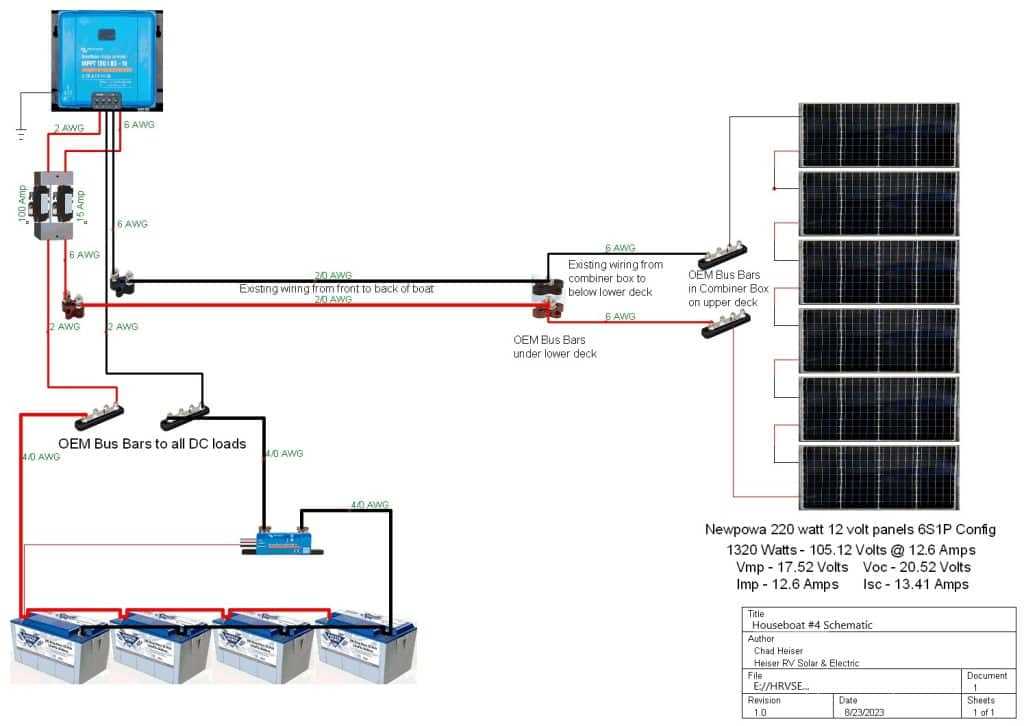
Run conductors directly from each rooftop module to the charge regulator without splicing to maintain full current capacity. For 12V arrays up to 200W, 12 AWG cables are sufficient for distances under 10 feet, while longer runs require 10 AWG.
Ensure polarity alignment before making connections. Positive from modules goes to positive on the controller input, and negative to negative. Reversing leads can damage the regulator or reduce battery lifespan.
Use fused leads at both ends of the controller connection. A fuse rated at 125% of the maximum output current of the array prevents backflow and protects batteries from overcurrent events.
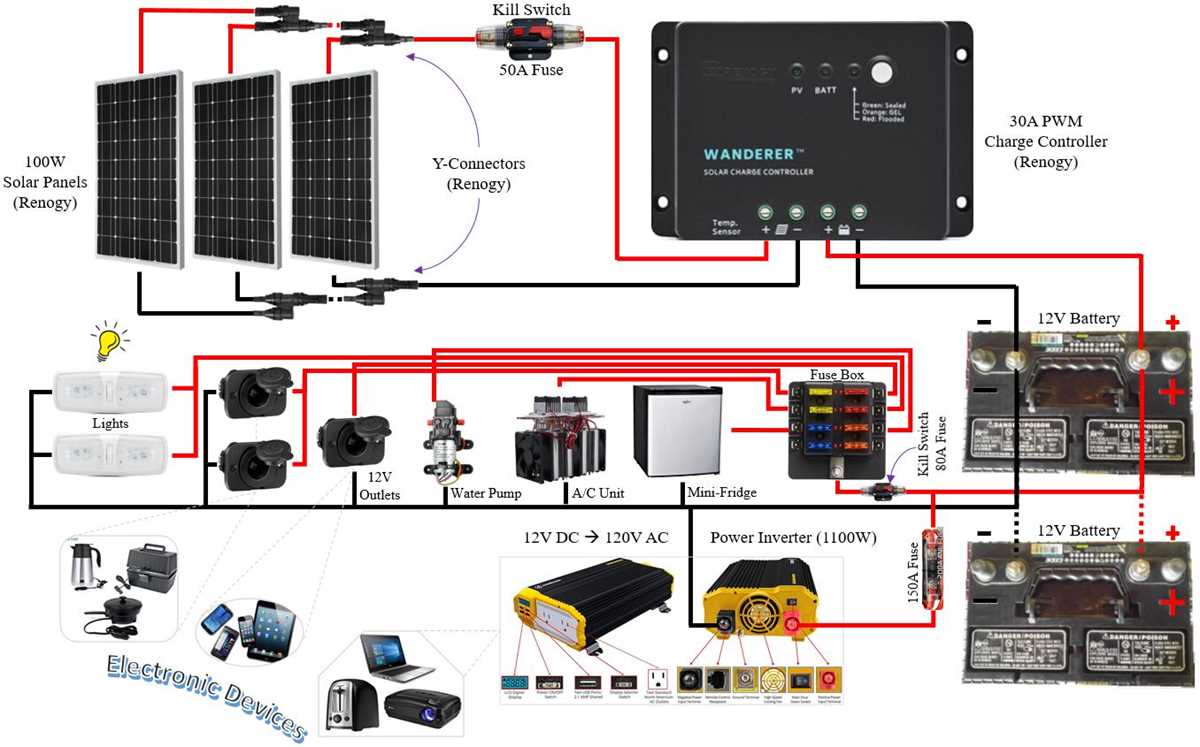
Connect the controller output to the battery terminals with short, thick conductors. For a 100Ah lead-acid bank, 8 AWG is recommended. Tighten terminals to manufacturer torque specs to avoid arcing and corrosion.
Install a monitoring device between controller and batteries to track voltage, current, and state of charge. This helps identify underperforming modules or loose connections early, maintaining consistent energy storage.