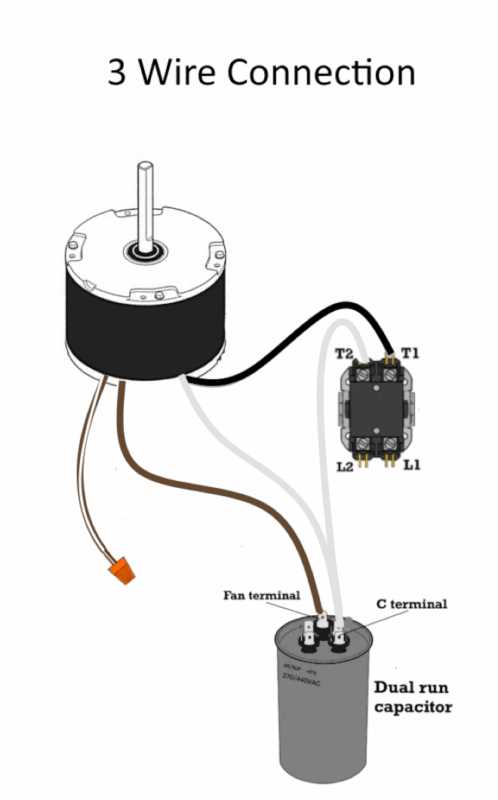
Connect the phase-shift component to the auxiliary motor winding through a relay or centrifugal switch. This element creates a temporary phase difference that increases torque during motor launch. Typical values range between 70 µF and 300 µF depending on motor size.
A second energy-storage unit remains connected during normal motor operation. Its capacitance usually falls between 5 µF and 80 µF. This component stabilizes the magnetic field inside the stator and supports steady rotation once the rotor reaches operating speed.
Identify the three motor terminals marked C, S, and R. The common terminal connects to the power supply, the auxiliary winding attaches through the relay and high-value phase-shift component, and the main winding links directly to the supply line. Misplacing these connections often leads to overheating or repeated tripping of overload protection.
Use insulated copper conductors rated for at least 300 V and secure all terminals with crimp connectors. Solid electrical contact reduces resistance at connection points and keeps the motor from drawing excessive current during acceleration.
Run Start Capacitor Wiring Diagram for Single Phase Motor with Start Relay
Connect the phase-shift unit with high microfarad rating through a relay to the auxiliary motor winding. When power reaches the motor, the relay briefly links this component into the circuit, creating a stronger magnetic field that moves the rotor from standstill.
Three terminals normally appear on single-phase motors:
- C – common connection tied to the power supply
- R – main winding terminal connected directly to the supply line
- S – auxiliary winding terminal linked through the relay and phase-shift component
Use two energy-storage components with different capacitance ranges. The large unit used during motor launch usually measures 80–300 µF, while the smaller permanent unit remains active during rotation and typically measures 5–60 µF. Both components assist the stator field in producing proper torque and stable rotation.
The relay disconnects the large unit once rotor speed reaches about 70–80% of rated RPM. This switching action prevents overheating and reduces current draw after acceleration.
Follow this connection sequence:
- Attach the supply line to terminal C
- Connect terminal R directly to the second supply line
- Link terminal S through the relay contact
- Attach the high-value phase-shift unit across relay output and terminal C
- Install the smaller permanent unit between terminals R and S
Secure all conductors with insulated crimp terminals and mount both components inside a ventilated housing near the motor body. Stable contact and protected routing prevent overheating and repeated overload trips.
Run Start Capacitor Wiring Diagram with Motor Start Relay and Terminal Connections
Connect the high-value phase-shift unit to the auxiliary winding through a relay contact. This arrangement allows the motor to develop strong initial torque while preventing the large component from remaining in the circuit after acceleration.
Locate the three motor terminals marked C, R, and S. Terminal C links to the supply line, R connects to the main stator winding, and S leads to the auxiliary winding used during rotor launch.
Place the relay between the auxiliary winding terminal and the large microfarad unit. When power reaches the motor, the relay closes for a short moment and the temporary energy-storage device produces a phase offset between the windings.
Typical capacitance ranges depend on motor power. Units rated 1–3 horsepower commonly use a large component between 100 µF and 250 µF, while the permanent phase unit often measures 10 µF to 40 µF.
Mount both components inside a sealed enclosure near the motor housing. Short conductor paths reduce voltage loss and limit heat buildup around connection terminals.
The relay automatically opens its contact once rotor speed approaches operating range. Removing the high-value device from the circuit prevents overheating and extends the service life of the motor windings.
Attach insulated spade connectors or ring terminals at every connection point. Loose contact points increase resistance and cause overheating under load.
After completing the electrical layout, apply power briefly and check rotation direction, current draw, and temperature rise during the first few minutes of operation.