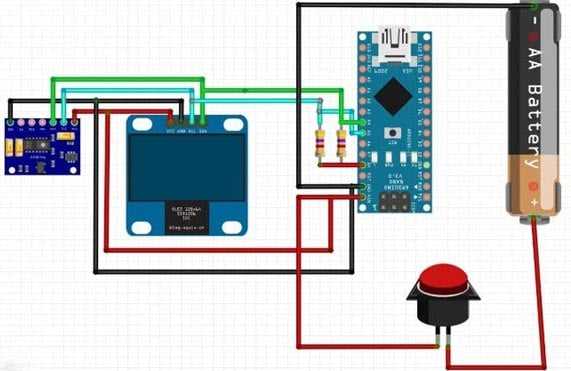
Connect the red and infrared LEDs directly to the driver outputs, ensuring correct polarity. Red LED typically operates at 660 nm and infrared at 940 nm, with forward currents around 20 mA for optimal light intensity.
Position the photodetector opposite the LEDs on the finger clip or sensor pad. Ensure minimal ambient light interference and secure alignment to capture transmitted light efficiently for accurate measurement of oxygen saturation.
Use amplification and filtering stages to isolate the weak photodetector signal. Apply a transimpedance amplifier followed by a bandpass filter around 0.5–5 Hz to extract the pulsatile component corresponding to arterial blood flow.
Implement an analog-to-digital conversion module with at least 10-bit resolution. Sample at 100–200 Hz to capture accurate waveform details, allowing microcontroller algorithms to calculate the oxygen saturation and pulse rate reliably.
Test the assembled module under controlled conditions. Compare readings with a reference oximeter and adjust gain and baseline offset to achieve consistent, reproducible results across different subjects and lighting environments.
Electronics Guide for Optical Oxygen Sensors
Connect the red and infrared light emitters to the driver module ensuring correct polarity. Red light typically operates at 660 nm, infrared at 940 nm, with forward currents around 20 mA to achieve reliable tissue penetration without overheating.
Position the photodetector directly opposite the emitters on a finger clip or earlobe sensor. Secure alignment and minimize ambient light interference to accurately capture the transmitted light intensity variations caused by arterial blood.
Signal Amplification and Conditioning
Use a transimpedance amplifier to convert the photodetector current into voltage. Follow with a bandpass filter tuned to 0.5–5 Hz to isolate the pulsatile component corresponding to cardiac cycles while removing high-frequency noise and baseline drift.
Choose resistors and capacitors in the amplification stage based on desired gain and bandwidth. Too high a gain increases noise, while too low reduces signal sensitivity. Adjust values to maintain a clear AC waveform riding on a steady DC level.
Integrate an analog-to-digital converter with at least 10-bit resolution. Sample at 100–200 Hz to capture sufficient detail of the waveform for accurate calculation of oxygen saturation and pulse rate by microcontroller algorithms.
Microcontroller Integration and Data Processing
Use a microcontroller with built-in ADC and timers to process signals. Implement averaging and ratio calculations between red and infrared light absorption to determine oxygen saturation. Include safeguards for low signal amplitude or sensor disconnection.
Test the assembled module under controlled conditions. Compare readings against a reference device, adjust baseline offsets and gain, and ensure repeatability across different subjects and ambient lighting environments to confirm measurement reliability.
Power the module with regulated voltage to prevent drift in LED brightness and amplifier performance. Include bypass capacitors near the power pins and ensure low impedance traces to reduce ripple and maintain stable readings.
Identifying Sensor and LED Connections
Connect the red LED and infrared LED to their respective driver outputs, ensuring correct polarity. Red typically operates at 660 nm and infrared at 940 nm, with forward currents around 20 mA to achieve stable light intensity without overheating the components.
Position the photodetector directly opposite the LEDs on a finger clip or earlobe sensor. Align carefully to maximize light capture and minimize interference from ambient lighting, which can introduce noise into the measurement signal.
Wiring and Signal Integrity
Use short, shielded wires for connections between the LEDs and the photodetector to prevent electromagnetic interference. Avoid routing wires near high-current traces or switching regulators that can induce voltage spikes affecting signal quality.
Verify connections with a multimeter before powering the module. Confirm that LEDs illuminate correctly and that the photodetector output changes with varying light intensity. Adjust mechanical alignment if necessary to ensure consistent readings across multiple tests.