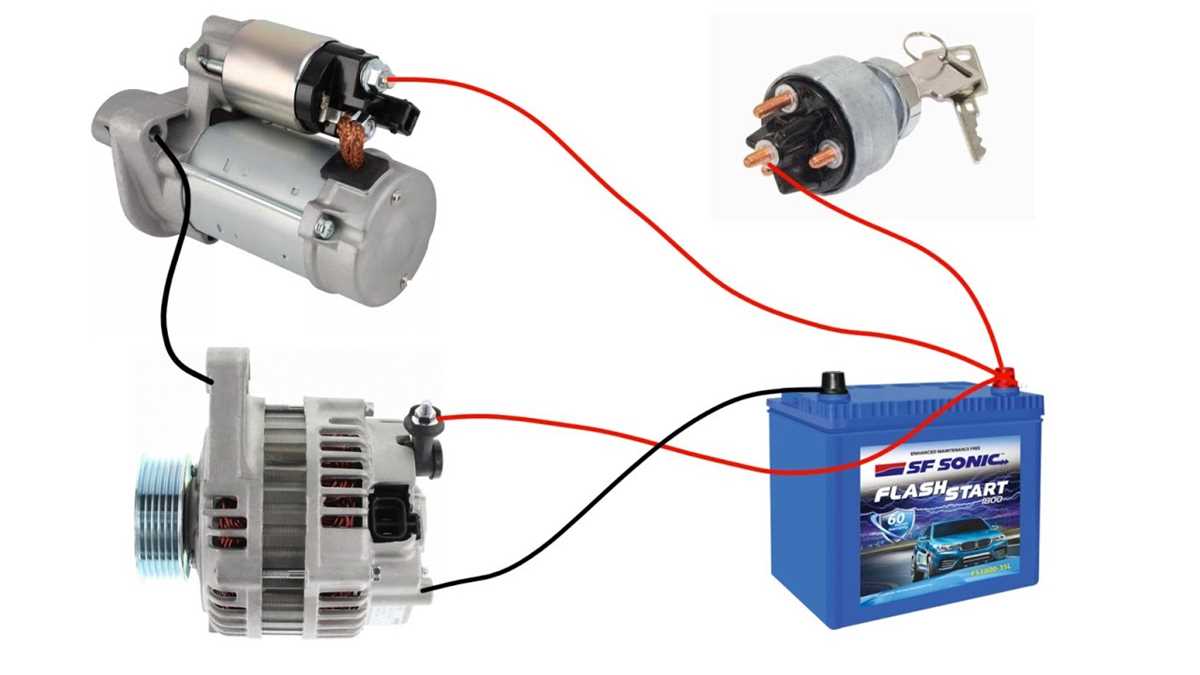
Connect the battery positive lead to the main power terminal of the key-controlled contact unit, then route the control line from the “start” position to the relay that activates the engine cranking motor. This layout appears in many passenger vehicles and light trucks produced after the 1980s. Red or thick pink conductors often carry constant battery power, while yellow or purple leads commonly deliver the signal that triggers the relay coil.
Check the terminal markings on the key cylinder assembly before attaching any conductor. Many manufacturers stamp short labels such as BATT, ACC, RUN, and ST near the connection points. The BATT terminal receives direct power from the battery through a fuse link rated between 30 and 60 amps. The RUN contact feeds systems such as the fuel pump relay, dashboard cluster, and engine control unit. The ST contact sends a brief signal to the cranking relay while the key is held in the start position.
Use a multimeter during installation or repair. With the key in the off position, voltage should appear only at the battery input terminal. Turning the key to the accessory position should energize circuits for radio, interior fan, and power outlets. When rotated to the run position, additional circuits become live, including fuel injection and control modules. A final turn to the crank position sends voltage through the start signal line toward the relay mounted near the engine bay fuse block.
Incorrect conductor placement can cause repeated fuse failure, relay chatter, or a motor that spins without engine engagement. Verify conductor gauge before connection. Power feed lines usually measure 10–12 AWG, while signal lines measure 14–18 AWG. Matching gauge and terminal location reduces overheating and voltage drop during engine cranking.
Ignition Starter Switch Wiring Diagram with Terminal Layout and Connection Steps
Connect the battery feed cable directly to the B terminal on the key-operated contact block using a 10–12 AWG conductor protected by a fusible link rated between 40 and 60 amps. This line carries constant battery voltage and must remain isolated from accessory outputs until the key rotates to an active position. Clean the terminal stud and tighten the nut to about 3–5 Nm to prevent voltage drop during engine crank.
Terminal layout on a typical key operated contact unit
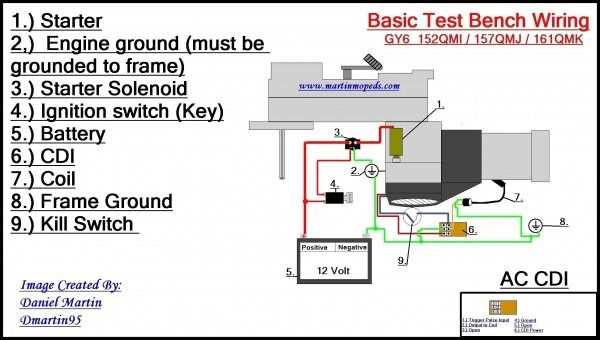
Most automotive key cylinders use four labeled contact points. The BATT pin receives permanent power from the battery. The ACC pin feeds devices such as audio units, dashboard screens, and cabin fan controls. The RUN pin supplies current to control modules, fuel pump relay circuits, and dashboard electronics. The ST pin carries a short signal to the crank relay mounted near the engine bay fuse block. These labels are usually stamped into the metal housing or molded into the plastic connector base.
Route the crank signal conductor from the ST terminal to the relay control input using 14–16 AWG copper. Many vehicles use a purple, yellow, or blue lead for this path. When the key rotates fully clockwise, voltage travels through this conductor and energizes the relay coil, which then connects battery power to the engine cranking motor. Signal duration normally lasts less than three seconds.
Connection sequence for the power distribution leads
Attach the accessory output next using a 12–14 AWG lead routed through the interior fuse panel. Typical loads on this branch range from 5 to 20 amps depending on installed equipment. After that, connect the run-position lead that feeds the engine management circuit. This conductor usually passes through a fuse rated between 10 and 30 amps before reaching modules such as the ECU and fuel pump control relay.
Test each contact position using a multimeter set to DC voltage. With the key removed, only the battery input should show about 12.4–12.8 volts. Turning the key to accessory should energize the ACC terminal only. The run position should supply voltage to ACC and RUN simultaneously. The full crank position should energize the ST output while RUN remains powered. Any deviation indicates worn contacts, loose terminals, or damaged conductors inside the steering column harness.
Ignition starter switch terminals and wire color codes in typical vehicle circuits
Identify each terminal on the key-controlled contact unit before connecting conductors. Most passenger vehicles follow a consistent color scheme that helps track power distribution from the battery to accessory systems and the engine cranking relay. Use a multimeter and verify voltage presence at each pin during key rotation. Typical terminal roles include:
- BATT terminal – constant battery feed, commonly a red or thick pink conductor rated 10–12 AWG
- ACC terminal – supplies radio, cabin fan, and infotainment circuits, often orange or brown conductor rated 12–14 AWG
- RUN terminal – powers ECU, fuel pump relay, and dashboard electronics, frequently a dark green or black with stripe lead rated 12–14 AWG
- CRANK terminal – signal path to the engine cranking relay, usually purple, yellow, or blue conductor rated 14–16 AWG
Verify conductor routing through the fuse panel and relay block before final attachment. Battery feed lines normally pass through a fusible link rated between 40 and 60 amps, while accessory branches use blade fuses rated from 10 to 25 amps. The crank signal lead travels from the key cylinder contact unit to a relay coil input, which then closes a high-current path toward the engine cranking motor. Mismatched colors or altered conductors often indicate previous repairs, so trace each lead from connector to load before applying power.