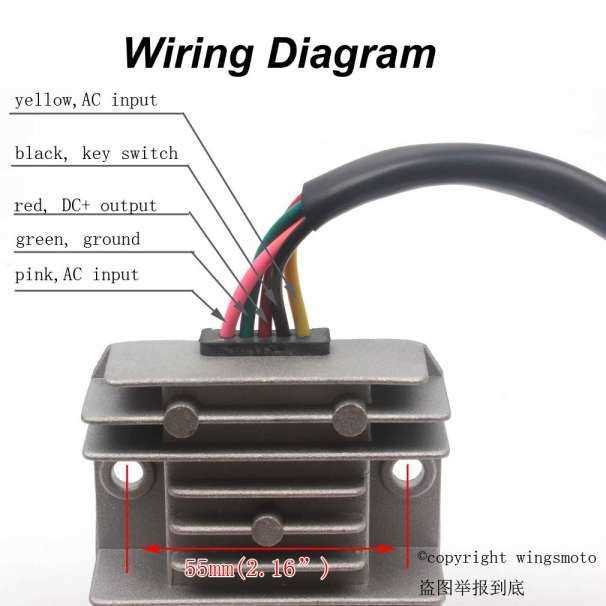
Ensure stable current output by connecting the control module directly to the main alternator terminals. Use high-quality insulated connectors rated for at least 15 amps to prevent overheating during sustained operation.
Include a fuse with a rating slightly above the maximum load expected, typically 20 to 25 amps, to protect wiring from short circuits. Position it as close to the power source as possible to minimize the risk of damage along the line.
Verify that all terminals are clean and free of oxidation. Applying a thin layer of dielectric grease can prevent corrosion and maintain consistent conductivity across the connections.
When routing the output leads, avoid sharp bends and exposure to high-heat areas near the engine exhaust. Secure the harness using clamps or cable ties to reduce vibration-induced wear and accidental disconnection.
Motorcycle Voltage Regulator Connection and Component Layout Guide
Connect the control unit directly to the alternator output terminals using insulated, heat-resistant connectors. This minimizes voltage drop and prevents overheating during high-load conditions, especially at idle and low RPMs.
Use a properly rated fuse inline with the main supply lead, typically 20 to 25 amps, positioned close to the power source. This protects the wiring from shorts and prevents damage to sensitive electronics downstream.
Route all leads away from exhaust pipes, engine casings, and other heat sources. Excessive heat can degrade insulation and lead to short circuits or intermittent power loss over time.
Secure the harness using clamps or zip ties at intervals of 4 to 6 inches. This reduces vibration-induced fatigue and prevents connectors from loosening during extended rides.
Component Placement for Reliable Operation
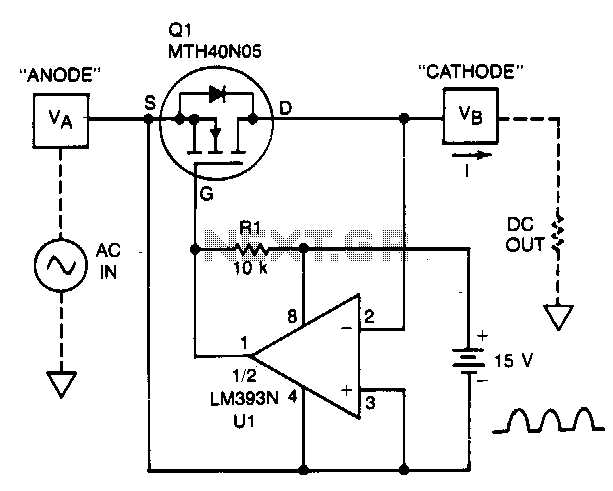
Place the control module in a ventilated area, ideally above the engine frame or behind fairing panels with airflow. Avoid enclosed, high-temperature compartments that could trigger thermal shutdowns.
Mount additional resistors or voltage dividers away from metal surfaces to prevent heat accumulation. Maintain at least 1 cm clearance from chassis elements to allow air circulation and prevent thermal coupling.
Testing and Verification
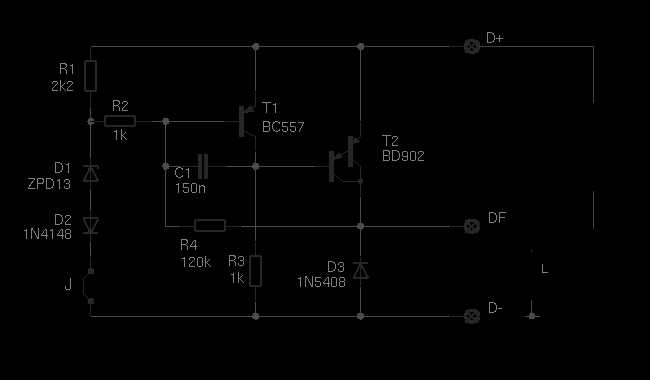
After installation, measure output with a multimeter under idle and load conditions. Ensure the voltage remains within manufacturer-specified limits, typically 13.5–14.8 volts at nominal speed, and that all connections are stable without fluctuations.
Perform a final inspection of harness routing, securing points, and connector integrity before extended operation. Regularly check these points every 3–5 months or 3,000–5,000 km to maintain consistent performance and prevent premature component failure.
Identifying Voltage Regulator Terminals and Their Functions
Locate the main power terminal, usually marked with a thick red lead. This connection carries the generated current directly to the battery and should be fused near the source to prevent overload.
Identify the ground terminal, typically a black wire attached to the frame. Ensure a solid metal-to-metal contact to avoid voltage fluctuations and erratic performance during operation.
Check for the excitation input, often a small gauge wire connected to the ignition switch. This terminal provides initial energizing current to the field coil and determines the regulator’s activation at startup.
Locate the output sensing lead, usually a yellow or green wire running to the battery or load point. This connection allows the module to monitor system voltage and adjust output dynamically to maintain stability.
Find the indicator terminal, sometimes labeled with an “L” or connected to a dashboard light. It signals abnormal operation or failure, illuminating when current flow is insufficient or excessive.
Identify auxiliary terminals if present, including temperature compensation or auxiliary load outputs. These terminals adjust performance under varying thermal or load conditions and must be correctly connected to avoid overheating or undervoltage.
Verify all terminals with a multimeter before connecting. Measure resistance and continuity between leads to confirm correct identification and prevent short circuits or reversed polarity that could damage the module.
Label each connection with heat-shrink markers or adhesive tags. This simplifies maintenance and replacement, ensuring future troubleshooting is straightforward without confusion between power, ground, excitation, or sensing leads.