
Start by identifying the components that form the heart of most modern electronic designs: the semiconductor device that acts as a switch. Its role in regulating power is invaluable in a variety of applications, including signal processing, power management, and amplification. When learning about this essential part, begin by understanding its gate, source, and drain terminals. These three parts are crucial in controlling the flow of current and voltage between the source and drain based on the voltage applied to the gate.
To properly read and interpret its schematic, ensure that you are familiar with the typical symbols used. These symbols represent the device’s polarity, the direction of current flow, and the behavior of the switch in response to the gate voltage. It is also important to understand how the switch interacts with other components, like resistors and capacitors, that help stabilize the overall functionality of the system.
Once you are comfortable with the symbol and structure, you can move on to applying it in real-world applications. Whether you’re controlling small motors, amplifying signals, or simply switching a load on and off, the understanding of how the device behaves in a given configuration is necessary. By correctly interpreting the relevant schematics, you can efficiently assemble and troubleshoot systems that incorporate this key component.
Remember that safety is paramount when dealing with such switches. Always double-check that the connections are made correctly to avoid any short circuits or damage to sensitive components. With this knowledge in hand, you’ll be well-prepared to explore a wide range of electronic projects, from simple systems to more advanced, high-power setups.
MOSFET Circuit Design and Analysis for Beginners
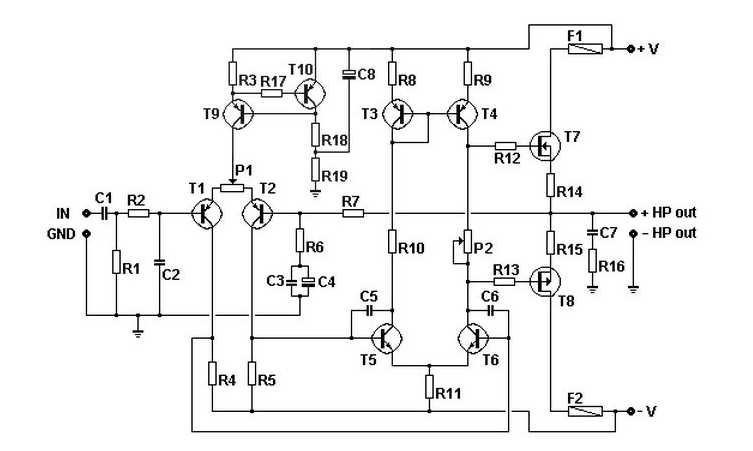
Start by understanding the key principle: a voltage applied to the gate terminal controls the current flow between the source and drain. This is the fundamental property that makes this component suitable for switching and amplification. Connect the source to ground, the drain to the load, and apply a voltage to the gate to control current flow. In the simplest design, you might use a resistor to limit current and prevent overheating.
Once you grasp the basic function, focus on understanding the operating regions. There are three modes to be aware of: cutoff, saturation, and linear. In cutoff mode, the device behaves like an open switch with no current flow. Saturation mode occurs when the gate voltage is sufficient to fully turn the device on, allowing maximum current to pass. In linear mode, it acts like a resistor, controlling the flow based on the gate voltage.
In your design, be mindful of voltage thresholds and maximum current ratings. These will vary based on the specific device you are using. For reliable performance, always ensure the component is operating within its safe limits. You should also account for thermal management, as the device will generate heat depending on the current passing through it. A good rule of thumb is to use a heatsink or other cooling solutions if the current levels are high.
Understanding the Basic Components of a MOSFET Circuit
Begin by identifying the three primary terminals: gate, drain, and source. The gate controls the flow of current between the drain and the source. In a basic design, applying a voltage to the gate turns the device on, allowing current to pass between the source and the drain. The source is typically connected to ground, while the drain connects to the load.
The next key component to understand is the load, which determines how much current the device will conduct. The load could be any resistive or inductive element, depending on the type of application. A resistor, for example, limits the amount of current passing through the circuit, while an inductive load such as a motor would introduce additional complexity due to inductive reactance.
When designing, also consider the role of resistors used in the gate and drain circuits. A resistor between the gate and source helps to ensure the transistor turns off when no voltage is applied to the gate. The resistor at the drain terminal helps to limit the current flowing through the device and protect it from damage under high load conditions.
Capacitors are commonly used in conjunction with MOSFETs to filter noise or stabilize voltage. These are often placed between the source and ground or between the drain and ground. Their role is crucial for smoothing out fluctuations and ensuring the stability of the entire system, especially in high-frequency applications.
The voltage supply is another critical component, providing the energy required for the device to function. For proper operation, the voltage should be within the MOSFET’s specified limits. Too high a voltage can cause damage, while too low a voltage can prevent the device from turning on or fully conducting.
Another important aspect is the thermal management system. When a MOSFET operates under load, it generates heat. Without proper cooling, the device can overheat, reducing its lifespan or causing it to fail. Heat sinks, thermal pads, and active cooling systems are commonly used to manage this heat.
The gate drive circuit also deserves attention. The gate needs to be driven with a sufficient voltage to switch the MOSFET fully on (saturation mode). A weak gate drive can lead to partial switching, resulting in inefficiency and excessive heat generation. A dedicated driver circuit ensures the gate voltage is sufficient for optimal performance.
Finally, always ensure that the components you use are rated appropriately for the expected current, voltage, and temperature conditions. Understanding these basic components will help you design more reliable and efficient systems, whether for simple switching applications or more complex amplification systems.