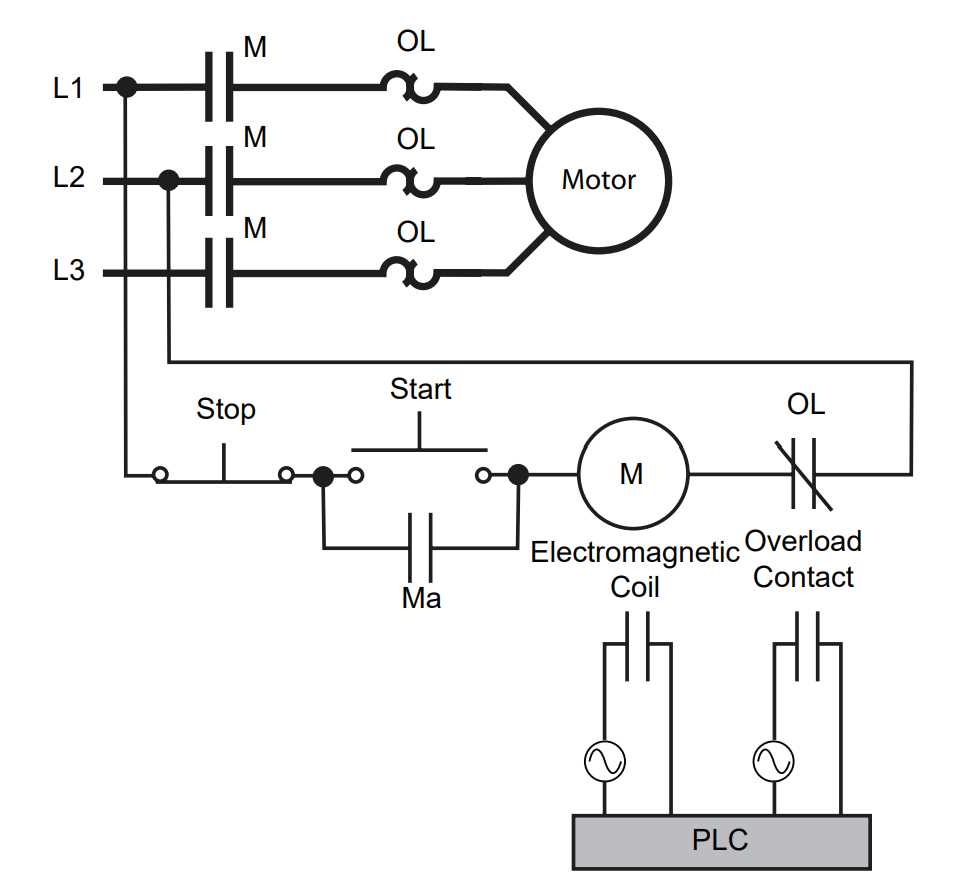
Use a detailed connection scheme for a motor control center before selecting components or routing conductors. A clear electrical layout showing feeders, protective devices, busbars, and motor starters reduces installation errors and simplifies maintenance. Engineers typically mark incoming supply ratings, breaker capacities, and contactor coil voltages directly on the plan so technicians can verify compatibility without additional documentation.
A reliable power distribution drawing for a control cabinet lineup should display the relationship between the main bus section, feeder compartments, overload relays, and control transformers. Indicating conductor cross-sections, grounding points, and terminal numbering allows installers to trace current paths quickly. For industrial panels rated between 400–690 V, copper busbars often carry currents from 800 A to more than 4000 A, which requires precise labeling of phase arrangement and insulation spacing.
Accurate graphical representation also improves troubleshooting. When a motor starter trips repeatedly, technicians compare relay settings, auxiliary contacts, and interlocks against the wiring layout of the control assembly. A well-structured electrical scheme shows how pushbuttons, PLC inputs, and protective relays interact with power switching devices, helping maintenance teams isolate faults without dismantling entire sections of the cabinet.
Include terminal identifiers, cable routes, and protection ratings within the motor control panel wiring plan. Marking short-circuit interrupting capacity, fuse class, and thermal overload ranges directly near each feeder reduces misinterpretation during upgrades or replacements. Such structured documentation supports safer commissioning and keeps large industrial drive systems organized.
Motor Control Center Wiring Scheme: Structure, Components, and Practical Reading
Read the power flow path first: trace the incoming feeder from the main busbars to each motor starter bucket, then follow protection, switching, and control lines toward the load. This sequence reveals how electrical energy travels through the panel assembly and prevents confusion between power conductors and low-voltage control lines. Use line thickness, terminal numbers, and device tags to separate high-current paths from auxiliary wiring.
Structural Layout of the Panel System
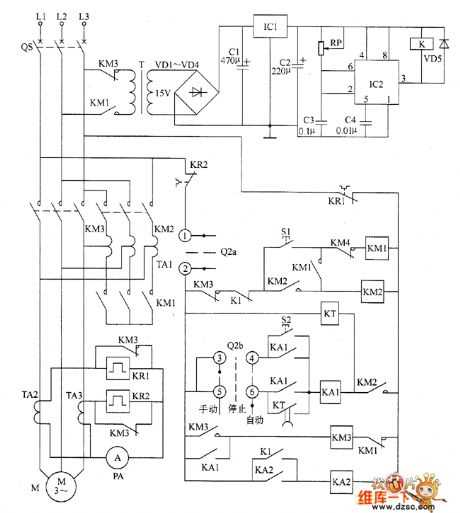
A typical motor control center drawing represents a vertical lineup of compartments supplied by horizontal busbars rated from 400 A to 4000 A. Each vertical section normally contains several motor starter units or feeder modules. The graphical layout usually separates three layers: the main power distribution path, protection equipment, and the control wiring section. Busbars appear as straight heavy lines, while branch feeders connect through molded-case breakers, contactors, or soft starters positioned inside removable modules.
Pay attention to compartment numbering and column markers. A lineup may be divided into sections such as A1, A2, B1, and B2, each corresponding to a physical cabinet. Inside each column, device identifiers such as QF (breaker), KM (contactor), OL (thermal overload relay), and M (motor load) form a logical chain. Cross-references often indicate terminal strips or external cable connections leading to field equipment.
Main Components Represented in the Electrical Layout
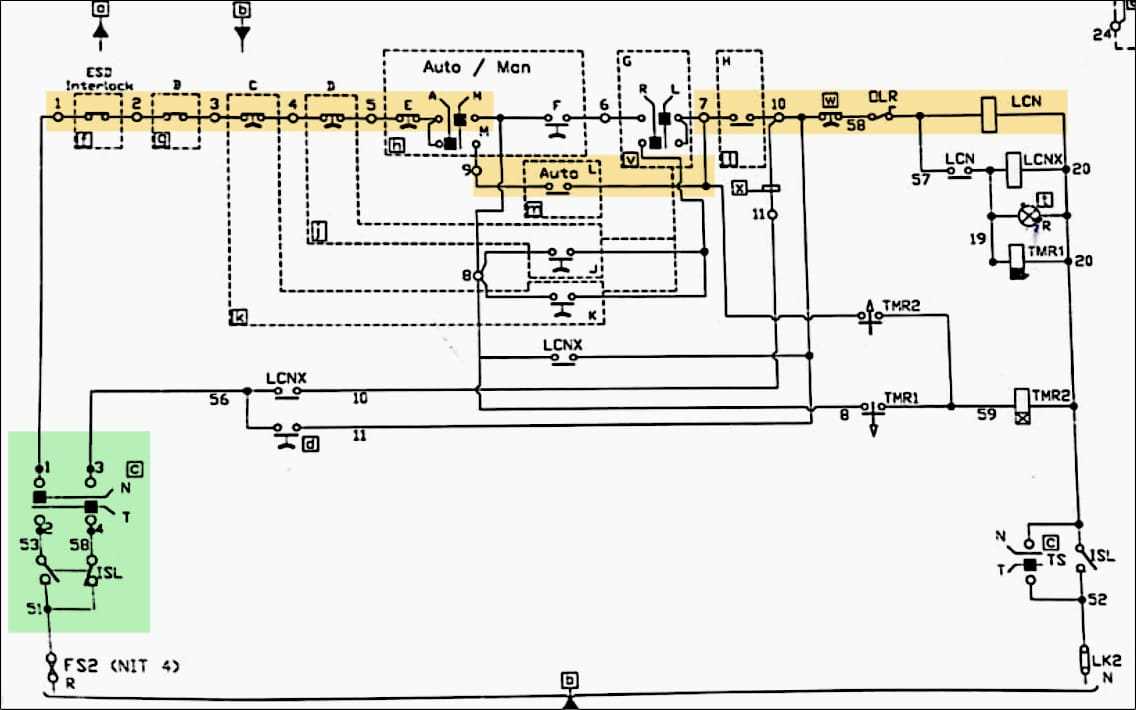
The incoming supply normally enters through a feeder breaker rated between 630 A and 2500 A depending on installation size. Downstream, busbars distribute three-phase power (L1, L2, L3) across starter modules. Each motor branch typically includes a protective breaker or fuse switch, a contactor controlling energization, and an overload relay protecting the motor windings from excessive current. Control elements–push buttons, selector switches, limit switches, and relay contacts–appear as separate control paths operating at 24 V, 110 V, or 230 V.
Auxiliary contacts attached to contactors provide status feedback and interlocking. For instance, a normally open auxiliary contact from the main contactor may seal the control line, maintaining the coil energized after a start push button is released. A normally closed contact from the overload relay interrupts the control loop if current exceeds the set value, typically 105–125 % of motor rated current.
Terminal blocks serve as the boundary between the cabinet interior and field wiring. Each terminal receives a number such as X1:12 or TB2-7, allowing technicians to match the drawing with physical terminals during installation or troubleshooting. Cable identification labels correspond directly to these numbers, enabling quick tracing from the motor starter module to the external motor junction box.
While reading the layout, examine cross-references beside relay contacts. A label such as “KM1-13/14 → page 4” indicates the associated contactor coil location elsewhere in the document. This referencing method prevents duplication while preserving logical connectivity across multiple sheets.
During troubleshooting, verify the sequence: supply voltage present at the feeder breaker, voltage passing through protection devices, coil voltage reaching the contactor, and continuity through control switches. Following this path step by step reveals whether the fault lies in protection hardware, control wiring, or the load itself.