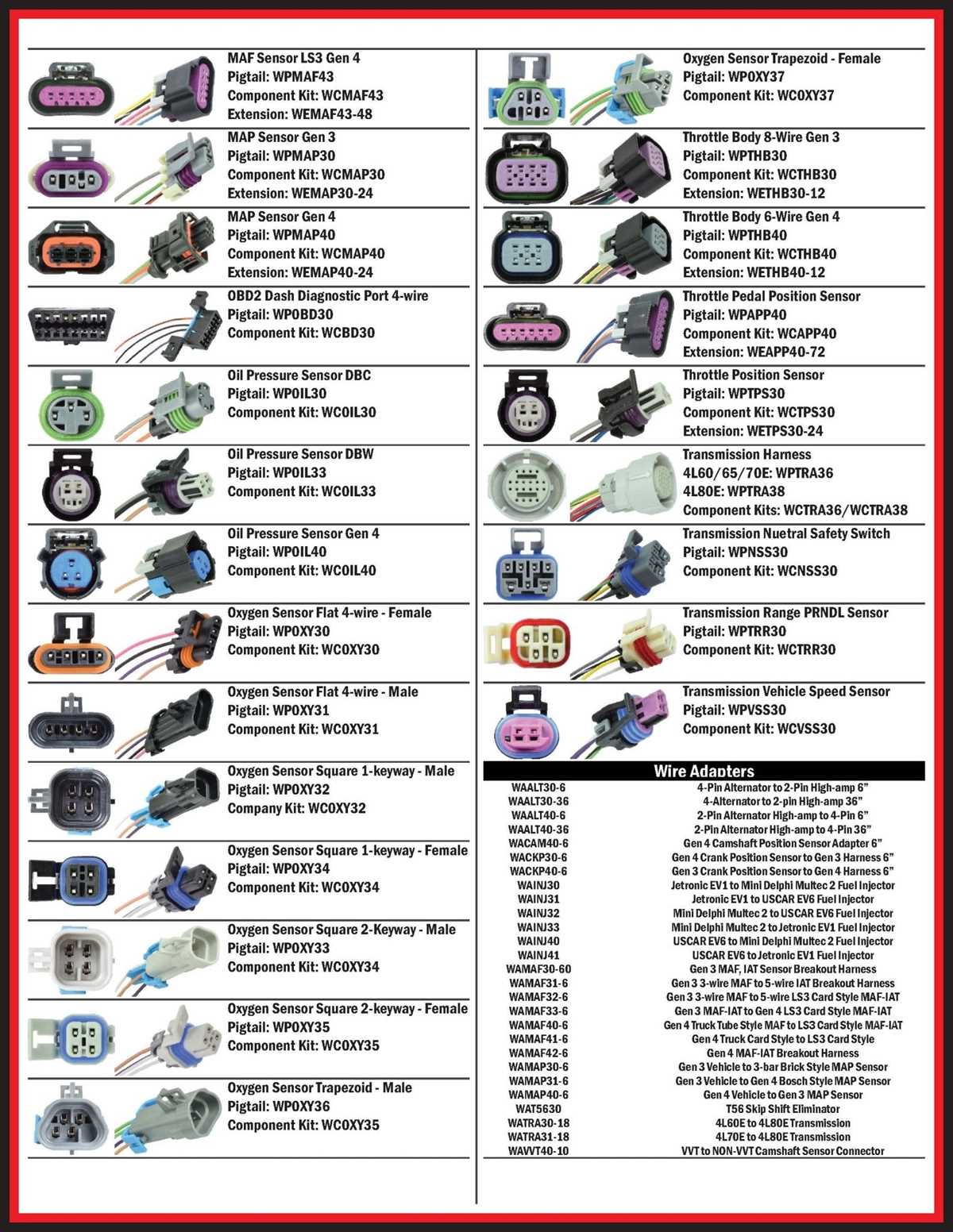
Connect the ignition module leads exactly according to the factory pin layout before powering the system. A typical eight-cylinder setup used on GM V8 platforms relies on four main conductors per ignition pack: switched 12-volt supply, chassis ground, reference signal from the control unit, and trigger output. Mixing the reference and trigger lines often leads to weak spark, random misfire, or a complete lack of ignition.
Use 16–18 AWG copper conductors for power delivery and keep the ground path short, ideally attached to the cylinder head or engine block. Voltage at the supply terminal should remain between 12.0 and 14.4 volts with the engine running. A drop below 11.5 volts during cranking can interrupt the ignition module operation and cause hard starting.
Each ignition pack serves one cylinder and receives a timed signal from the engine control module. The control unit sends a low-current pulse that activates the internal driver transistor. That driver switches the primary winding inside the ignition pack, which then generates high voltage for the spark plug. Incorrect pin placement in the connector or swapped signal leads often causes cross-firing between cylinders.
Before connecting the harness, verify terminal positions using the connector numbering molded into the plastic housing. Pin positions typically follow a sequence such as A for ground, B for trigger signal, C for control reference, and D for 12-volt supply. A multimeter set to continuity mode helps confirm each conductor from the harness to the control unit before the engine is started.
LS1 Coil Wiring Diagram With Pinout Details Power Ground and Signal Connections
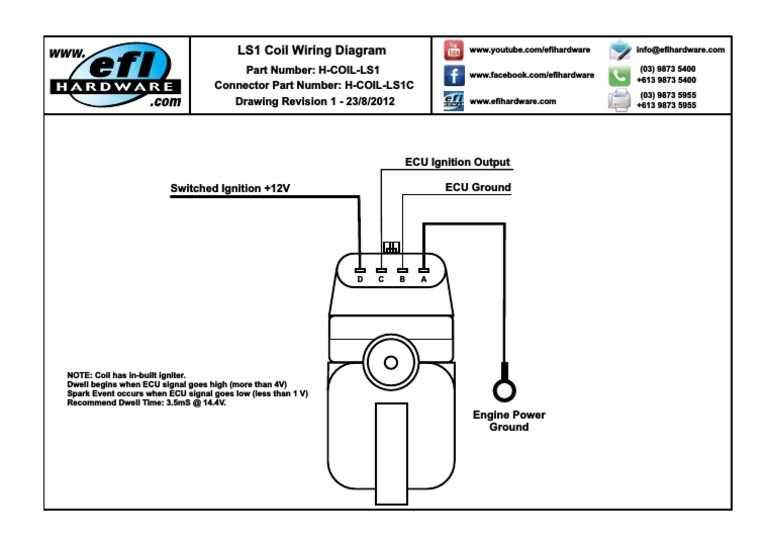
Verify terminal order on the ignition pack connector before attaching the harness. Most GM V8 ignition units of this family use a four-pin connector with dedicated circuits for switched battery feed, ground return, control pulse from the engine control module, and a reference line. Reversing the control pulse and reference lead commonly produces intermittent spark events or misfires across several cylinders.
The battery supply line should deliver 12–14.4 volts with ignition on. Use 16 AWG copper for the supply path and protect the circuit with a fuse rated around 10–15 amps for a group of ignition units. Excess resistance in the power lead increases heat inside the ignition module and can shorten component life.
Connector pin layout and terminal roles
Typical connector markings appear as letters molded into the plastic housing. Terminal A usually connects to ground, attached directly to the engine block or cylinder head. Terminal B receives the trigger pulse from the control unit. Terminal C carries the reference signal used for internal driver timing. Terminal D connects to the switched battery feed routed through the ignition relay.
Ground quality affects spark strength. The ground conductor should measure less than 0.2 ohms between the connector terminal and the engine block. Higher resistance may cause unstable ignition timing signals and irregular firing during acceleration.
Signal routing and harness layout
Control pulses from the engine management unit travel through shielded or twisted conductors to reduce electrical noise. Keep these lines separated from alternator cables and starter power leads by at least 50–70 mm. Running them in parallel with high current circuits can distort the trigger pulse.
After connecting all terminals, test the circuit with a digital multimeter and scan tool. During engine cranking the trigger lead should show a rapid switching signal between approximately 0 and 5 volts. A constant voltage without switching indicates a break in the harness or a failed driver in the control unit.
LS1 ignition coil pinout and function of each wire
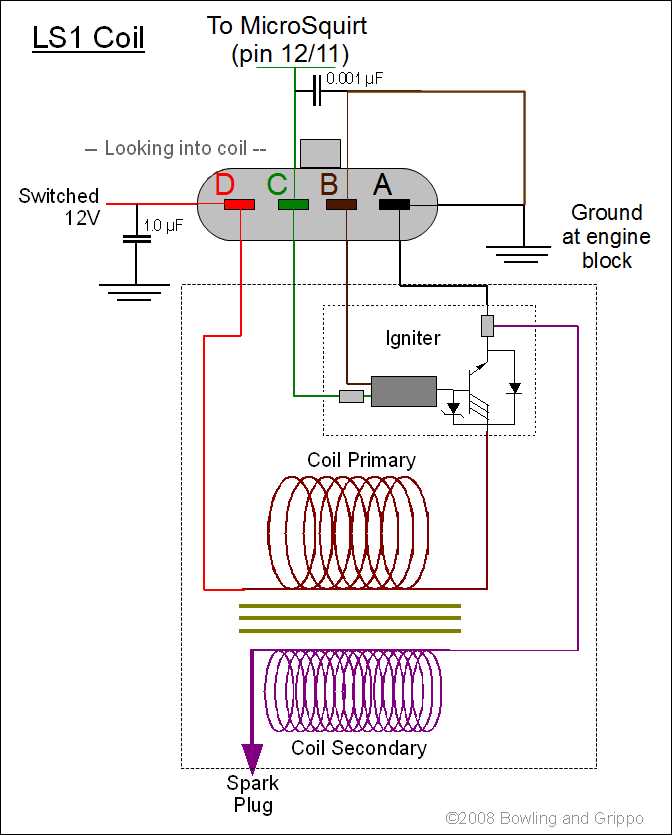
Check connector letters on the ignition module before attaching the harness. The plug used on this GM V8 ignition unit has four terminals, each responsible for power delivery, grounding, or control signals sent from the engine management system.
The connector normally contains the following terminal layout:
- Pin A – ground return connected to the engine block or cylinder head
- Pin B – trigger pulse from the engine control module
- Pin C – reference signal used by the ignition driver circuit
- Pin D – switched 12-volt battery supply through ignition relay
The ground conductor must provide a low resistance path. Measure resistance between terminal A and engine metal using a multimeter. The value should remain below 0.2 ohms. Higher readings indicate corrosion, loose bolts, or damaged harness strands.
The battery feed line supplies power to the internal driver transistor and primary winding. Recommended conductor size ranges from 16 AWG to 18 AWG. Voltage at the terminal with ignition switched on normally stays between 12.0 and 14.4 volts. Lower voltage during cranking may weaken spark output.
The control pulse line carries a digital signal generated by the engine management unit. The signal typically switches between 0 V and about 5 V. Each pulse activates the driver transistor inside the ignition unit, collapsing the magnetic field in the primary winding and creating high voltage for the spark plug.
- Locate connector letters molded into the plastic housing
- Confirm ground path with a multimeter
- Check battery supply with ignition key in ON position
- Verify switching signal on the trigger terminal during engine cranking
- Inspect harness routing away from alternator and starter cables
Correct identification of these four conductors prevents misfire across cylinders and protects the ignition module from reverse polarity or signal interference.