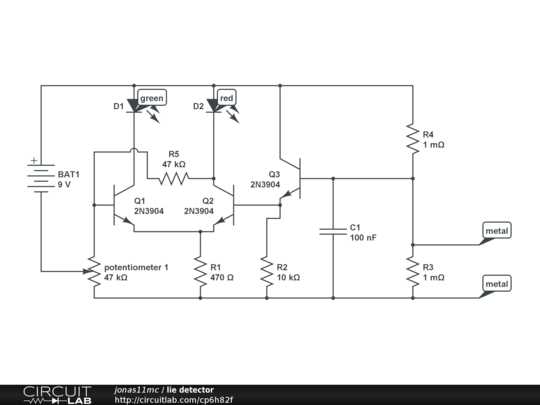
Attach two metal electrodes to adjacent fingers and measure skin resistance changes through a galvanic skin response sensor. Human skin conductivity shifts with sweat gland activity, and resistance may drop from about 500 kΩ to 50 kΩ during stress. A small measurement network powered by a 5–9 V supply converts this variation into a voltage signal that can be amplified and observed.
Place a pair of stainless steel or copper pads on the index and middle finger using elastic straps. The electrodes connect to a voltage divider where the skin acts as a variable resistor. A fixed resistor between 220 kΩ and 470 kΩ forms the second half of the divider. As perspiration increases, the voltage at the midpoint rises or falls depending on electrode arrangement.
The weak signal from this sensing network requires amplification. Use an operational amplifier configured as a high-gain stage with gain between 50 and 200. A trimmer potentiometer in the feedback path allows sensitivity adjustment so small conductivity shifts produce a noticeable output swing.
An output indicator such as an LED bar, analog meter, or buzzer reacts when the amplified voltage crosses a selected threshold. A comparator stage built around a second op-amp section monitors the signal and activates the indicator when skin conductance rises quickly. Proper calibration with a multiturn potentiometer prevents false triggers caused by normal finger pressure or dry skin.
Lie Detector Circuit Diagram Using GSR Sensor Op Amp Amplifier and LED Indicator
Connect two finger electrodes to a galvanic skin response sensor built from a simple voltage divider. One side uses a fixed resistor between 220 kΩ and 470 kΩ, while the human skin forms the variable resistance element. With dry skin the resistance may exceed 500 kΩ; perspiration can drop it below 100 kΩ. This variation shifts the divider output voltage, creating a small signal that reflects physiological stress.
Route the divider output into an operational amplifier configured as a high-gain non-inverting stage. Devices such as LM358 or TL071 handle low-level signals well on a 5–9 V supply. A feedback network using a 100 kΩ resistor and a 10 kΩ input resistor produces gain around 11, while a trimmer potentiometer can extend gain up to about 50. Higher amplification allows the system to react to minor conductivity changes between the electrodes.
After amplification, feed the signal into a comparator stage. A reference voltage generated by a 10 kΩ multiturn potentiometer defines the trigger threshold. When the measured voltage rises above this point, the comparator output switches high and drives an indicator stage.
The indicator stage may consist of a transistor driving an LED or small buzzer. A typical configuration uses an NPN transistor such as 2N2222 with a 1 kΩ base resistor. When the comparator output becomes active, the transistor saturates and powers the indicator, providing a clear visual or audible response to rapid skin conductance changes.
GSR sensor electrode placement and skin resistance measurement method
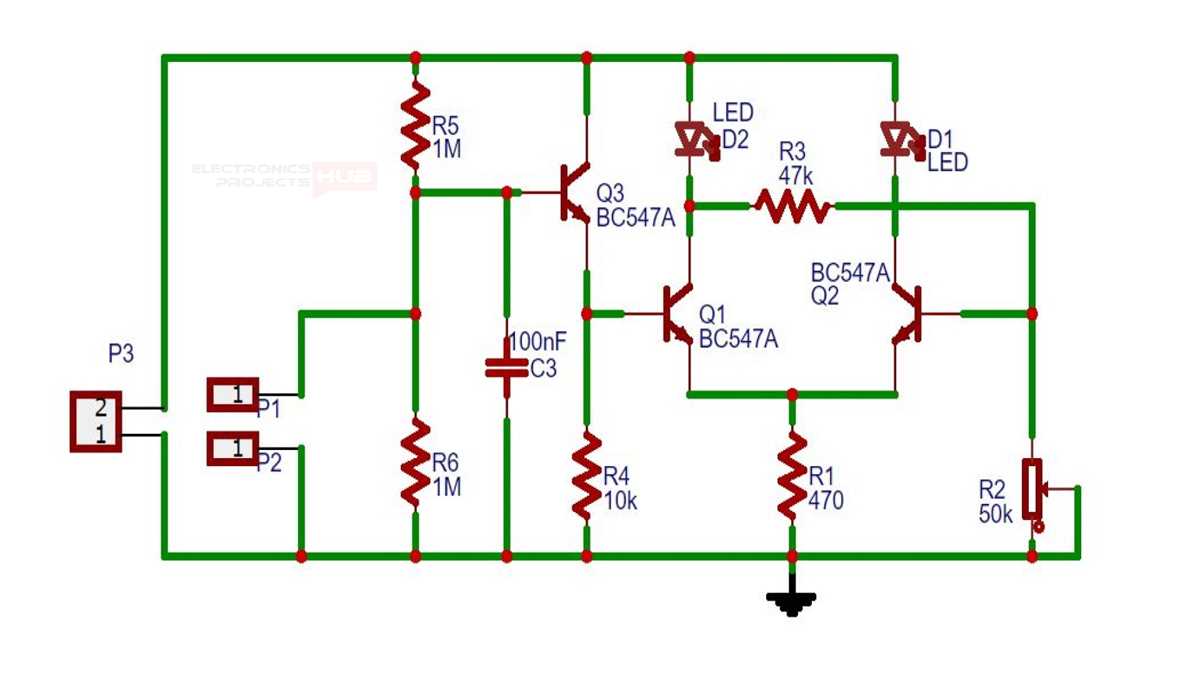
Attach two metal electrodes to adjacent fingers, typically the index and middle finger of the same hand, and keep pressure constant during measurement. Copper, stainless steel, or nickel-plated pads with a contact area of about 1–2 cm² provide stable readings. Secure the electrodes with elastic straps or medical tape so the skin contact remains steady. Connect the electrodes into a simple resistance sensing network where the skin acts as a variable resistor.
The measurement network converts skin conductivity changes into a voltage variation that can be amplified and monitored.
- Typical dry skin resistance: 300 kΩ – 1 MΩ
- Moist skin during stress: 20 kΩ – 150 kΩ
- Recommended divider resistor: 220 kΩ – 470 kΩ
- Supply voltage for the sensing network: 5–9 V
- Clean the finger surface with alcohol to remove oils.
- Place electrodes on two neighboring fingers.
- Maintain light, steady pressure without squeezing.
- Allow several seconds for the resistance value to stabilize.