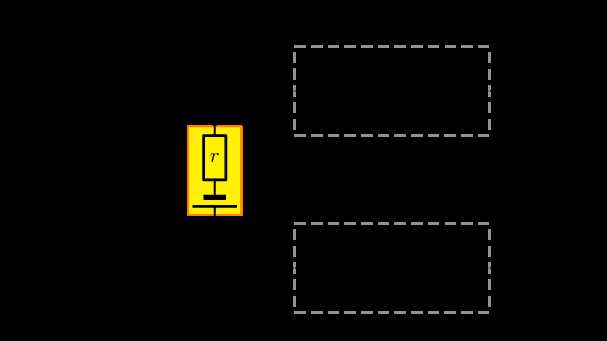
Connect the test leads across the power source terminals and apply a known load to measure voltage drop. Small drops indicate minimal impedance within the supply path while larger drops suggest poor conductivity or aging components.
Use a precise digital meter or micro-ohmmeter to capture readings under load conditions. Ensure probes are firmly attached and contact surfaces are clean to avoid false readings.
Identify high-impedance sections by measuring at multiple points along conductors and connectors. Replace corroded or undersized connectors to restore proper current flow and prevent heating.
Mark all tested paths and record values for comparison over time. This allows detection of gradual degradation in conductivity before it causes operational issues.
Internal Resistance Measurement Guide
Connect a high-precision voltmeter directly across the terminals of your power source while maintaining a low-load draw of 0.1–0.5 A to prevent overheating. Record the voltage immediately to capture the unloaded potential accurately.
Introduce a known load using a precision decade box or a calibrated resistor. Ensure the load matches 10–20% of the nominal current rating to avoid nonlinear voltage drops. Measure the voltage again under this applied load.
Calculate the difference between the open and loaded voltage. Divide this voltage drop by the applied current to determine the inherent opposition within the energy source. For instance, a 0.1 V drop at 0.2 A indicates 0.5 Ω.
- Set the source on a stable platform to minimize contact variability.
- Use four-wire (Kelvin) connections to avoid measurement error caused by connecting wires.
- Allow components to stabilize thermally before recording values.
Repeat the procedure at multiple current levels to detect nonlinearity in the source’s inner impedance. Record each pair of voltage and current readings for accurate trend analysis. Plotting voltage versus current provides a slope that represents the inner opposition directly.
For sources that operate intermittently, such as rechargeable cells, ensure a full charge cycle before testing. Capture data quickly to prevent voltage sag from skewing the measurement, and cross-verify with short pulse techniques if precision is critical.
Identifying Components Affecting Internal Resistance
Focus on the connectors and terminals first, as corrosion or loose fittings can introduce 0.05–0.2 Ω of additional opposition. Measure voltage drop under a small load at each junction to pinpoint weak links. Use copper or gold-plated contacts to reduce signal loss during testing.
Electrochemical Elements
Cells and batteries contribute significantly due to electrolyte composition and electrode surface area. A standard AA alkaline can exhibit 0.15–0.3 Ω, while lithium-ion pouches may range from 0.02–0.1 Ω. Compare readings at different charge levels and temperatures to see how ionic mobility affects overall opposition.
Passive Components
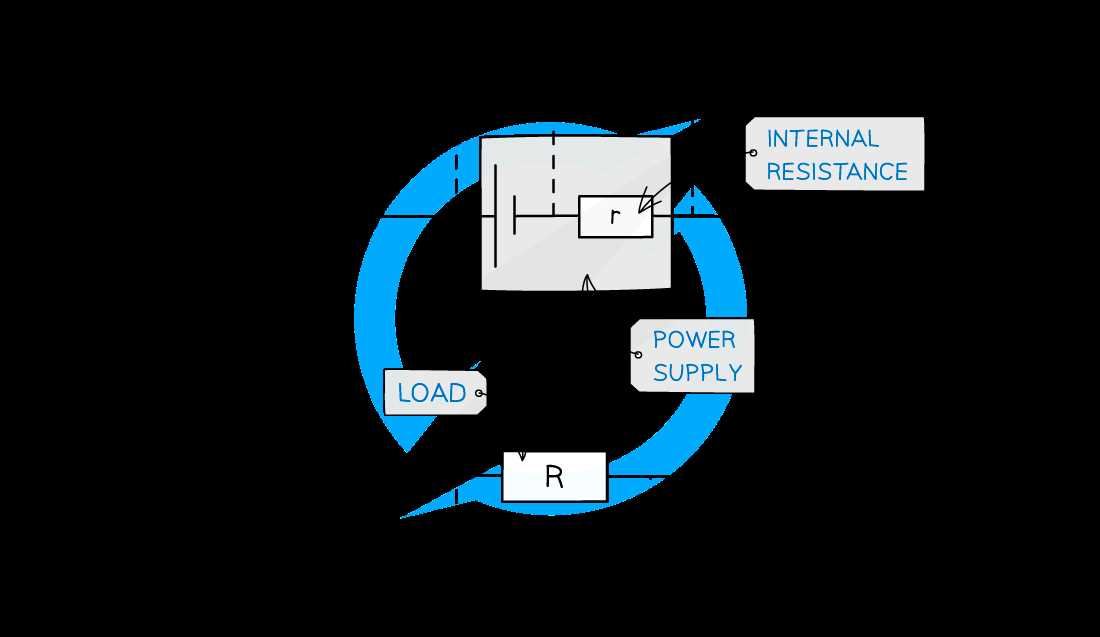
Wire gauge, solder joints, and small resistors in series impact the total impedance. For example, a 1-meter 22 AWG copper lead can add roughly 0.05 Ω. Measure each segment independently to isolate contributors, and replace any oxidized or undersized wires to achieve minimal loss in the energy path.