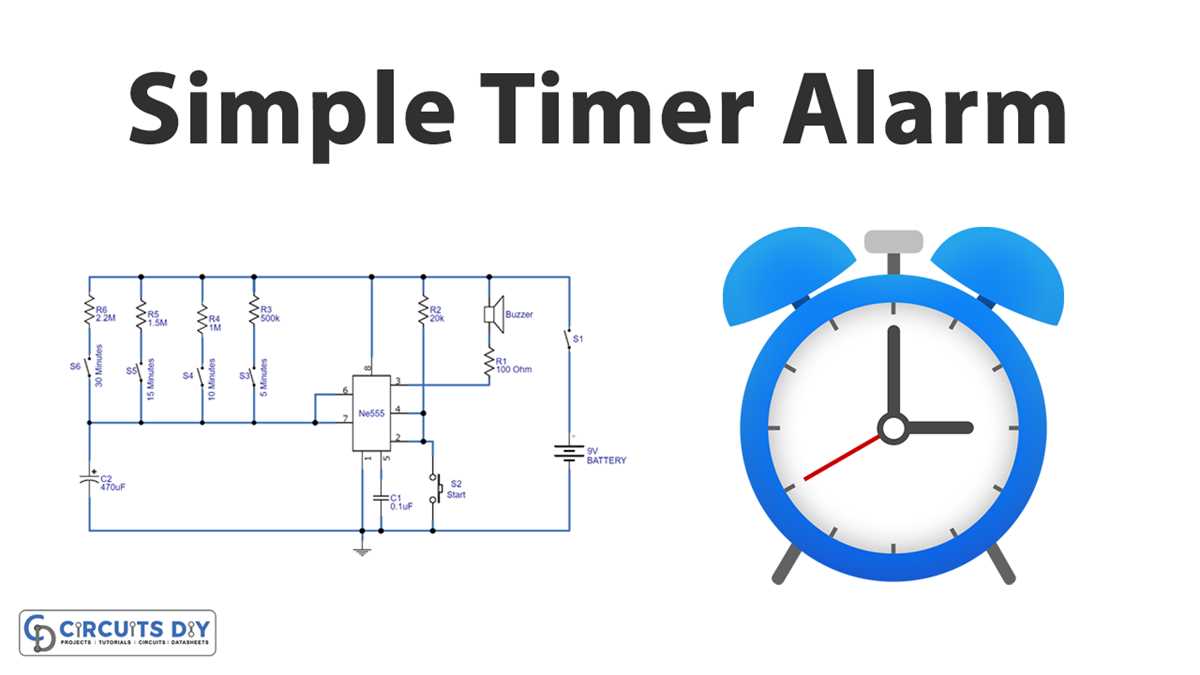
When designing a timer or pulse generator for various applications, using a versatile and cost-effective component can save time and effort. The integrated circuit discussed here is widely employed for its ability to provide precise timing functions, whether generating delays or controlling frequency. It can be configured in several modes depending on the specific needs, such as for frequency generation or pulse-width modulation.
For building a stable frequency generator, this component operates by charging and discharging capacitors through resistors, creating an oscillating signal. By carefully selecting the resistor and capacitor values, you can modify the output frequency, making it useful in diverse projects ranging from simple timers to more complex audio or light control systems. Understanding its role in both astable and monostable configurations is key for practical implementation.
Before beginning the design process, it is important to consider the required output behavior–whether you need a continuous pulse train or a one-shot pulse. From controlling motors to regulating signal flow in communication devices, this integrated unit can be adapted for numerous purposes. Being familiar with the connections and functional principles can help you modify the design to fit particular project goals effectively.
IC Timer Breakdown
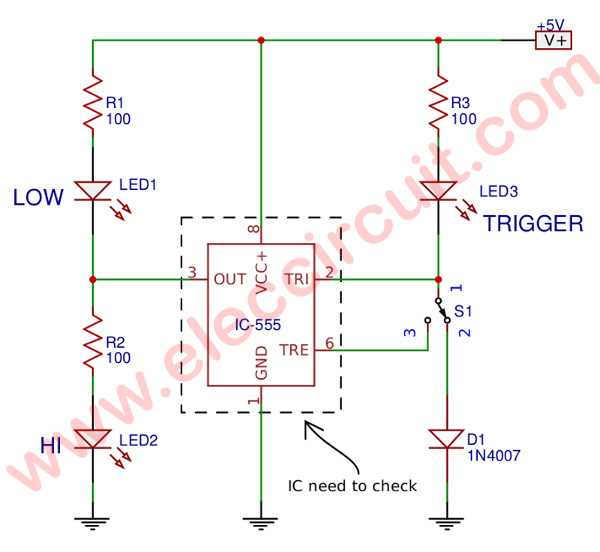
The IC timer is widely used due to its simplicity and versatility. Understanding how it functions in various configurations–astable, monostable, and bistable–is key to mastering its application in different tasks like timing, pulse generation, and frequency modulation. Each configuration serves a different purpose, with astable mode generating continuous pulses and monostable mode producing a single pulse upon triggering.
The heart of the IC is the internal comparator circuit. It constantly compares the voltage across a capacitor to a reference voltage. Depending on the comparison results, the output changes state. This feedback mechanism makes the timer suitable for generating accurate timing intervals or controlling external devices, like relays or LEDs.
In astable mode, the IC continuously oscillates between high and low states, generating a square wave output. The frequency of this square wave is determined by the external resistor and capacitor values connected to the timer. Adjusting these components can give you precise control over the pulse frequency, making it useful for applications such as clock pulses or tone generation.
For a single pulse output, use the monostable mode. In this configuration, the IC produces a single output pulse when triggered by an external signal. The width of this pulse is determined by the external resistor and capacitor. Monostable circuits are ideal for creating time delays or controlling timing-sensitive operations.
Another crucial feature of this timer is its ability to drive external devices with its output. By controlling the output voltage, the timer can be used to switch on/off transistors, activate relays, or light LEDs. Understanding the current and voltage levels is vital to avoid damaging external components.
To understand the precise timing behavior, calculate the pulse duration and frequency using the time constant formula: T = 1.1 × R × C for the astable configuration. For monostable operation, the time pulse is determined by T = 1.1 × R × C, where R is the external resistor, and C is the external capacitor. By adjusting these values, you can achieve the desired output timing with ease.
In summary, the IC timer is a versatile and simple tool, widely used in a range of electronics projects. Its capability to operate in different modes and control external components makes it indispensable for applications ranging from signal generation to time-based control. Understanding its configuration and the relationship between resistors, capacitors, and output behavior will allow you to use the timer effectively in various circuits.
How to Set Up an IC Timer in Astable Mode
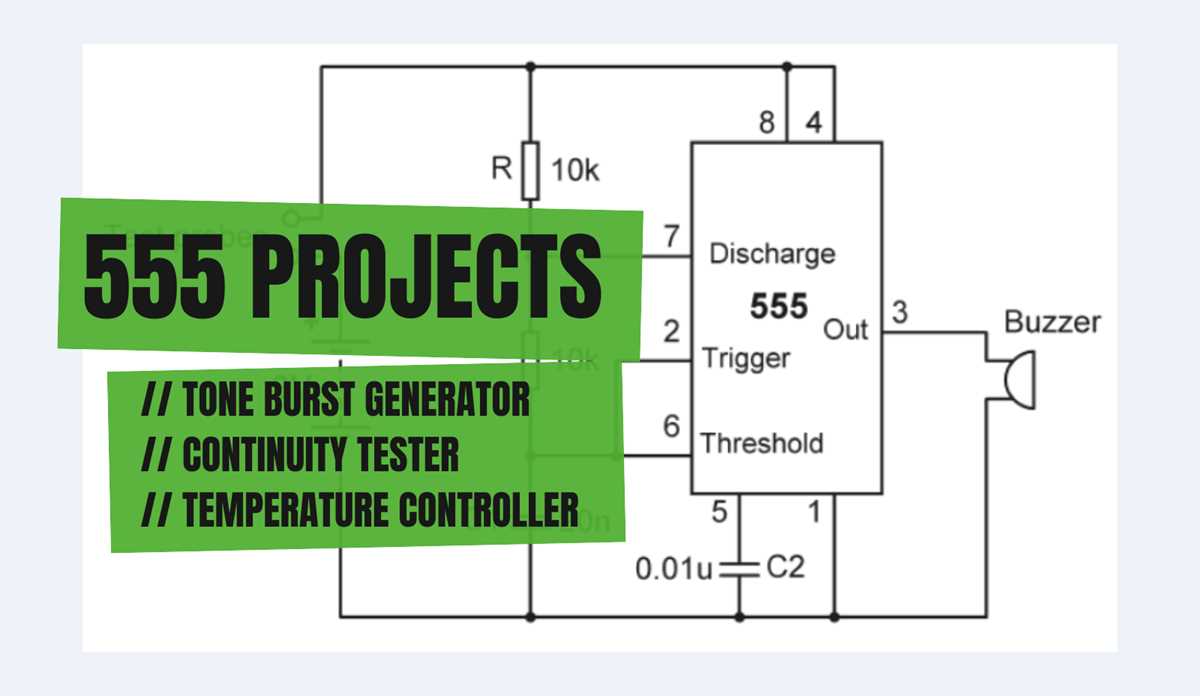
To begin, connect the power supply to the timer’s VCC (pin 8) and GND (pin 1). Set the reset pin (pin 4) high to ensure continuous operation. Link the trigger pin (pin 2) and threshold pin (pin 6) together, and connect them to a resistor network. The discharge pin (pin 7) will be involved in controlling the timing cycle, so it’s connected to the resistors and capacitor network. The output (pin 3) will give you the oscillating signal you need for your application.
For timing control, place a resistor between VCC and pin 7 (discharge pin) and another resistor between pin 7 and pin 6. Attach a capacitor between pin 6 and ground to define the frequency of oscillation. By varying the resistor values and the capacitance, you can adjust the frequency and pulse duration. A common formula to calculate the frequency is Frequency = 1.44 / ((R1 + 2R2) * C), where R1, R2, and C control the timing cycle.
Once the components are set up, the IC will begin generating a continuous square wave. The output pin will alternate between high and low states, creating a square wave with a frequency determined by the resistor and capacitor values. By adjusting these components, you can tailor the frequency and duty cycle to suit your specific timing needs, making it ideal for pulse generation, tone production, or clock signals in various electronic projects.