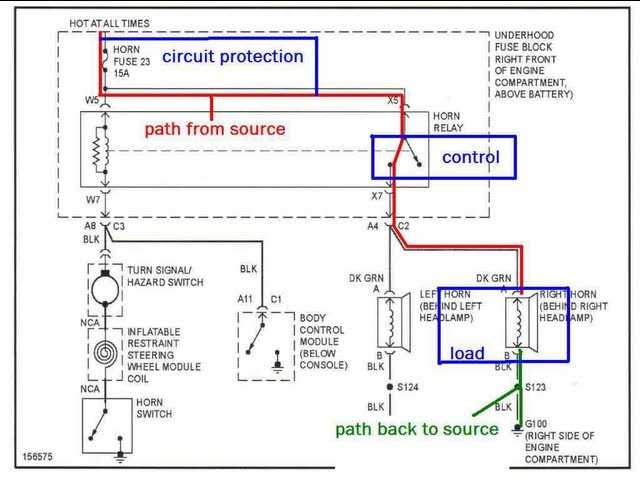
Focus first on identifying symbols and connection types to quickly determine the role of each component. Standard shapes indicate relays, fuses, switches, and sensors, while line styles reveal signal flow and grounding points. Mark these on a printed copy for faster reference.
Follow the current path from the battery or power source to locate open circuits or shorts. Start with primary circuits like ignition or lighting, then move to auxiliary systems. Use a multimeter to confirm continuity at key junctions and note any irregular voltage drops.
Check connectors and pin assignments precisely to prevent misdiagnosis. Each connector often has numbered pins corresponding to specific wires. Comparing these with the schematic allows accurate tracing of signals and identification of potential faults in sensors or actuators.
Label each wire with its function and color code while examining the layout. This reduces confusion when multiple circuits overlap in a harness. Keeping a diagram with annotations helps when replacing components or testing relays, fuses, and switches systematically.
Verify continuity and component operation sequentially rather than testing randomly. Inspect relays, solenoids, and modules in the order the current would normally flow. Observing these steps ensures you pinpoint the exact source of a malfunction without trial-and-error disassembly.
Identifying Symbols and Line Types in Wiring Diagrams
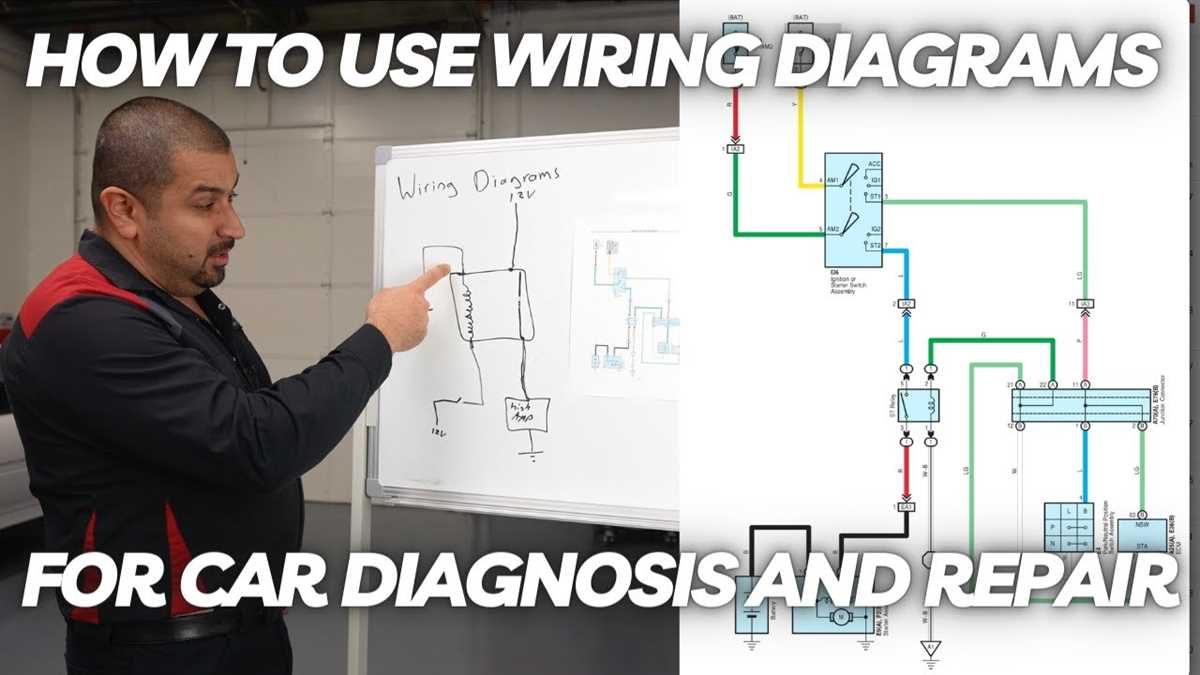
Mark each shape and line type immediately to recognize relays, fuses, switches, and sensors. Solid lines indicate continuous power or ground paths, while dashed lines often represent signal or control circuits. Triangles, circles, and squares correspond to specific devices–triangles usually show diodes or direction of flow, circles indicate connectors, and squares represent modules. Highlighting these elements on a copy simplifies tracing multiple circuits simultaneously.
Pay attention to line thickness and patterns because they convey current capacity and wiring function. Heavy lines signal high-current paths for starters or main power feeds, thin lines track low-current sensor or indicator signals. Combining symbol recognition with line characteristics allows accurate identification of component roles and interconnections without relying on guesswork during troubleshooting or component replacement.
Tracing Circuits to Diagnose Electrical Problems
Start at the power source and follow each branch sequentially to pinpoint faults. Check fuses, relays, and connectors first, then proceed along each path using a multimeter to confirm voltage continuity. Note abnormal readings immediately to isolate potential shorts or open circuits.
Document each step with a checklist to avoid confusion in complex harnesses:
- Mark tested lines with colored tape or annotations
- Record voltage levels at key points
- Compare measurements with standard specifications
- Identify points where current does not flow as expected
Focus on suspect components in sequence rather than testing randomly. Measure resistance in sensors, continuity in switches, and current draw in actuators. Testing in logical order from source to load reduces troubleshooting time and ensures accurate identification of malfunctioning elements without unnecessary disassembly.
Interpreting Connectors and Component Layouts
Check connector pin assignments before testing circuits to avoid incorrect measurements. Each connector typically has numbered terminals corresponding to specific signals or power feeds. Compare pin numbers with the schematic to trace signal flow accurately and identify faulty paths quickly.
Organize component positions visually using reference layouts. Modules, relays, and sensors are often clustered in fuse boxes, junction blocks, or engine compartments. Mapping these positions reduces time spent searching for specific elements during troubleshooting.
Use tables to track connector details and functions for clarity:
| Connector | Pin | Function | Signal Type |
|---|---|---|---|
| ECM1 | 3 | Oxygen Sensor Signal | Analog |
| FUSEBOX_A | 12 | Headlight Power | High Current |
| SWITCH_B | 2 | Ignition Input | Control |
| RELAY_C | 1 | Fuel Pump Activation | Control |
Trace components sequentially in the physical layout while cross-referencing table entries. Confirm continuity and connector integrity at each point. Label wires and terminals to prevent confusion, especially when multiple circuits run through a single harness or junction block.