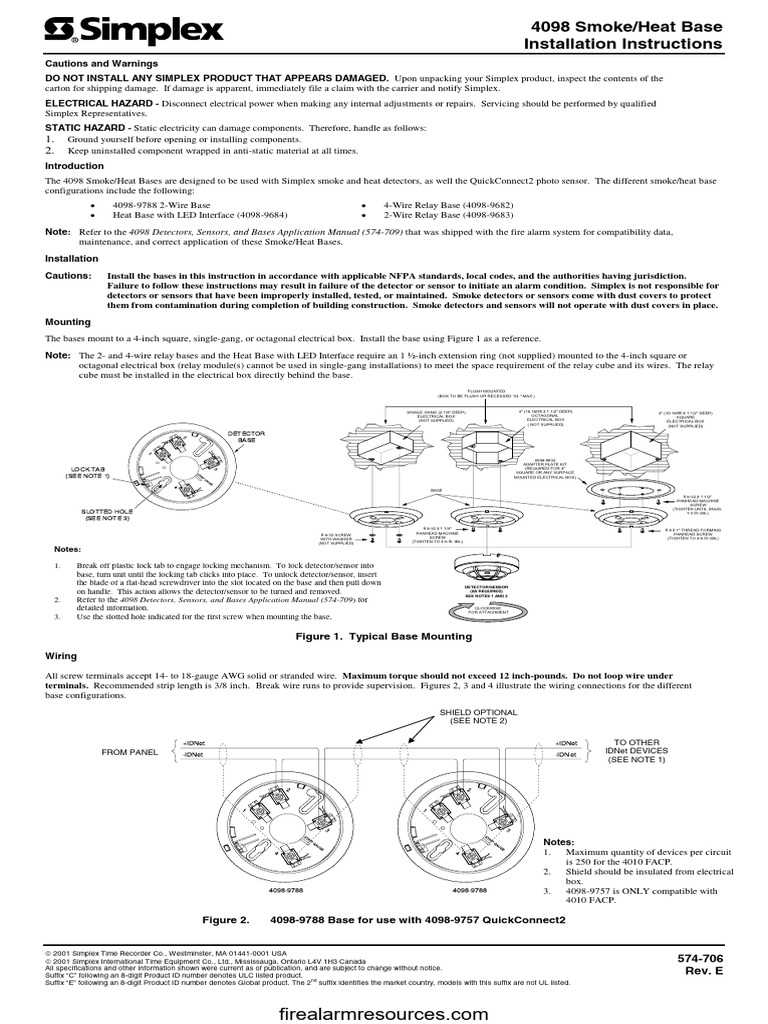
Connect the air handling smoke sensor module directly to the fire alarm control panel using supervised signal lines and a regulated power supply. Most commercial units operate from 24-volt DC provided by the alarm panel or a listed auxiliary supply. Correct polarity and terminal identification prevent communication faults and unwanted alarms.
The sensing unit mounted on the ventilation channel typically includes terminals for power input, alarm relay contacts, and supervisory outputs. Alarm relay contacts connect to the panel input loop so the system registers smoke inside the airflow path. Some models include a separate relay for fan shutdown that interrupts the motor control circuit of the air handler.
Power conductors often use 18 AWG or 16 AWG copper depending on distance between the panel and the sensing unit. Signal pairs must remain separated from high-voltage HVAC lines to avoid electrical interference. Shielded cable may be used in mechanical rooms with large motors or variable frequency drives.
Placement of terminal connections inside the unit follows manufacturer markings. Typical layouts include labeled points for power positive, power negative, alarm relay common, and normally open or normally closed contacts. Clear labeling simplifies installation and supports routine inspection by fire protection technicians.
Duct Detector Wiring Diagram With Fire Alarm Panel and HVAC Shutdown Connections
Route the sensing unit terminals to the fire alarm control panel using supervised low-voltage conductors rated for fire protection systems. Most installations rely on a 24-volt DC supply delivered from the panel auxiliary output. Maintain polarity between positive and negative terminals to keep monitoring circuits stable.
Main connection points inside the sensing module normally include:
- Power input positive terminal
- Power input negative terminal
- Alarm relay common contact
- Normally open or normally closed alarm contact
- Trouble or supervisory output terminal
The alarm relay pair links to an initiating device input on the fire alarm control panel. Once smoke particles pass through the air sampling chamber, the relay changes state and the panel registers an alarm condition. Many systems also activate audible signals and building evacuation indicators through the main control unit.
Ventilation shutdown uses an auxiliary relay inside the sensing assembly. That relay interrupts the control voltage feeding the air handler starter or motor contactor. Stopping airflow prevents smoke transport through supply channels and reduces spread across occupied areas.
Typical connection sequence for the shutdown function:
- Control voltage from HVAC control board routed through relay common terminal
- Normally closed contact connected to fan starter control input
- Alarm activation opens the contact and stops the blower motor
Separate low-voltage signal cables from high-power motor lines. Maintain spacing of several inches inside electrical enclosures and use conduit where required by fire safety codes. Clear terminal labeling and proper routing simplify maintenance and reduce troubleshooting time during inspection.
Terminal connections between duct smoke detector and fire alarm control panel
Connect the sensing module terminals to the fire alarm control panel using supervised initiating device circuits powered by 24-volt DC. Maintain correct polarity between positive and negative supply lines so the monitoring loop remains stable and faults are detected by the panel.
The unit installed on the ventilation channel normally contains several labeled terminals used for power and alarm signaling. Each conductor must land on the correct contact point to ensure the control panel receives alarm and trouble conditions without interruption.
Main terminal points inside the sensing module
Typical connection labels include power input, relay contacts, and supervisory outputs:
Power + terminal supplies regulated voltage from the fire alarm panel.
Power − terminal completes the DC supply path.
Alarm COM serves as the relay common contact.
Alarm NO or NC routes the alarm signal toward the initiating input of the control panel.
Trouble or supervisory terminal reports device faults or maintenance alerts.
Alarm signaling usually travels through the relay contacts. When smoke enters the sampling chamber inside the ventilation channel, the internal relay changes state. The initiating zone at the control panel detects the change and activates building notification appliances or monitoring systems.
Connection path toward the fire alarm panel
The signal conductors typically follow this sequence: power pair from panel auxiliary output enters the sensing unit, relay contacts link to the initiating device loop, and end-of-line resistors remain at the last device to maintain supervision of the circuit.
Use 18 AWG fire alarm cable for most installations and route the conductors inside metallic conduit in mechanical rooms. Separation from high-voltage motor feeds prevents electrical noise that could cause false alarm signals.