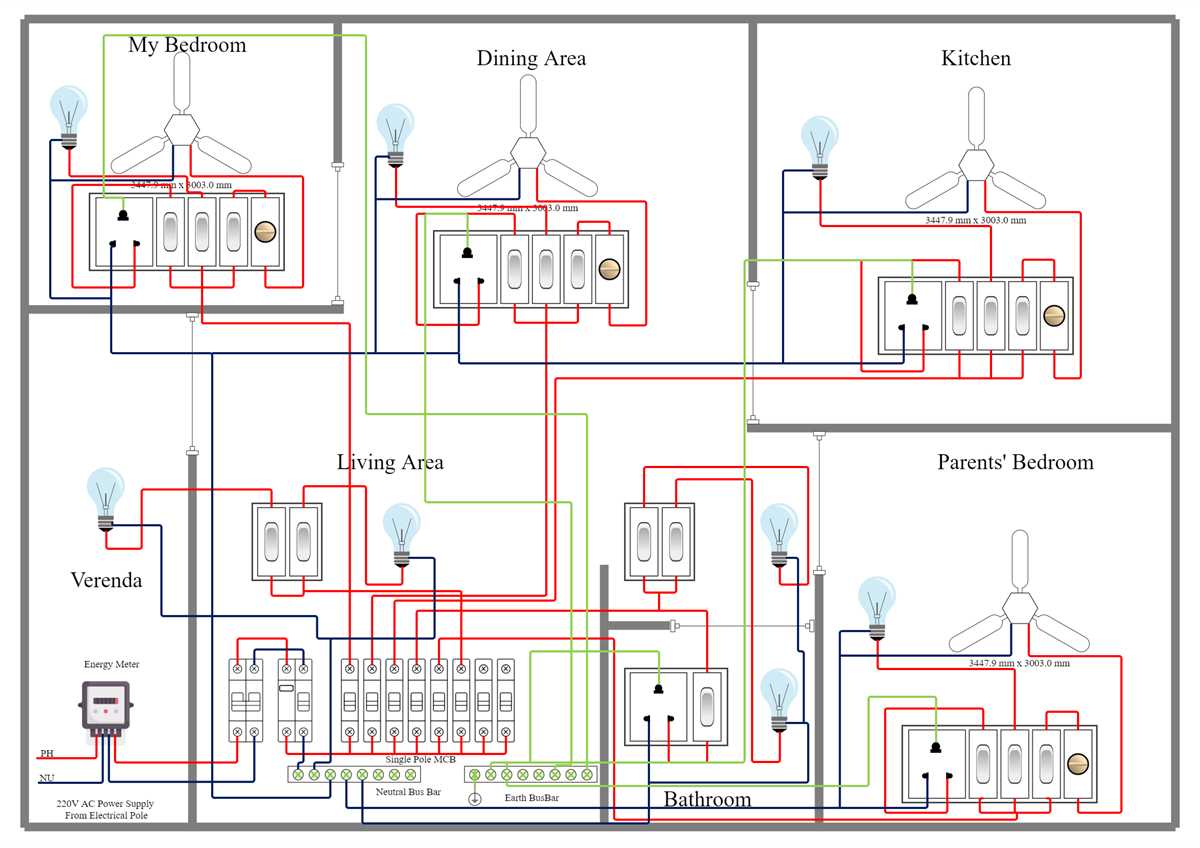
Ensure all power circuits are labeled clearly before connecting appliances to prevent overloads and reduce the risk of short circuits. Use color-coded lines to separate lighting paths from high-current outlets for easier identification and troubleshooting.
Distribute breakers according to load requirements so that each major appliance has its dedicated pathway. This prevents voltage drops and maintains stable current flow throughout the household network.
Document all switch positions and junction points in a clear reference sheet. Include measurements for distances between outlets and fixtures to avoid excessive cable lengths and ensure compliance with safety regulations.
Include surge protection and grounding points in the central panel layout. Proper earthing prevents electrical shocks and protects sensitive devices from transient spikes caused by sudden power fluctuations.
Residential Power Layout for Safety and Appliance Connectivity
Separate circuits for high-load appliances such as ovens, dryers, and air conditioners prevent overloads on general sockets. Each line should have its own breaker rated for the device’s current to maintain stable voltage and avoid tripping.
Plan lighting and outlet paths with careful spacing to reduce long cable runs. Maintain at least 12-inch spacing from water pipes and avoid sharp bends to preserve insulation integrity. Mark junction boxes for easy access during maintenance.
Include grounding and surge protection throughout the network. Connect metallic fixtures and appliances to a common earth point, and install surge suppressors near sensitive electronics to protect from voltage spikes caused by storms or power fluctuations.
Mapping Main Power Supply and Distribution Breakers
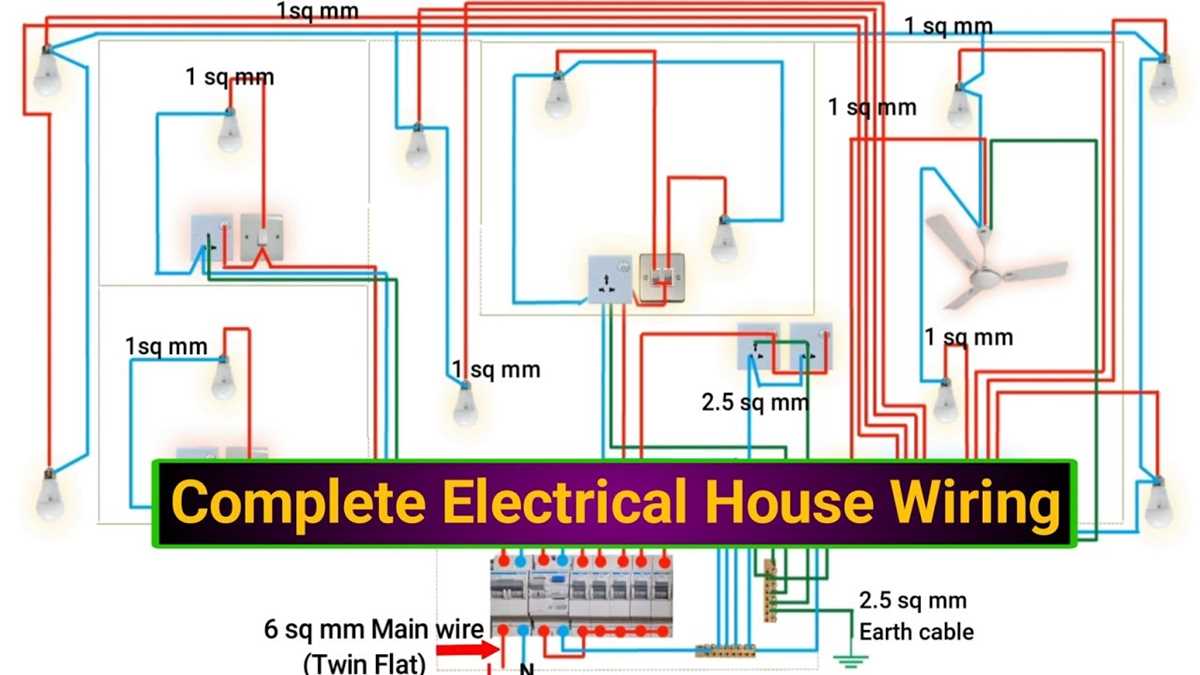
Label each main line entering the panel according to its voltage and amperage. Identify the primary feed from the utility and mark secondary feeds leading to subpanels or large appliances to maintain clear reference points.
Document the amperage rating of every breaker and its associated branch. Standard residential breakers typically range from 15A to 50A; appliances such as water heaters and HVAC units require dedicated lines rated accordingly to prevent overloads.
Arrange circuits logically by zone or room to simplify maintenance. Group lighting, general outlets, and high-load devices separately to quickly locate potential issues and reduce downtime during troubleshooting.
Trace ground and neutral connections to confirm proper bonding at the main panel. Misconnections can create dangerous potential differences and lead to tripping or electrical shock risks.
Include surge protection devices near the main panel. Connect them inline with the main feed to guard all downstream circuits from voltage spikes caused by lightning or switching events.
Verify breaker placement aligns with the anticipated load. Avoid mixing high-load appliances on the same line with low-power sockets; this prevents frequent tripping and maintains consistent voltage levels.
Maintain clear labeling for each branch on the panel cover and in a separate log. Include room designation, device type, and amperage; this improves safety and reduces confusion during upgrades or emergency shutdowns.
Periodically inspect connections for signs of overheating or corrosion. Tighten terminals and ensure wires are correctly seated in breakers. Proper mapping and maintenance extend system reliability and reduce the risk of fire or equipment damage.