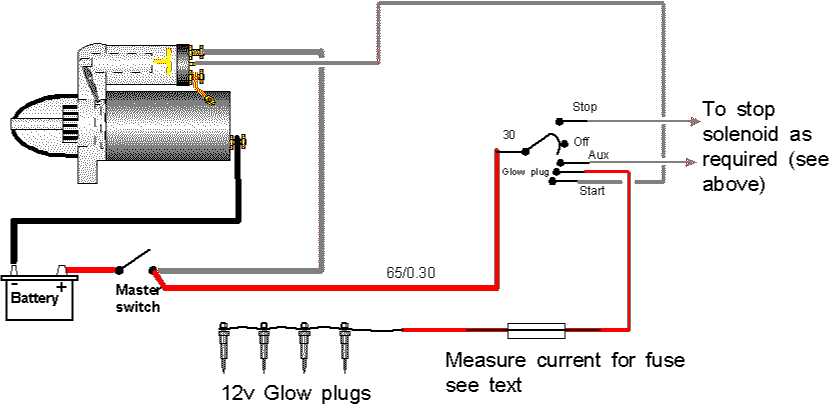
Use a 12-volt delay relay module rated for 40–70 A to manage the preheating elements installed in a diesel engine. The relay coil should receive power through an ignition-activated line, while the heating elements draw current directly from the battery through a fused supply rated between 60 A and 80 A. This arrangement allows the heating phase to run for 5–12 seconds, a typical interval that raises chamber temperature enough for reliable cold ignition.
The wiring layout normally includes four main parts: a battery source, a high-current relay, a delay control module, and the heating elements mounted in the cylinder head. Connect the battery positive terminal to the relay input through a heavy cable of 6–8 AWG copper. The relay output feeds the heater terminals using the same gauge to prevent voltage drop. Ground connections should attach directly to the engine block; resistance above 0.2 Ω can reduce heating performance.
The delay controller can be assembled using a NE555-based pulse module or a small microcontroller board such as an ATtiny. In a typical configuration, the delay period is determined by an RC pair. A capacitor of 470 µF combined with a resistor near 15 kΩ produces roughly ten seconds of activation. Adjusting either value modifies the heating duration for different climates or engine sizes.
Include a dashboard indicator lamp connected in parallel with the relay coil. The lamp shows when the heating elements receive power and warns the driver not to crank the engine prematurely. Many diesel systems also add a temperature sensor near the coolant outlet; if coolant exceeds 60 °C, the delay module bypasses the heating stage, reducing electrical load on the battery and starter.
Diesel Preheat Control Layout for Cold Starts
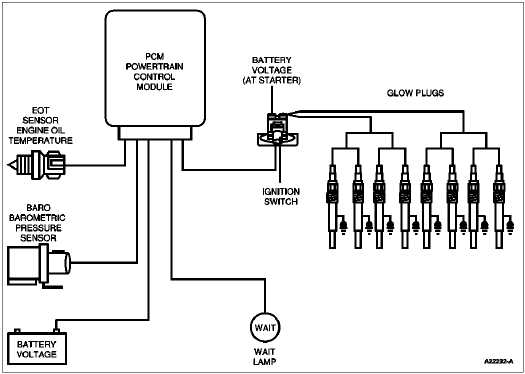
Use a relay-driven delay module built around an NE555 chip to energize cylinder-head sheath heaters for 5–12 seconds before cranking. Select a 12 V automotive relay rated at 40 A and place a flyback diode (1N5408) across the coil. Set the delay interval with a 100 kΩ potentiometer paired with a 100 µF electrolytic capacitor; this pair defines the warm-up period. Power the control stage directly from the battery through a 5 A fuse and trigger it from the ignition key’s preheat position so the heating elements receive current only during the preparation phase.
Component Values and Wiring Layout
The NE555 operates in monostable mode where the RC network determines activation duration. With R = 100 kΩ and C = 100 µF, the output pulse lasts roughly 11 seconds (T ≈ 1.1 × R × C). Shorter preparation periods use 47 µF or a 50 kΩ variable resistor. Pin 3 of the chip feeds a small NPN transistor such as a 2N2222 through a 1 kΩ base resistor; the transistor switches the relay coil, preventing the chip from carrying heavy load. Connect pin 8 and pin 4 to +12 V, pin 1 to ground, pin 2 to the ignition trigger line through a 10 kΩ pull-up, and pin 6 tied to the RC node. Install a 470 µF capacitor near the supply pins to stabilize voltage during high current draw from the heaters. Heavy conductors (at least 6 mm² copper) should route battery power to the heating elements through the relay contacts, while the low-power control wiring remains separate to reduce interference and voltage drop.
How a Glow Plug Timer Circuit Controls Preheating Duration in Diesel Engines
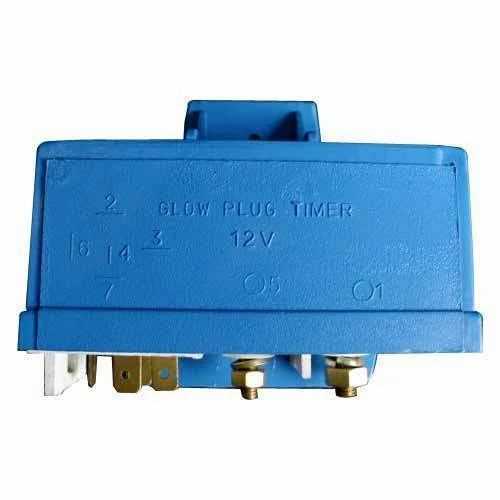
Set the preheating interval between 3 and 10 seconds for most light-duty diesel engines; colder climates may require up to 15 seconds. The control module determines this interval by regulating current flow to the heating elements installed in each cylinder head port. When the ignition key moves to the pre-start position, the controller activates a relay that supplies high current to the heaters while monitoring voltage and temperature feedback.
The control unit relies on a temperature sensor placed near the coolant passage or intake manifold. Lower ambient or engine temperatures trigger a longer energizing period. Typical calibration values used by manufacturers:
- +20 °C coolant temperature → ~2–3 s heating
- 0 °C → ~5–7 s heating
- −10 °C → ~10–12 s heating
- below −20 °C → up to ~15 s heating
Timing control is usually implemented through an electronic module using a transistor switch and a high-current relay. Once activated, the module counts the heating duration using an RC network or a microcontroller clock. The relay contacts then disconnect the heaters before battery drain or thermal overload occurs.
Voltage monitoring plays a second role. If supply drops below roughly 10.5–11 V during heating, the controller shortens the interval. This prevents deep battery discharge during cold starts, particularly in engines with four or six heating elements drawing 8–15 A each.
Typical operational sequence:
- Ignition key moves to the pre-start position.
- Control module reads coolant or intake temperature.
- Relay closes and sends high current to heating elements.
- Indicator lamp on the dashboard lights up.
- Internal timing network counts the calibrated interval.
- Relay opens and the indicator lamp turns off.
Advanced diesel control systems extend heating briefly after engine start. This post-start phase stabilizes combustion and reduces white smoke. Duration usually ranges from 20 to 180 seconds depending on engine load and temperature readings.
Design parameters that determine heating duration include resistance of the elements (typically 0.4–1.0 Ω), supply voltage, and allowable tip temperature, often limited to 900–1050 °C. Engineers adjust the RC constant or firmware values so that the heating phase ends before these limits are exceeded.
For reliable operation, the controller must also incorporate protective functions:
- thermal cutoff preventing overheating of heating elements
- short-circuit detection on the supply line
- relay contact protection against current spikes
- automatic shutdown if ignition remains on too long without engine start
These measures maintain stable pre-start heating while preventing damage to electrical components and the battery system.