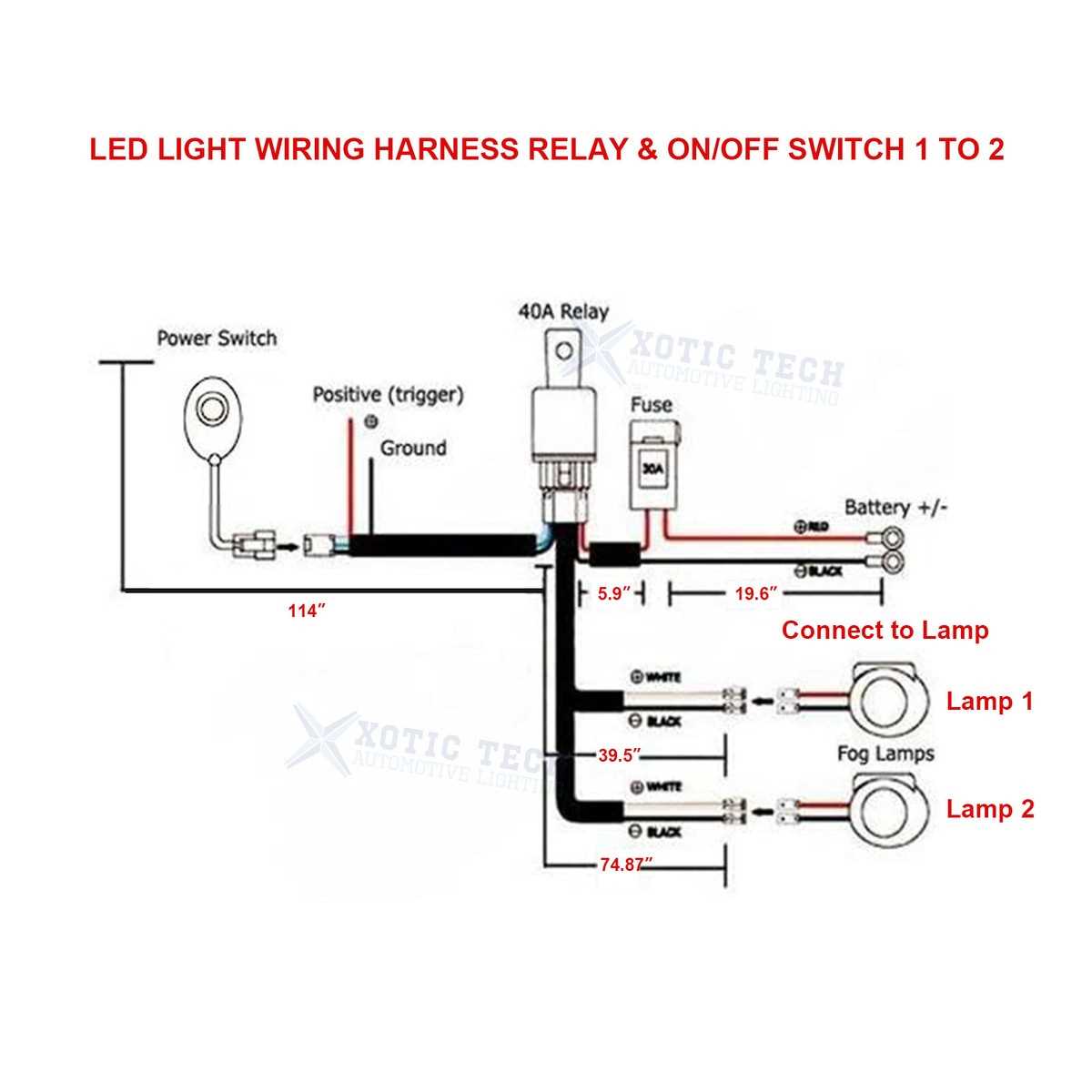
Connect auxiliary road lamps through a 4-pin electromagnetic switch powered directly from the battery rather than feeding current through the dashboard button. This approach keeps high current away from interior controls while allowing the small cabin button to activate the power contact safely.
Typical installation uses terminals numbered 30, 85, 86, and 87. Terminal 30 receives positive supply from the battery through a fuse rated between 15 A and 20 A depending on lamp wattage. Terminal 87 sends current to the pair of front beam units. The control coil sits on pins 85 and 86, where one side goes to ground and the other to the dashboard switch.
Current demand depends on bulb type. Two halogen units rated at 55 W each draw about 9.2 A on a 12 V system. Copper conductors between the battery and the power contact should measure at least 14 AWG to avoid voltage drop. Thinner conductors increase resistance and reduce brightness.
Ground connections require direct contact with chassis metal. Paint, rust, or loose bolts raise resistance and cause unstable operation. Use ring terminals secured with stainless hardware and place them on cleaned metal surfaces near the lamp housing.
The fuse must sit close to the battery terminal. If insulation damage occurs along the cable run, the protective element interrupts current before the conductor overheats. This small component prevents harness damage and protects the vehicle electrical system.
Fog Light Wiring Diagram Relay Connection With Switch Fuse and Battery Layout
Connect auxiliary road lamps through a 4-pin electromagnetic control unit powered directly from the vehicle battery. The positive battery cable should pass through a fuse holder placed within 20–30 cm of the battery terminal. From that fuse, the conductor goes to terminal 30 on the power contact device. Terminal 87 then feeds current to the pair of front road lamps mounted on the bumper or grille.
Control of the power contact occurs through a low-current dashboard button connected to the coil terminals. Typical layout:
- Pin 85 connected to chassis ground
- Pin 86 connected to the dashboard control button
- Button receives +12 V from an accessory source or parking lamp line
- When the button closes, the coil energizes and the internal contact links pins 30 and 87
Correct conductor size prevents voltage loss and overheating. Recommended installation steps:
- Use 14 AWG copper cable between battery, power contact unit, and lamp pair
- Install a 15–20 A protective fuse depending on bulb wattage
- Secure ground leads to bare chassis metal near each lamp housing
- Route cables away from engine heat and moving parts using plastic loom
This layout ensures stable current delivery while keeping the cabin control button free from heavy electrical load.
Relay Terminal 30 85 86 87 Connections for Fog Light Wiring Diagram
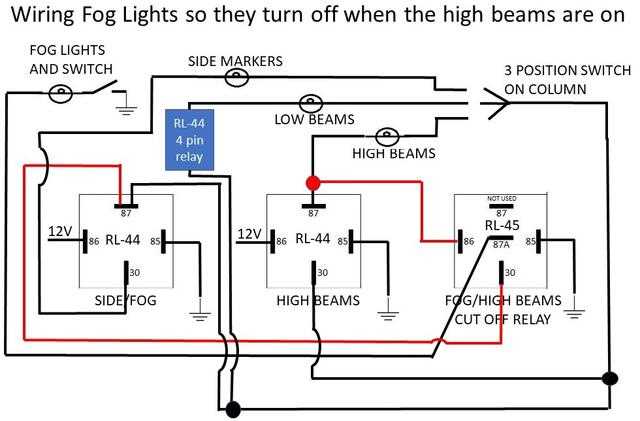
Connect terminal 30 directly to the battery positive line through a fuse rated between 15 A and 20 A. This pin supplies the high-current path used by the front road lamps. Place the fuse close to the battery so any short along the cable interrupts current immediately.
Terminal 87 serves as the output contact. When the electromagnetic contact closes, current flows from pin 30 to 87 and then toward the lamp pair mounted at the front bumper area. Use copper conductors no smaller than 14 AWG if two 55 W bulbs are installed.
Pins 85 and 86 belong to the internal control coil. One of these terminals attaches to vehicle chassis ground, while the other connects to the cabin control button. When the button sends +12 V to the coil, the magnetic field pulls the internal armature and links the power contacts.
The dashboard control button usually receives voltage from an accessory or parking lamp line. This arrangement prevents the auxiliary beams from operating when the vehicle electrical system is turned off. Current through the coil normally stays below 200 mA, allowing thin control conductors inside the cabin.
After installation, verify continuity with a multimeter. Battery voltage should appear at pin 30 at all times, while pin 87 shows voltage only after the dashboard button energizes the control coil. This test confirms correct connection of all four terminals.