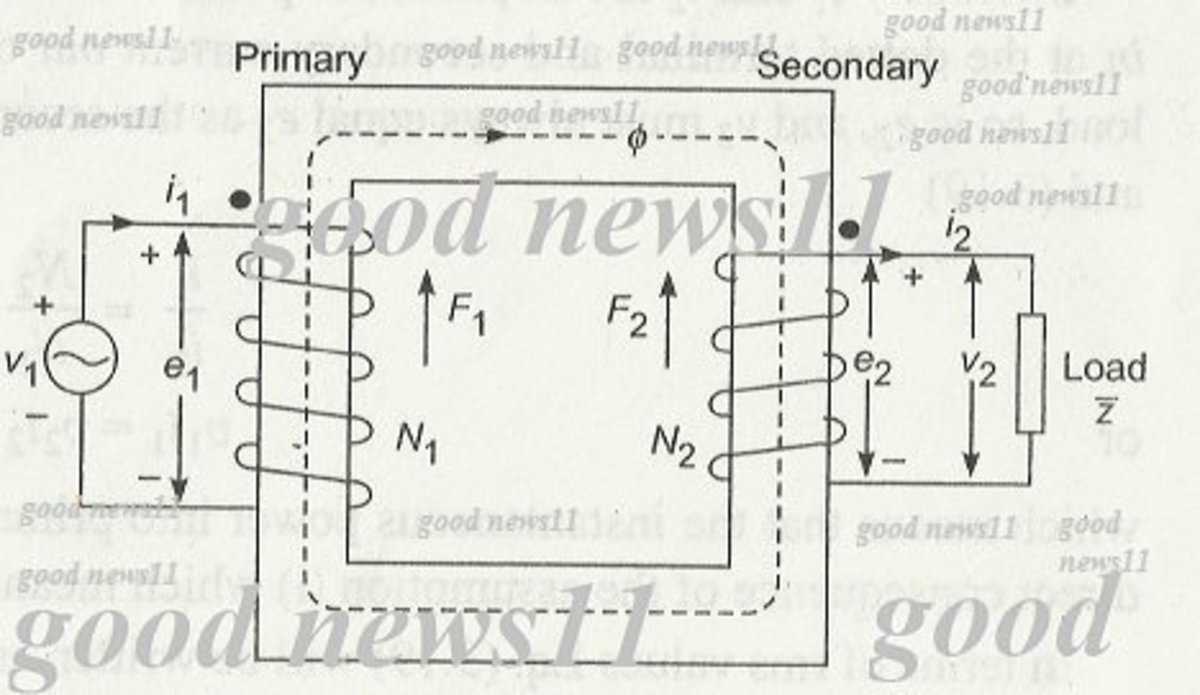
Start by replacing complicated networks of components with a model that represents the behavior of the system using just a few key elements. This method allows you to analyze the performance of a system without getting bogged down by unnecessary details.
To create a clear and functional representation, focus on replacing real-world parts like resistors, capacitors, and inductors with idealized versions that simplify the calculations. For example, replace a voltage source with an ideal voltage source and a resistor network with a simple equivalent resistance.
Understanding how to build this model step by step makes solving problems like voltage drop or current flow much more straightforward. This approach is particularly useful when analyzing components like amplifiers, power supplies, or signal filters, where direct measurement is difficult or impractical.
Building an Accurate Model for Electrical Systems
Begin with simplifying a complex electrical network by converting it into an idealized model that closely represents its behavior under different conditions. Use standardized elements like resistors, capacitors, and inductors to replace intricate components, allowing you to focus on key parameters like current and voltage without unnecessary complexity.
The first step is to identify how each component interacts in the original setup. For instance, if you’re dealing with a power supply and various resistive elements, these can be modeled with a simplified resistance that combines their effect, drastically reducing calculation time while maintaining accuracy in your results.
Next, draw the simplified schematic by replacing the power source or voltage source with idealized versions. This approach is commonly used when dealing with systems where direct measurement is difficult or when exact values are not needed for general analysis, such as in signal processing or electrical signal modeling.
Finally, after you’ve simplified the components, use this model to predict system behavior under varying load conditions. This method is incredibly useful for troubleshooting and improving system performance, as it makes identifying problems like excessive current draw or voltage fluctuations far easier to diagnose and correct.
How to Construct an Equivalent Circuit Model for Simple Systems
Start by identifying the key components in your system: power sources, resistive elements, and any reactive components like capacitors or inductors. Replace real-world elements with their idealized counterparts to simplify the analysis. For instance, represent resistors with their resistance values and power sources with ideal voltage or current sources depending on the situation.
Step 1: Combine Series and Parallel Elements
If your system includes multiple resistors in series or parallel, combine them into a single resistance. Use the appropriate formulas: for series resistors, add their values together; for parallel resistors, use the reciprocal sum. This step reduces the number of elements in your model, making it easier to analyze.
Step 2: Substitute Reactive Elements
For inductors and capacitors, substitute them with their impedance equivalents depending on the frequency of operation. This helps in simplifying the model, especially for AC analysis, where the impedance of these components depends on frequency. Use standard formulas for reactance (X = 1/jωC for capacitors, X = jωL for inductors) to replace these elements in the schematic.
Finally, draw the reduced model by positioning the idealized elements in a simplified form. Ensure that all connections reflect the actual paths of current flow and voltage drops. With these steps, you now have a clear, simplified representation of the system, ready for further analysis or calculation of key parameters like current and voltage.