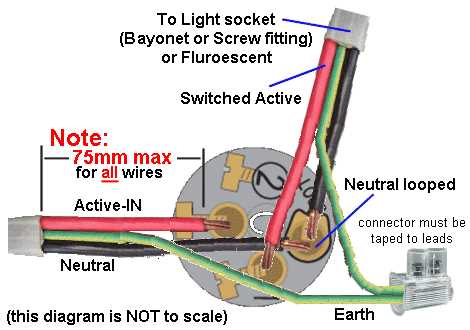
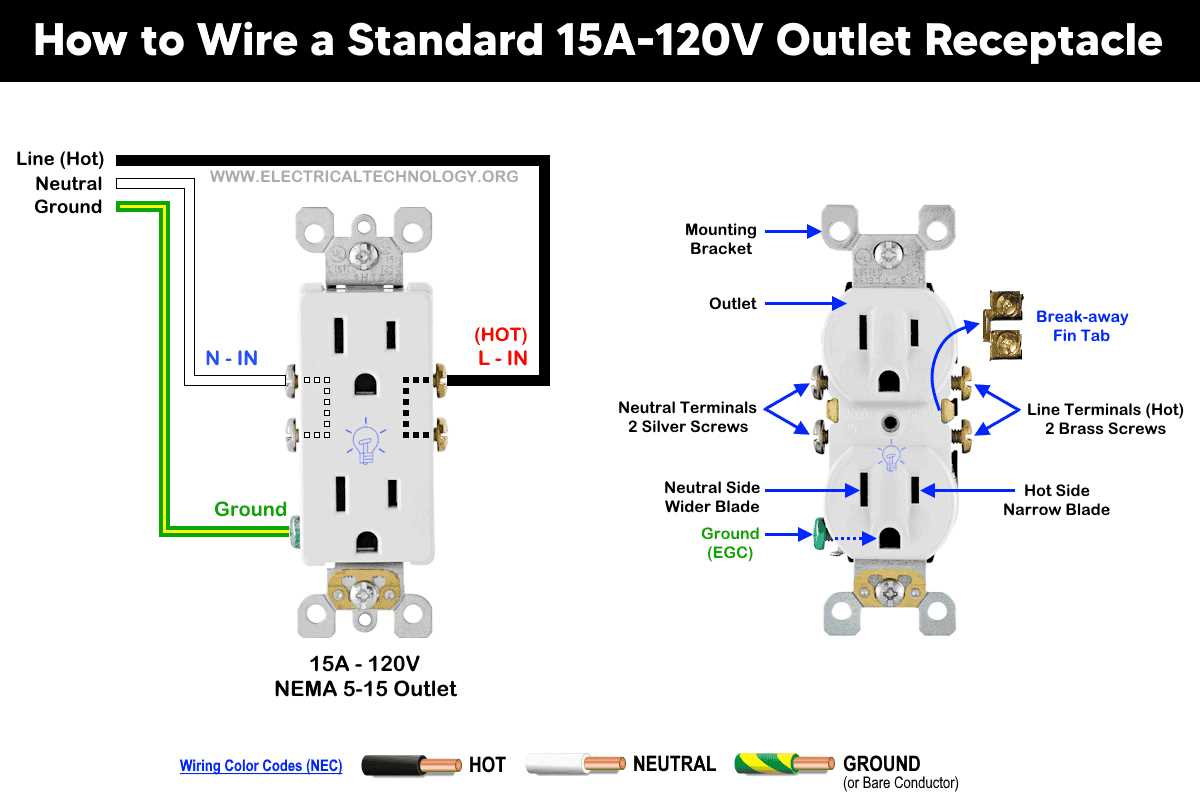
Use a clear terminal layout before attaching conductors: connect the live lead to the brass terminal, the neutral lead to the silver terminal, and the ground lead to the green screw. In North American 120-volt systems the live conductor is usually black or red, the neutral is white, and the grounding conductor is green or bare copper. Matching each conductor to its designated terminal prevents reversed polarity and reduces overheating at contact points.
A typical three-pin connector contains two parallel blades and one round grounding pin. The round pin links directly to the device chassis and directs stray current into the building grounding network. Measurements show that correct grounding can drop fault voltage on exposed metal surfaces from dozens of volts to near zero within milliseconds during a short circuit.
Inside the connector housing, conductors should be stripped by 10–12 mm and tightened firmly beneath terminal screws. Copper strands must sit fully under the clamp plate; loose strands increase resistance and may raise contact temperature above 60 °C during sustained loads of 10–15 amperes. A strain-relief clamp should grip the outer cable jacket rather than the inner conductors so pulling force does not reach the terminals.
Check orientation after assembly. The wider blade corresponds to the neutral path, while the narrower blade carries the energized conductor. This polarity arrangement ensures switches and fuses interrupt the energized line rather than the return path, reducing the chance of live components remaining energized while a device appears switched off.
Power Connector Pin Layout for Safe Installation
Use a three-core connector layout where the live conductor attaches to the brass terminal, the neutral conductor to the silver terminal, and the protective ground to the green terminal screw. Keep insulation stripped to about 8–10 mm so copper reaches the clamp without exposed strands outside the terminal. Route each lead along the molded channels inside the housing so the cover closes without pinching. Tighten terminal screws firmly; loose contact raises resistance and heat during load.
For a standard household cord set rated around 120–250 V, arrange conductors by color: black or brown for live, white or blue for neutral, and green or green-yellow for ground. Feed the cable through the strain clamp before attaching conductors; the clamp must grip the outer jacket rather than the copper cores. Bend each lead into a small clockwise hook so the screw head presses the loop tighter as it turns. Trim stray strands using side cutters; even one loose filament can contact another terminal inside the casing. After assembly, confirm polarity using a multimeter: continuity from the live pin to the live conductor, neutral pin to the neutral conductor, and ground pin to the chassis or grounding lead. Finally, close the housing and tighten the casing screws evenly so the internal cable guide keeps the cord fixed during pulling force.
Identifying Live, Neutral, and Ground Wires in a Standard Electrical Plug Wiring Diagram
Check conductor color first: brown or black normally indicates the phase conductor, blue or white marks the return conductor, and green-yellow (or plain green) designates the safety earth. In a typical connector layout the phase terminal sits on the right side, the return terminal on the left, while the earth contact connects to the longer pin or the top contact. Confirm orientation before assembly because reversing phase and return may leave internal device parts energized even when switched off.
Color Codes and Terminal Placement
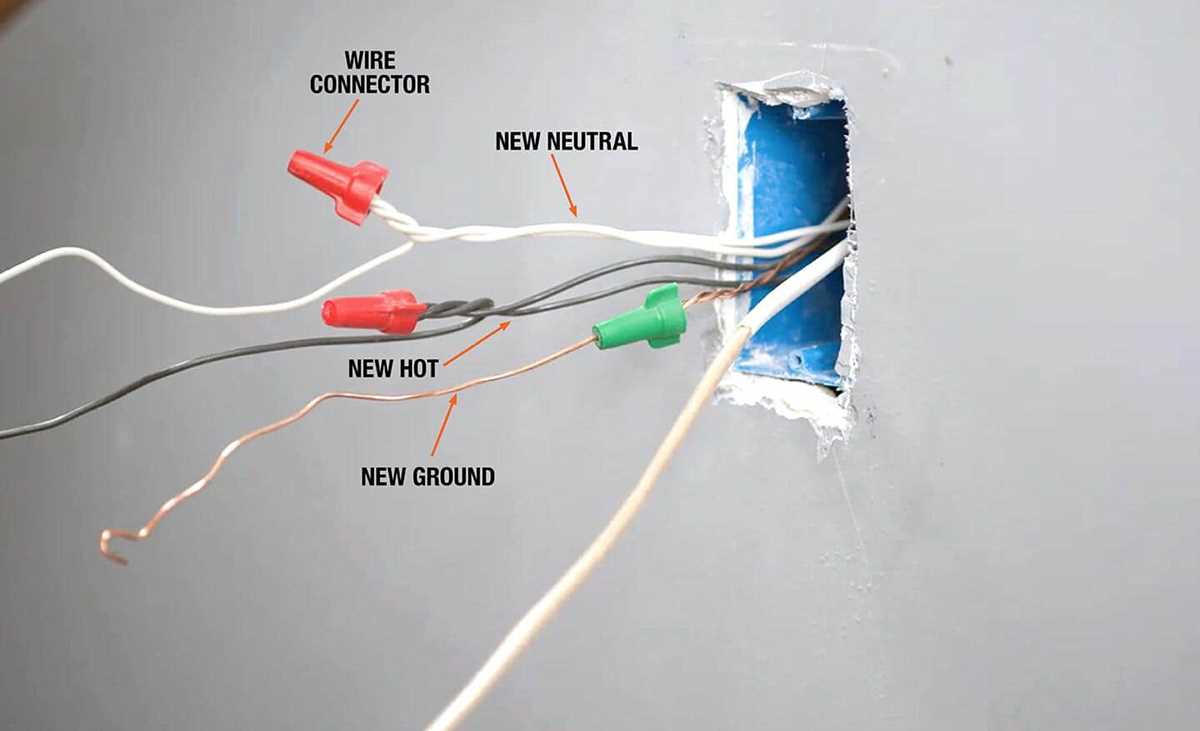
International color conventions simplify identification. European systems typically use brown for phase, blue for return, and green-yellow for earth. North American standards commonly use black or red for phase, white for return, and green or bare copper for grounding. Terminal screws often match these assignments: brass screws for phase conductors, silver screws for return conductors, and green screws for the protective earth. When examining a connector layout sketch, the earth path normally links to the longest pin because it must engage before the current-carrying contacts during insertion.
Measure voltage between conductors if colors appear unclear or the cable has been modified. Using a multimeter set to AC voltage, place one probe on the suspected phase and the second on the return; typical readings range from 110–120 V in North America or about 220–240 V across much of Europe and Asia. Measuring between phase and earth produces nearly the same value, while the reading between return and earth should remain near zero. These measurements confirm conductor roles without relying on insulation color.
Visual Indicators Inside the Connector Housing
Connector interiors often include molded markings such as “L” for the phase terminal, “N” for the return terminal, and the earth symbol (⏚) for the grounding contact. The earth connection usually attaches to a metal frame or a reinforced terminal with thicker metal because it must handle fault current safely. Cable strain clamps sit behind these terminals and secure the outer sheath rather than the individual conductors, preventing tension from pulling the phase or return leads loose during repeated use.