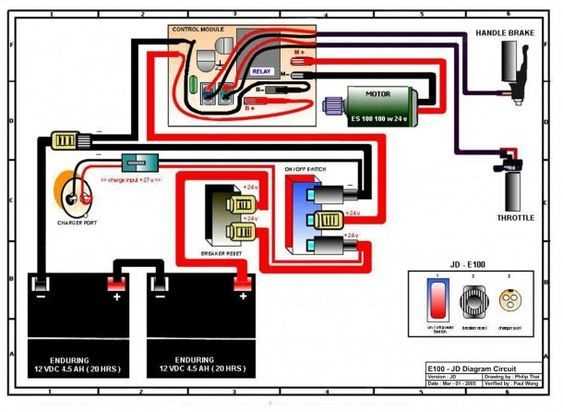
Connect the battery pack to the power control unit using the thick positive and negative leads before attaching any signal cables. This order helps identify the main power input and prevents confusion between high-current conductors and thin communication lines that run to sensors and handlebar components.
A typical personal mobility board powered by a lithium pack uses three heavy phase conductors running from the drive management unit to the hub motor. These cables, often colored yellow, blue, and green, deliver alternating current pulses that rotate the brushless motor inside the wheel hub. Nearby sits a smaller multi-pin plug carrying rotor position signals from Hall sensors.
Throttle input uses a low-voltage signal line that reports handle position to the power management module. Most systems operate with a 5-volt reference line, a ground return, and a signal conductor that changes between roughly 0.8 and 4.2 volts as the accelerator lever moves. If this connector fails, the drive system may refuse to activate or remain locked at idle.
Brake lever sensors interrupt motor drive through a cutoff line. When the lever is pressed, a small switch closes or opens a signal path that tells the control unit to stop sending phase current to the hub motor. This safety feature prevents acceleration while braking and also supports regenerative slowing on many modern boards.
Inside the deck compartment, cable bundles usually include connectors for the battery pack, hub motor phases, rotor sensors, accelerator input, brake detection, display module, and lighting supply. Labeling each plug during disassembly reduces reconnection errors and helps track signal paths through the drive system.
Electric Scooter Controller Wiring Diagram With Battery Motor and Throttle Connections
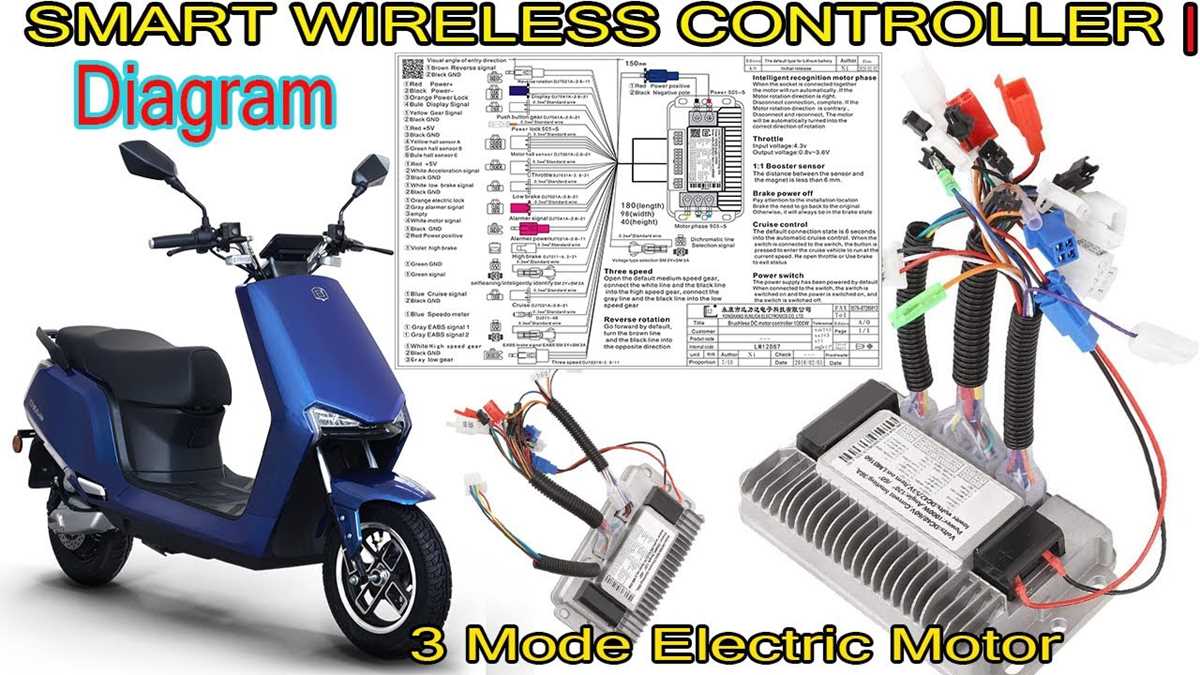
Connect the battery pack to the power management unit using the thick red positive lead and black negative lead. These conductors carry the highest current in the system, often between 15 and 30 amps on typical commuter boards powered by 36-48 volt lithium packs. Loose terminals create voltage drop, heat buildup, and sudden shutdown during acceleration.
Battery and Motor Phase Connections
- Red cable from battery pack connects to the positive power input on the drive control unit
- Black cable connects to the ground return terminal
- Three thick phase conductors link the drive unit to the hub motor
- Typical phase colors include yellow, green, and blue
- A multi-pin plug carries rotor position signals from internal Hall sensors
The hub motor receives alternating current pulses through the three phase conductors. The drive management unit rapidly switches these lines in sequence based on rotor position data. This timing allows the wheel hub motor to rotate smoothly under load and maintain steady torque while climbing slopes or starting from a stop.
Throttle Signal and Control Lines
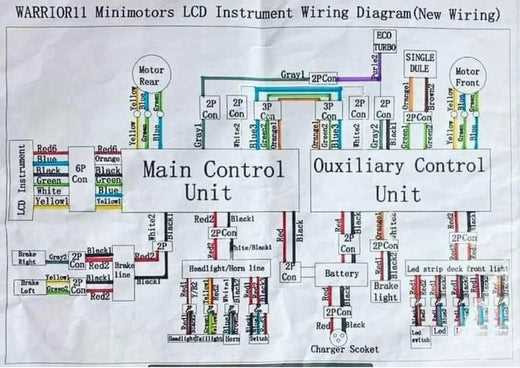
- 5-volt reference supply from the drive unit powers the accelerator sensor
- Ground conductor completes the low-voltage loop
- Signal wire returns variable voltage based on lever position
- Typical signal range spans roughly 0.8 to 4.2 volts
- If the voltage falls outside this range, the system blocks motor drive
Check connector orientation before applying power. Many harness plugs contain small alignment tabs that prevent reversed insertion. A mismatched connection between the phase bundle and sensor plug can stop the hub motor from spinning or cause strong vibration during startup.
Battery Power and Main Controller Cable Connections in Electric Scooter Wiring
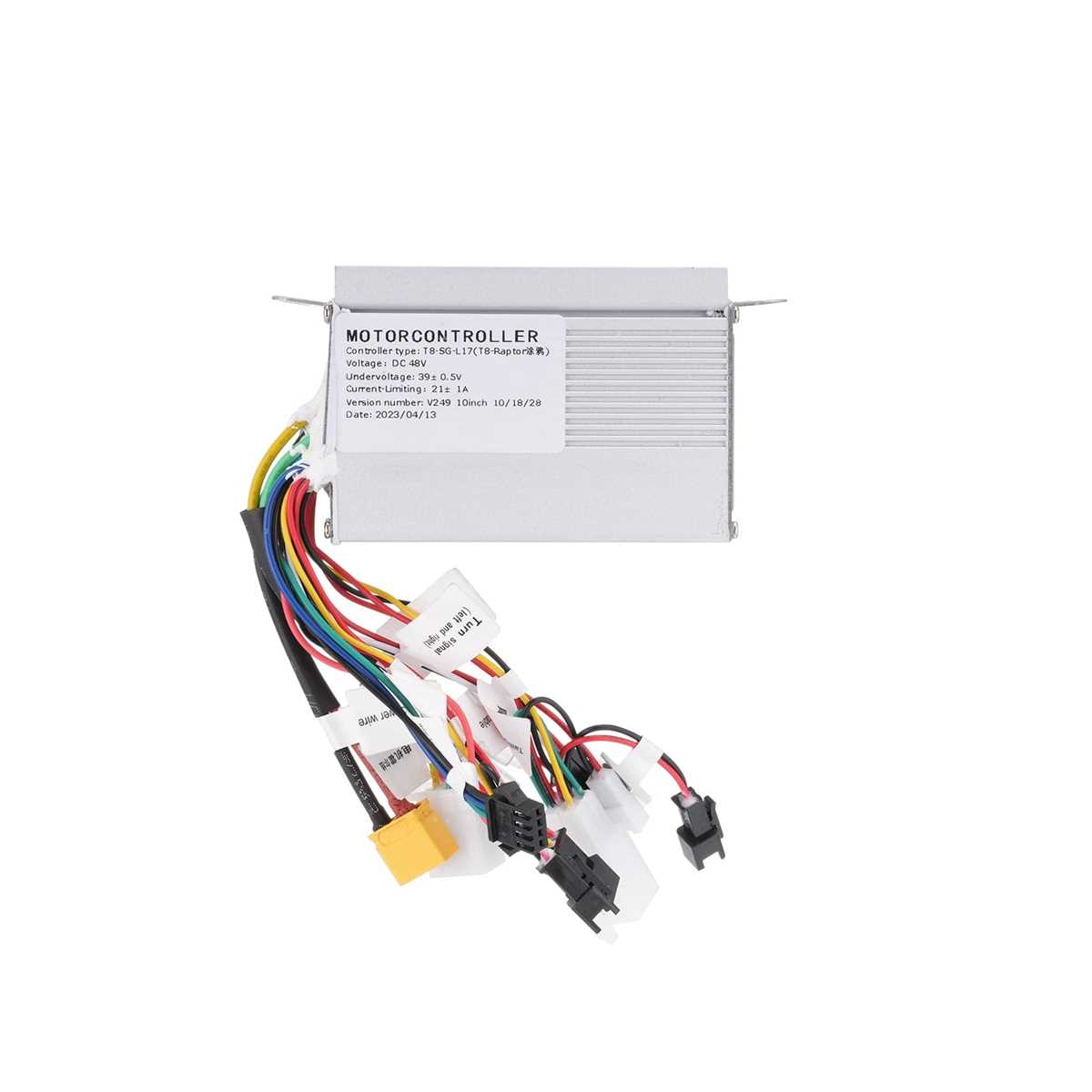
Attach the battery pack to the power management module using the thick positive and negative leads first. These conductors carry the full current delivered by the lithium pack and must connect to the correct terminals before any signal harness is installed. Reverse polarity can damage MOSFET stages within seconds.
Most compact urban ride boards use lithium packs rated at 36 V or 48 V. The positive line usually appears as a thick red cable, while the negative return appears black. Wire gauge commonly ranges between 12 AWG and 14 AWG depending on current rating. Thinner conductors heat up under load and may trigger voltage drop during acceleration.
Secure the power connectors with firm mechanical contact. Loose bullet connectors or poorly crimped terminals cause resistance at the joint. Resistance generates heat when current exceeds 20 A, which may melt insulation or shut down the drive electronics through internal protection circuits.
The energy pack normally routes through a fuse or protective breaker before reaching the drive unit. A typical setup places a 30–40 A fuse inline with the positive cable. This device disconnects the pack if a short path forms inside the motor driver or along damaged conductors.
Place the battery ground directly on the main negative input of the drive module. Avoid sharing this connection with lighting or display circuits before it reaches the power stage. A direct return path stabilizes voltage for the switching transistors that regulate motor torque.
Cable bundles leaving the drive module include several groups: heavy phase conductors leading to the hub motor, a multi-pin harness carrying rotor position signals, and thin leads for throttle, brake detection, and dashboard communication. Each group uses different connector sizes to prevent confusion during assembly.
Route the main power pair away from signal harnesses. High current lines produce electromagnetic interference while the motor runs. Separating them from low-voltage lines reduces sensor noise and prevents irregular throttle response.
Before closing the deck enclosure, verify pack voltage using a multimeter at the power input terminals of the drive module. A healthy 36 V pack usually reads between 36 V and 42 V depending on charge level, while a 48 V pack ranges roughly from 46 V to 54.6 V.