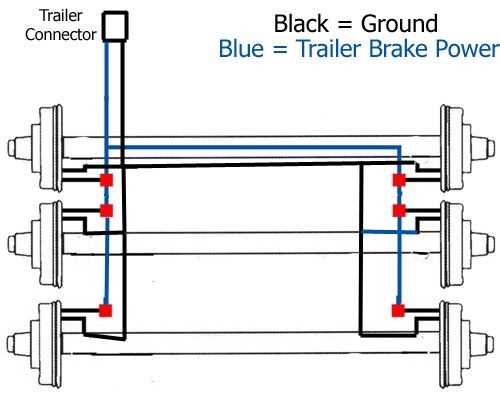
Use a dedicated 10–12 AWG blue control line from the in-cab deceleration controller to the axle magnets of the towed cargo carrier. This conductor carries the variable 12-volt signal that regulates stopping force. Each wheel hub typically draws 3–4 amperes, while most magnet coils measure 3.0–4.0 ohms resistance. Connect the supply line through a sealed junction box mounted on the frame rail, then branch equal-length leads toward the left and right axle assemblies to maintain balanced current distribution.
The ground return must be treated with the same care as the supply conductor. Run a separate white 10–12 AWG return line directly from the connector plug to the junction box rather than relying only on the chassis. Corrosion on frame contacts raises resistance and weakens magnet engagement. Inside the junction enclosure, join the return leads from each hub with a crimped ring terminal secured to a stainless grounding stud.
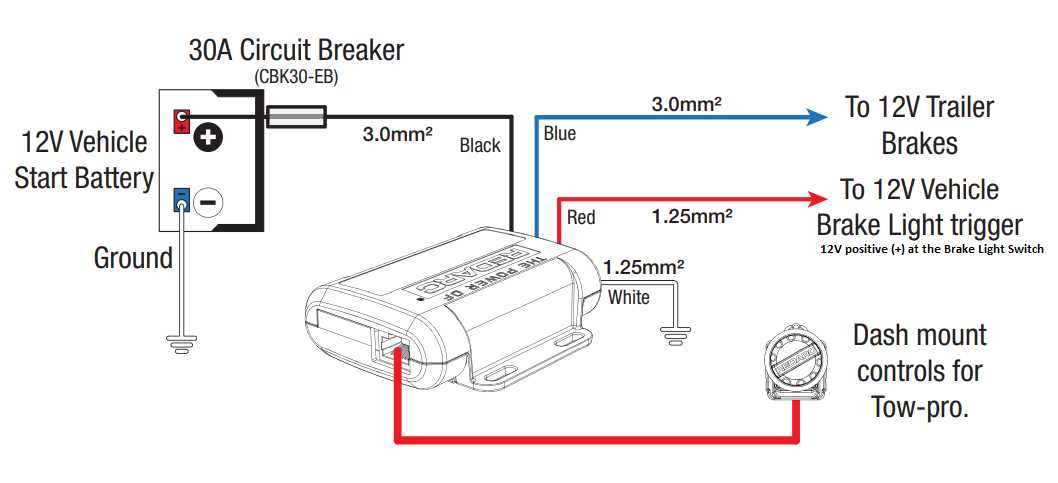
Install the safety battery cutoff module between the control plug and the axle magnet circuit. If the tow vehicle disconnects, the onboard 12-volt battery immediately powers the hub magnets. For two axles, select a battery rated at at least 5 Ah; this capacity can maintain magnet current long enough to bring the rolling platform to a halt. Route all conductors inside split loom tubing and fasten them to the steel frame every 30–40 cm using insulated clamps to prevent abrasion and voltage loss.
12-V Control Layout for Towed Carrier Stopping System
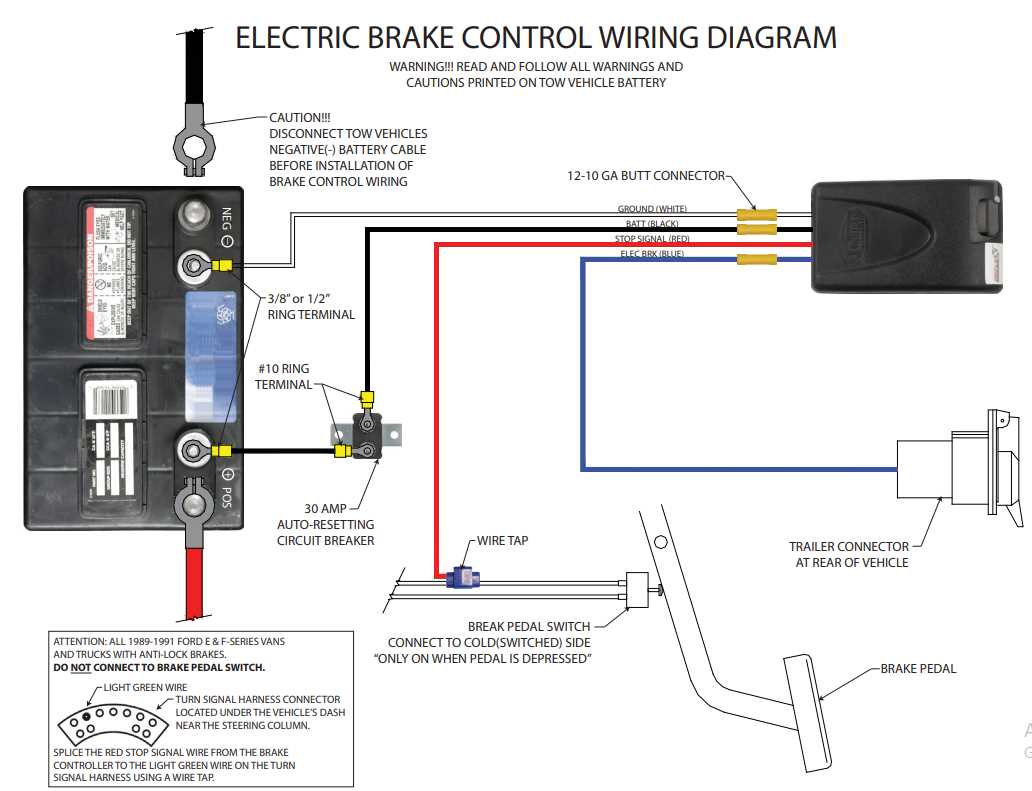
Connect the blue control conductor from the cab controller directly to the axle magnet leads using 10–12 AWG copper; thinner conductors heat up and reduce magnet force. The supply line from the vehicle battery should pass through a 20–30 A auto-reset circuit protector placed within 30 cm of the battery terminal. Ground return must attach to the steel frame of the hauled platform using a star washer and corrosion-resistant bolt, because paint layers raise resistance and weaken actuator response.
Color coding simplifies installation and later inspection. Many North American harness standards follow a seven-pin round connector layout used on tow vehicles and haul-behind carriers. Recommended conductor roles:
- Blue – control signal to axle magnets
- White – ground return bonded to frame
- Black – 12-V battery charge feed
- Brown – tail lamps
- Green – right indicator and lamp
- Yellow – left indicator and lamp
- Purple or red – reverse light circuit
Route conductors along the inside of the chassis rail and secure them every 30–40 cm with insulated clamps. Avoid sharp edges and suspension travel zones near leaf springs. A flexible loom sleeve protects insulation from gravel impact and water spray. Where lines cross a cross-member, add a rubber grommet or spiral wrap to prevent abrasion during long-distance hauling.
Each axle actuator normally draws about 3.0–3.5 A at full controller output. A dual-axle carrier therefore pulls roughly 6–7 A through the blue conductor during hard deceleration. Verify continuity using a multimeter: resistance across two magnets in parallel should measure around 1.6–2.0 Ω. Higher readings indicate corrosion at connectors or damaged coils.
Connector pin orientation at the vehicle socket should match the following sequence viewed from the front of the tow vehicle port:
- Top center – ground
- Upper left – tail lamps
- Upper right – left signal
- Lower left – right signal
- Lower right – battery charge feed
- Bottom center – control conductor for axle magnets
- Center pin – reverse circuit
After completing the cable routing, lift the hauled platform with a jack and spin each wheel by hand while a partner moves the cab controller slider. Properly powered magnets create a firm drag that stops rotation quickly. If one wheel continues spinning freely, inspect that axle’s two magnet leads, crimp connectors, and frame ground point.
Color Codes and Functions of Wires in a 7-Pin Tow Connector for Wheel-Stopping Circuits
Use the standard RV-style 7-contact plug color scheme to avoid connection faults: white for ground return, blue for the controller output that feeds the wheel-mounted stopping magnets, black for the 12-volt auxiliary supply from the tow vehicle battery, brown for rear marker lamps, yellow for the left turn/stop signal, green for the right turn/stop signal, and red (or sometimes purple depending on manufacturer) for the reverse signal line.
Detailed Role of Each Conductor
The white lead forms the negative return path and must be bolted directly to the chassis of the towed unit using a corrosion-resistant lug; poor grounding leads to weak magnet response and erratic lighting. The blue lead carries the variable output from the in-cab controller to the axle magnets; its current typically ranges between 0 and about 3–4 A per axle depending on controller setting and magnet resistance. The black conductor supplies constant battery power (commonly fused at 30–40 A) used for charging an onboard battery or powering interior equipment. Brown serves low-intensity rear marker lamps and clearance lights, drawing relatively small current but requiring continuous connectivity along the frame harness. Yellow feeds the left turn and stop lamp combination circuit, while green handles the same function on the right side; both must remain isolated from the blue control line to avoid unintended magnet activation during signaling. The red or purple conductor carries the reverse signal from the tow vehicle transmission switch; some caravans route this line to backup lamps or a lockout solenoid on hydraulic surge assemblies. Proper color matching at both the vehicle socket and the plug reduces diagnostic time and prevents cross-connection faults that can overheat conductors or disable the magnet control path.