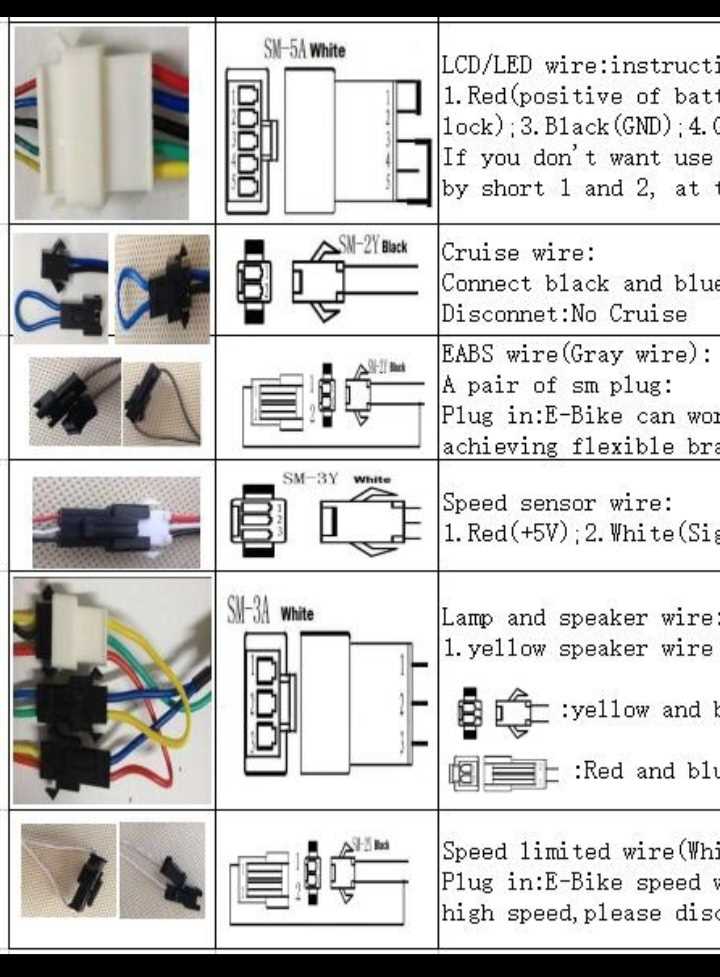
Use a color-coded harness map from the motor drive manufacturer and match each conductor before applying power; a wrong connection between the battery lead (typically red, 36–52 V) and the throttle signal line (usually green or white, 0.8–4.2 V range) can destroy the power management module within seconds. Check that the phase leads from the hub motor–commonly yellow, blue, and green–align with the identical colors on the drive electronics. If the wheel jerks or rotates backward during a test spin, swap any two phase leads and repeat the check.
The harness from the handlebar panel normally carries five low-voltage conductors: ground (black), supply for sensors (red, ~5 V), throttle signal (green), display communication (blue), and assist sensor input (yellow or white). Measure voltage between the 5 V supply and ground before attaching peripherals. A stable reading between 4.8 V and 5.1 V indicates that the internal regulator inside the drive electronics is functioning and safe for sensor connection.
Hall sensor leads from the hub motor usually appear as a six-pin bundle: red (5 V), black (ground), and three signal outputs (yellow, green, blue) with pulses switching between 0 V and ~5 V while the wheel turns slowly. A sixth white conductor often carries speed feedback. If the motor vibrates without rotation, inspect this signal group first; a broken Hall line causes phase timing errors that prevent smooth torque production.
Secure the cable bundle along the frame using flexible clips spaced every 10–15 cm and keep high-current battery leads separated from thin sensor conductors by at least 20 mm. This spacing reduces electromagnetic noise that may disturb throttle readings or pedal sensor signals. After completing the connections, lift the rear wheel, apply light throttle, and monitor current draw; values around 1–2 A at no load indicate a correctly assembled electrical layout.
E Cycle Power Unit Connection Guide: Practical Lead Setup
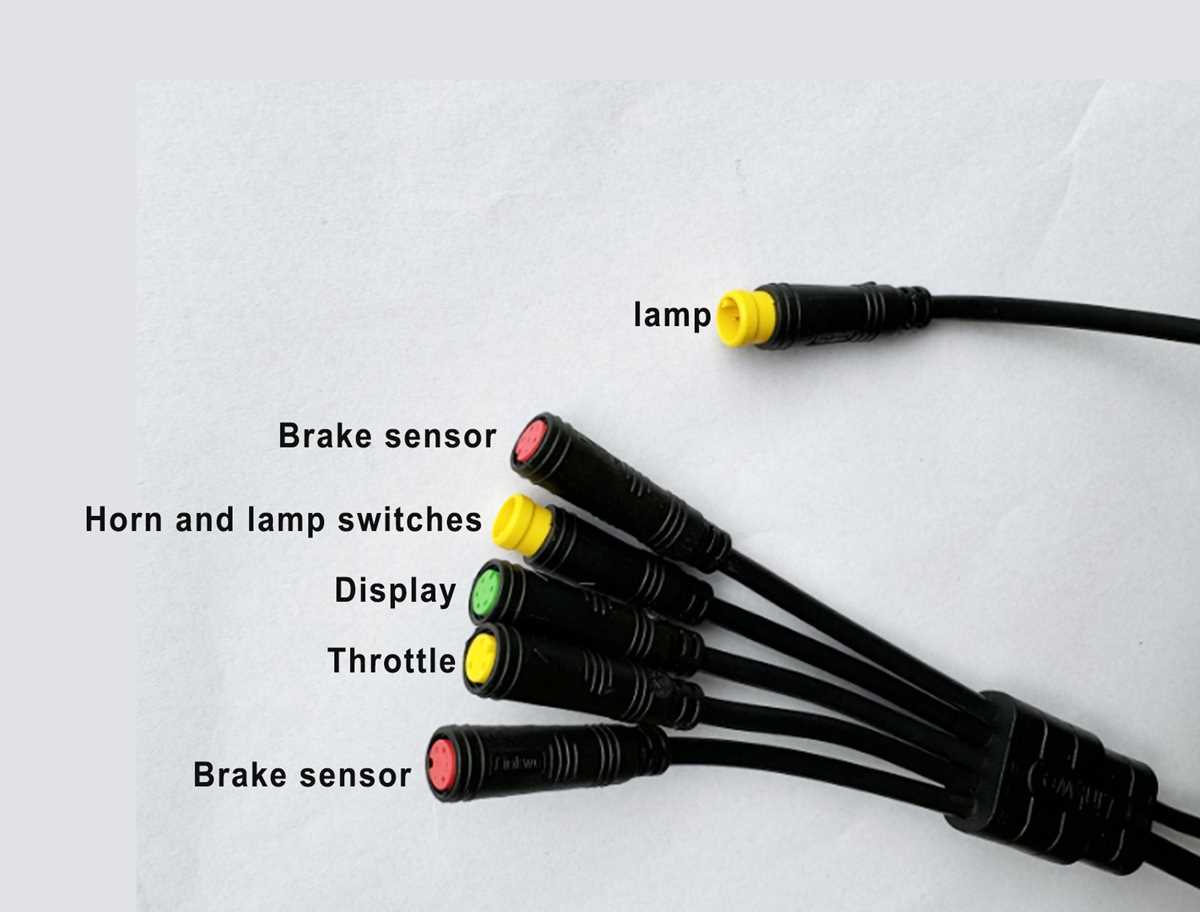
Connect the battery leads to the power unit first: red to positive (+), black to negative (−), using connectors rated for at least 30–40 A on 36 V or 48 V systems. A loose power contact causes voltage drop, heat, and random shutdown. Place a 30 A–50 A fuse within 15 cm of the battery output. Phase leads from the drive motor usually appear as thick yellow, green, and blue cables; they attach directly to the matching colored outputs on the drive module. Hall sensor lines arrive through a smaller multi-pin plug; typical pin order includes +5 V (red), ground (black), and three signal lines (yellow, green, blue).
- Battery pack → main power input (red/black, 12–14 AWG)
- Motor phase set → three thick colored cables (yellow/green/blue, 14–16 AWG)
- Rotor position sensor plug → 5- or 6-pin connector (+5 V, GND, signals)
- Throttle line → 3 wires: +5 V, ground, signal (0.8–4.2 V range)
- Brake cutoff line → 2-wire switch loop
- Pedal sensor → 3-wire input (5 V, GND, pulse)
Throttle signal voltage should measure about 0.8–1.0 V at rest and approach 4 V at full twist; confirm using a multimeter before final assembly. Brake cutoff lines act as a simple switch: closed circuit enables drive, open circuit disables output immediately. Pedal sensor pulses typically range from 5–12 signals per crank revolution depending on magnet disc design. Route all signal cables away from phase lines by at least 20 mm to reduce electromagnetic interference. Use waterproof Higo or Julet connectors where possible; these support 5–9 pins and maintain reliable contact in rain.
- Secure battery leads and fuse holder.
- Attach motor phase cables by matching colors.
- Insert rotor sensor plug and verify 5 V supply.
- Connect throttle and confirm voltage sweep.
- Attach brake cutoff pair.
- Link pedal sensor cable and test pulse output.
- Power the system briefly and check motor rotation; swap any two phase cables if rotation runs backward.
Keep cable lengths minimal between battery and drive unit (preferably under 40 cm) to limit resistance losses. Phase cables tolerate high current; signal lines do not–never mix them inside the same tight bundle. After final assembly, run the wheel off-ground and monitor current draw: a typical 500 W setup at 48 V should idle below 1 A and reach 10–15 A under moderate load. Tight insulation sleeves, strain relief near connectors, and silicone sealing around entry points prevent moisture intrusion and extend system life.
How to Identify and Match Motor Phase Wires and Hall Sensor Pins on a Typical E-Cycle Power Unit
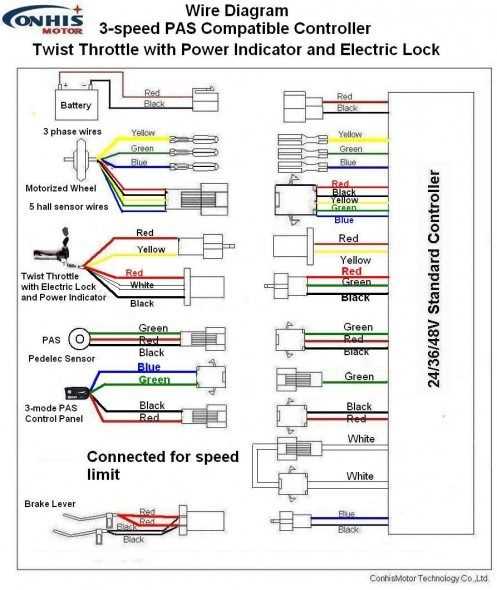
Measure continuity between the three thick phase conductors coming from the hub motor and mark them before connecting them to the power unit terminals. These heavy leads usually carry labels such as yellow, green, and blue, but color conventions are not guaranteed. Use a multimeter set to low resistance: any pair of phase leads will show very low resistance (commonly 0.2–1.5 Ω). Label them A, B, and C if factory colors are unclear. After connection to the drive module, briefly apply low-voltage supply and check rotation; smooth startup without vibration indicates correct phase alignment.
Hall sensor lines appear as a group of five thin conductors exiting the motor axle. Three of them carry digital rotor position signals, while the remaining pair provides power: +5 V and ground. Typical color layout: red for +5 V, black for ground, and yellow/green/blue for signal outputs. Confirm this with a multimeter: between red and black you should read about 4.8–5.0 V when the control unit is powered. Rotate the wheel slowly and probe each signal lead relative to ground; voltage must switch between 0 V and ~5 V every 60 electrical degrees.
If the motor spins roughly or reverses under load, swap two of the three phase leads while keeping the Hall signal order unchanged. Test again. If vibration persists, return the phase leads and instead swap two Hall signal lines (for example yellow and green). Repeat testing until rotation becomes smooth and current draw at no load drops to roughly 1–2 A for a 36–48 V system. Correct pairing produces quiet rotation and stable speed response.
Pin mapping on the signal connector often follows a six-pin layout: 1: +5 V, 2: Hall A, 3: Hall B, 4: Hall C, 5: Ground, 6: temperature or speed line. Verify by tracing conductors from the axle harness. Temperature wires usually show several kilo-ohms to ground, while Hall outputs toggle between logic levels. Mark each pin after testing to prevent misconnection during maintenance.
During troubleshooting, observe current consumption and rotor behavior rather than relying on insulation colors alone. Correct phase-Hall pairing produces immediate rotation without jerking, minimal heat buildup in the drive module, and steady Hall transitions on an oscilloscope or logic probe. Misaligned combinations generate high idle current, strong vibration, or stalled rotation within seconds.