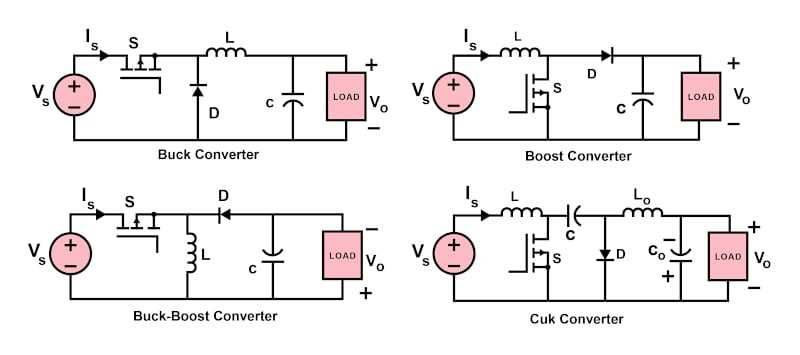
Use a regulated input source to prevent voltage spikes from damaging components. Ensure the input stays within the recommended range of 8 to 18 volts to maintain consistent operation and extend component lifespan.
Select high-quality inductors and capacitors with ratings that exceed the maximum expected current and voltage. Low ESR capacitors reduce ripple and improve voltage stability under fluctuating loads.
Install a reliable voltage regulator or switching controller to maintain the desired output level. Verify the controller’s feedback loop is properly connected to the output to prevent oscillations or voltage drift during operation.
Use proper heat management for transistors and regulators. Heatsinks or thermal pads should be rated for at least 1.5 times the expected thermal load to avoid thermal shutdown or permanent damage.
Check all connections with a multimeter before energizing. Confirm polarity and continuity to prevent shorts or reversed current that could destroy sensitive components.
Test the module with incremental load steps, starting from low current and gradually increasing. Observe voltage response and temperature at each stage to ensure safe and stable performance before full deployment.
Key Components for a DC to DC Conversion Module
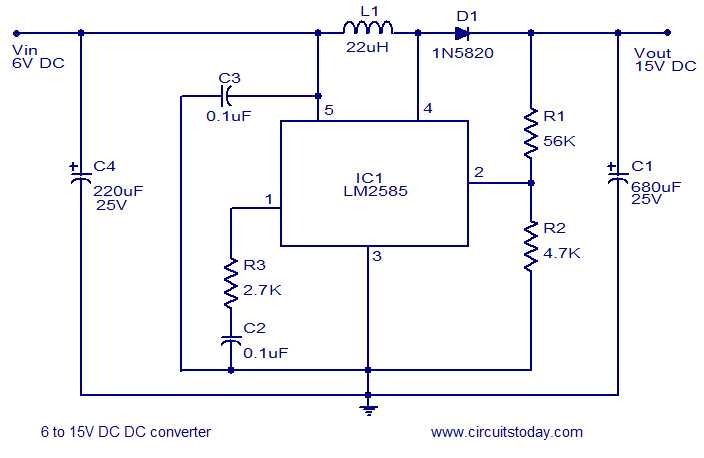
Start with a reliable switching controller to regulate output voltage efficiently. Choose a model that supports the desired output current and has built-in protection features for overcurrent and thermal shutdown.
Select suitable inductors with current ratings exceeding maximum load by at least 25%. Core material should minimize energy loss at switching frequencies between 50 kHz and 500 kHz, depending on the controller.
Use capacitors with low ESR for both input and output filtering. Electrolytic and ceramic combinations provide stable voltage and reduce ripple during load transients.
Semiconductors and Switching Devices
MOSFETs or IGBTs should be rated for at least 30% above the maximum input voltage. Ensure gate drive circuitry matches device requirements to minimize switching losses and heat generation.
Diodes must be fast-recovery type for synchronous or asynchronous configurations. Schottky diodes are preferred for lower forward voltage drop and higher efficiency at high switching speeds.
Component Selection Table
| Component | Specification | Recommendation |
|---|---|---|
| Controller IC | Max 5A output | Integrated overcurrent and thermal protection |
| Inductor | 1–100 µH, ≥ Max load current | Ferrite core, low DCR |
| Capacitor | Input: 100–470 µF, Output: 100–220 µF | Low ESR, ceramic/electrolytic mix |
| MOSFET | Vds ≥ 1.3 × Vin | Low Rds(on), fast switching |
| Diode | Reverse voltage ≥ 1.2 × Vin | Schottky or fast-recovery type |
Heat management is critical. Use heatsinks or thermal pads for regulators and switching devices to maintain temperatures below 85°C under full load.
Finally, include proper connectors and fuses rated for maximum current to ensure safety and maintain stable operation during repeated load cycles.
Step-by-Step Connection and Assembly Process
Begin with the controller IC placement. Position it centrally on the board with all pins accessible for soldering. Ensure orientation matches the datasheet pinout to avoid reverse connections and potential damage.
Install the inductors and capacitors next. Use the largest values for input filtering near the supply terminals, and place output capacitors close to the load pins. Maintain short and direct traces to minimize voltage ripple and electromagnetic interference.
Mounting Semiconductors
Attach MOSFETs and diodes with appropriate heatsinks or thermal pads. Check gate or cathode connections for polarity and drive requirements. Fasteners should be tightened to manufacturer torque specifications to maintain thermal contact.
Connect input and output leads using thick gauge wires capable of handling maximum load. Use ferrules or crimp connectors for secure mechanical and electrical contact. Verify continuity and resistance before applying initial voltage.
Perform final inspection and assembly. Confirm component values, polarity, and solder joints. Power the module with a current-limited source to test stability. Adjust feedback or trim resistors to achieve precise output voltage and observe temperature rise on switching devices during operation.
Troubleshooting Common Operational Issues
Check for voltage instability by measuring across input and output terminals. Excessive ripple often indicates degraded capacitors or incorrect inductor placement. Ensure that feedback resistors are within tolerance and that solder joints do not create intermittent connections.
Inspect thermal performance of switching components. Overheating may result from insufficient heatsinking or incorrect transistor orientation. Use a thermal camera or probe to identify hotspots. Follow this checklist for systematic review:
- Verify input voltage is within the recommended range
- Confirm component polarities, especially electrolytic capacitors and diodes
- Check for shorts between traces or pads
- Measure current draw under different loads to detect overloads
- Review layout for long traces causing voltage drops
Apply these checks sequentially to isolate faults efficiently and restore stable operation.