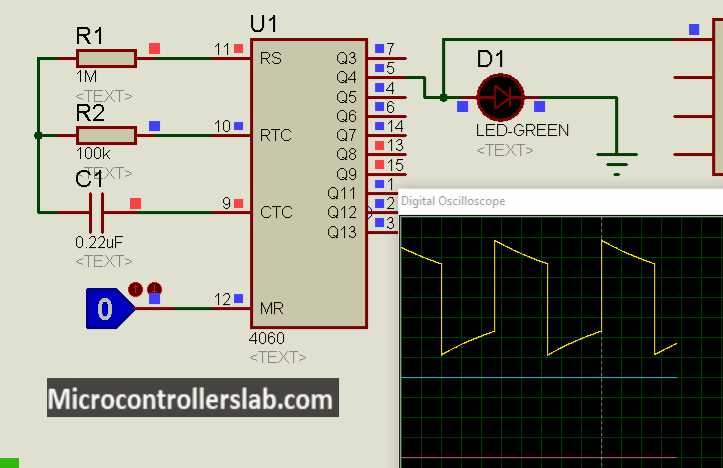
Use a 14-stage binary divider IC with built-in oscillator to generate stable time delays. Connect the RC network to pins 9 and 10 to define oscillation frequency. For a 100 kΩ resistor and 0.01 µF capacitor, the output pulse occurs approximately every 0.14 seconds.
Choose output stages based on load requirements. Lower-order outputs provide faster pulses for LED indicators, while higher-order outputs can drive relays or trigger other modules over longer intervals.
Power supply voltage directly affects oscillation accuracy. Operate within 3–15 V, and avoid fluctuations above 5% to maintain consistent timing. Add a small decoupling capacitor (0.1 µF) near the IC to suppress noise.
For adjustable intervals, replace the fixed resistor with a potentiometer. A 500 kΩ potentiometer allows scaling from milliseconds to several minutes when combined with microfarad-range capacitors, providing flexible timing without changing components.
Test the setup by connecting LEDs with current-limiting resistors to output pins. Observe the sequence to verify correct division stages before connecting higher-power devices. This ensures each stage counts pulses correctly without load interference.
CD4060 Timer Setup and Connection Guide
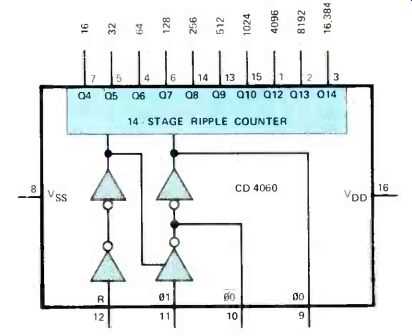
Connect a resistor and capacitor network between pins 9 and 10 to set the oscillator frequency. A 100 kΩ resistor with a 0.01 µF capacitor produces pulses around 0.14 seconds per cycle, while increasing the capacitor to 0.1 µF extends the interval to 1.4 seconds.
Use the higher-order output pins to drive relays or sequential logic. Pins Q4 to Q14 provide divided pulses that can trigger devices at specific intervals, reducing the need for external counting circuits.
Stabilize the power supply with a 0.1 µF decoupling capacitor near the IC to prevent voltage spikes from affecting pulse accuracy. Operating voltage should remain between 3 V and 15 V to maintain correct division ratios.
For adjustable intervals, replace the fixed resistor with a potentiometer in series with the capacitor. A 500 kΩ potentiometer allows gradual tuning from milliseconds to several minutes, giving flexibility without changing multiple components.
Verify each output stage by connecting LEDs through current-limiting resistors. Observe the sequence of illumination to ensure proper counting, and check that no stage skips or lags under load conditions.
When connecting inductive loads like relays, insert flyback diodes across the coil to prevent voltage spikes from damaging the IC. Maintain short and direct wiring to minimize stray capacitance and maintain accurate timing performance.
Selecting Resistors and Capacitors to Set Timing Intervals
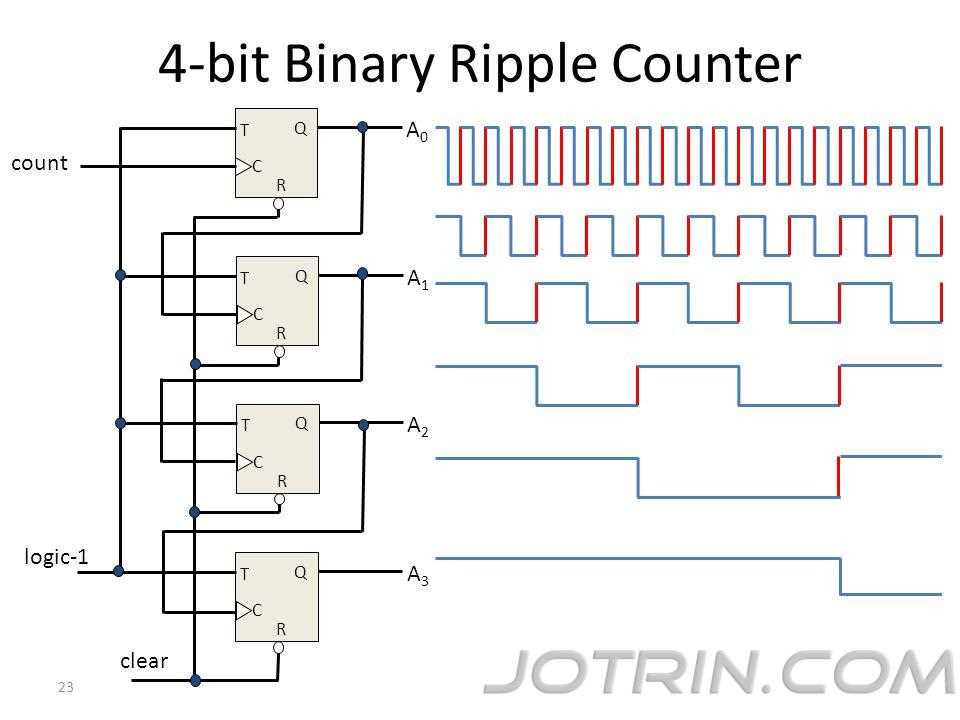
Use a resistor in series with a capacitor to define oscillation frequency. A 100 kΩ resistor paired with a 0.01 µF capacitor produces a pulse every 0.14 seconds, while increasing the capacitor to 0.1 µF extends the interval to 1.4 seconds, providing flexibility in delay periods.
Choose resistors with 1% tolerance to maintain precise timing. Wider tolerance values can result in noticeable variation in output intervals, which may affect sequential operations or relay triggering.
Capacitor type impacts stability. Ceramic capacitors offer high-frequency response, while polyester or tantalum types provide better long-term stability with minimal leakage. For intervals over several minutes, low-leakage electrolytic capacitors improve consistency.
Adjustable potentiometers can replace fixed resistors to allow fine-tuning of delay. A 500 kΩ potentiometer in series with a 0.01–1 µF capacitor allows intervals ranging from milliseconds to several minutes without replacing components.
Verify chosen values by simulating output with LEDs or an oscilloscope. Observe that each stage toggles at the expected interval and that no timing drift occurs under operating voltage variations. This ensures reliable performance for both short and long-duration applications.