Connect the shore power inlet directly to the main AC breaker panel using a three-conductor cable rated for the current of the recreational vehicle supply, usually 30 A at 120 V. The hot conductor feeds the main breaker, the neutral connects to the neutral bus bar, and the grounding conductor bonds to the chassis grounding bar attached to the vehicle frame.
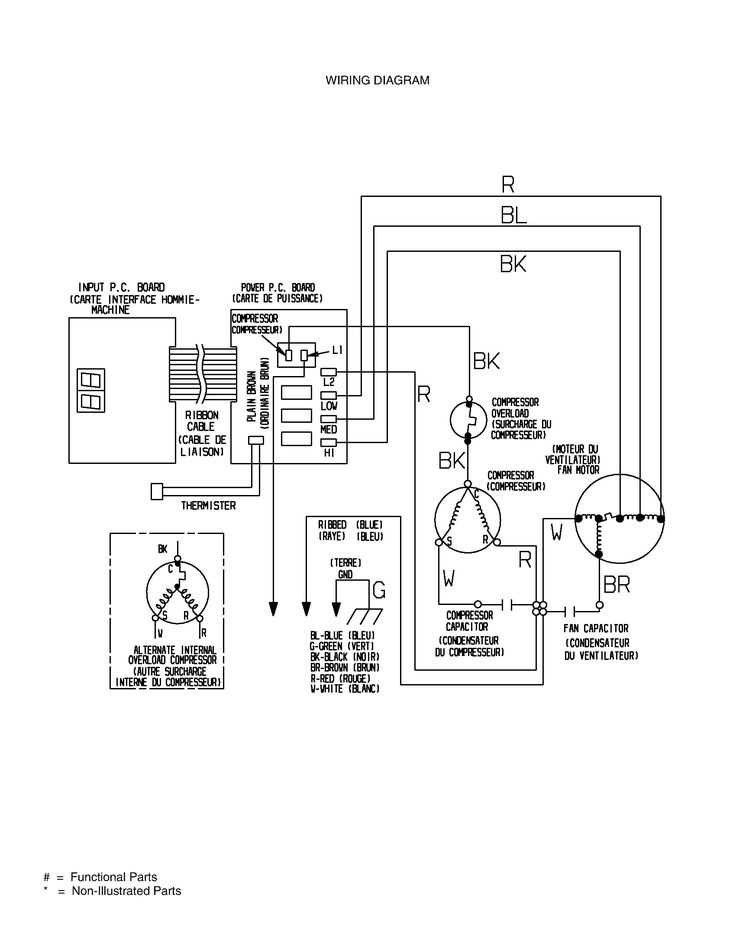
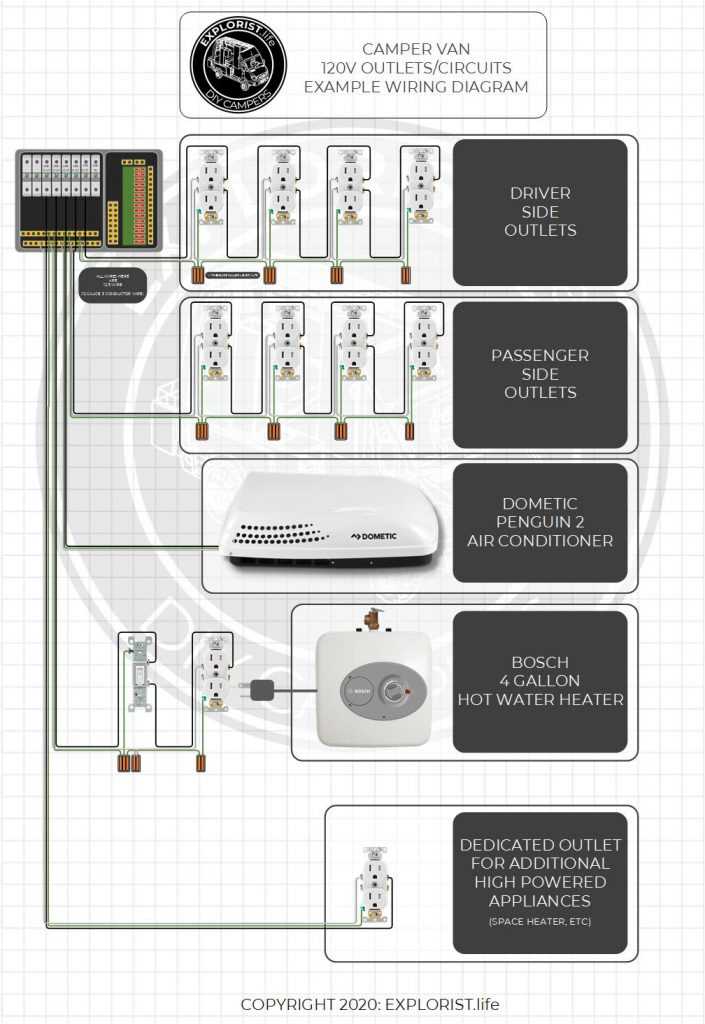
The roof air conditioning unit normally draws between 12 and 16 amperes during operation, with compressor startup peaks reaching 45–60 A for a fraction of a second. For this reason the branch circuit feeding the cooling unit typically uses 10 AWG copper conductors protected by a 20 A breaker. This branch circuit runs from the distribution panel through the ceiling cavity to the rooftop appliance junction box.
Inside the electrical compartment of the vehicle, the power distribution panel separates incoming shore power into multiple circuits such as outlets, converter charger, microwave, and the cooling unit. Each circuit connects through a dedicated breaker. Conductors routed through cabinets or roof channels should pass inside protective loom or flexible conduit to prevent insulation damage from vibration during travel.
Thermostat control lines are usually low-voltage conductors running between the rooftop cooling unit and the wall controller. These small gauge leads do not carry line voltage; they only transmit control signals that activate the compressor and fan relays located in the upper assembly of the cooling unit.
Before energizing the system, verify polarity with a multimeter at the shore inlet and distribution panel terminals. A correct reading shows approximately 120 V between the live conductor and neutral, while the voltage between neutral and chassis ground should remain close to zero. Incorrect polarity or missing grounding may damage onboard equipment and create shock risk.
Camper AC Wiring Diagram With Shore Power Breaker Panel and Roof Air Conditioner Connection
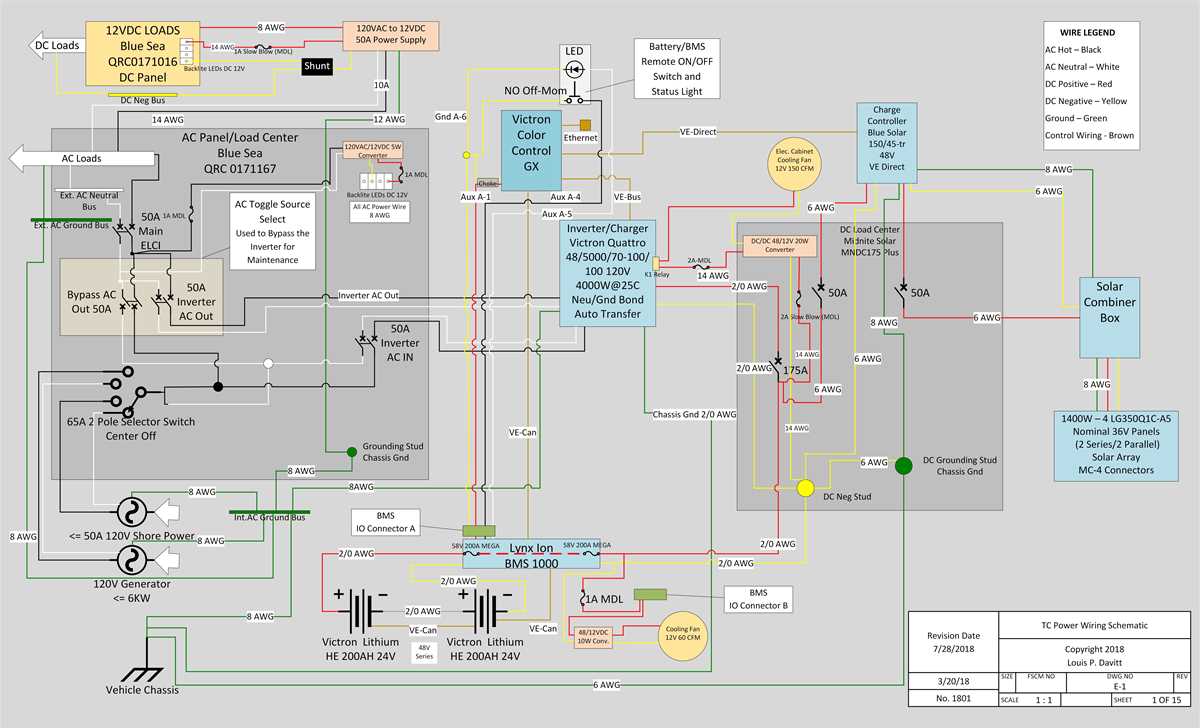
Route the shore inlet cable directly to the AC distribution panel using a three-conductor copper cable rated for the service amperage. Most recreational vehicles use a 30-amp 120-volt inlet with 10 AWG conductors. The live conductor connects to the main breaker, the neutral attaches to the neutral bus, and the grounding conductor bonds to the chassis ground bar.
From the distribution panel, dedicate a separate branch circuit for the rooftop cooling unit. This circuit normally uses a 20-amp breaker and 10 or 12 AWG copper conductors depending on manufacturer requirements. The cable runs through ceiling cavities or wall channels toward the roof opening where the upper appliance assembly sits.
The rooftop cooling unit contains its own junction box located under the interior ceiling assembly. Inside this compartment, the incoming supply cable connects to three leads from the appliance: live, neutral, and ground. Tighten all terminals firmly because compressor startup vibration can loosen poorly secured connections.
Typical current draw for a roof cooling appliance ranges between 12 and 16 amps during steady operation. Compressor startup may briefly exceed 40 amps. A dedicated breaker prevents overload on outlet circuits and protects the supply conductors running through the vehicle interior.
Thermostat control cables usually run from the ceiling assembly to a wall-mounted controller. These conductors carry low-voltage control signals that activate relays inside the upper unit. They remain separate from the 120-volt supply conductors and should not share the same connector blocks.
Secure all cables with insulated clamps along structural members inside the roof cavity. Movement during travel can cause abrasion where cables pass through wooden framing or metal panels. Use rubber grommets at every penetration point.
After completing connections, energize the shore inlet and verify voltage at the distribution panel. Measure about 120 V between live and neutral and near zero between neutral and chassis ground. Turn on the branch breaker feeding the rooftop cooling unit and confirm compressor startup and fan operation.
How to Connect Shore Power Inlet to the Camper AC Breaker Panel
Install the shore inlet on an exterior wall close to the AC distribution panel and run a three-conductor copper cable between them. For a 30-amp service use 10 AWG conductors rated for 120 volts. The cable must remain protected inside flexible conduit or plastic loom where it passes through storage compartments or framing.
Identify the Supply Conductors
Most recreational vehicles using a 30-amp hookup rely on three conductors:
- Black – live conductor carrying 120-volt supply
- White – neutral return path
- Green or bare copper – equipment grounding conductor
Strip about 12 mm of insulation from each conductor and secure them to the terminals inside the shore inlet housing. Tighten the screws firmly and confirm that no copper strands extend outside the clamp.
Connect the Distribution Panel
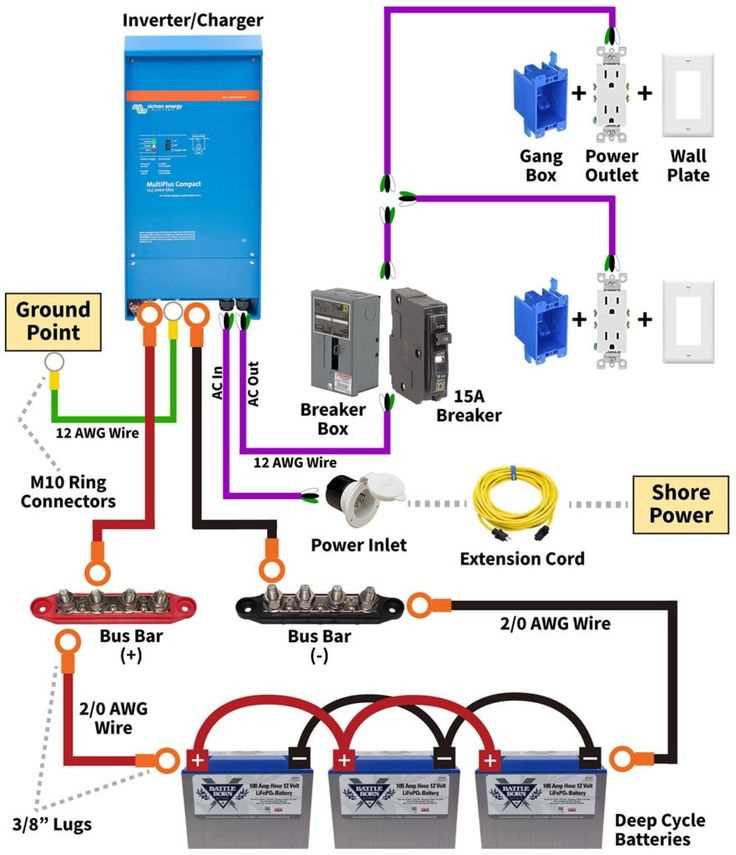
Route the cable to the AC breaker panel and terminate the conductors in this order:
- Attach the black conductor to the main breaker input lug
- Attach the white conductor to the neutral bus bar
- Attach the green or bare conductor to the chassis ground bar bonded to the frame
After securing all terminals, reinstall the panel cover and connect the vehicle to an external pedestal supply. Use a multimeter to confirm about 120 V between the live terminal and neutral bus, while the reading between neutral and ground should remain near zero. This check verifies correct polarity and grounding.
Switch on the main breaker and observe the branch circuits. Outlets, converter charger, and rooftop cooling unit should receive power through their individual breakers without tripping the main supply.