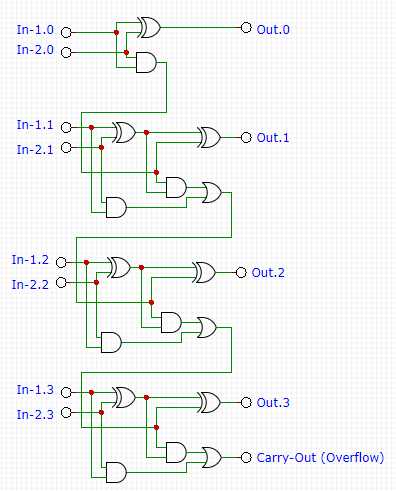
Use exclusive OR and AND gates in a sequential layout to create a device capable of producing accurate sum and carry outputs for two single-digit inputs. Maintain consistent voltage levels of 5V for TTL logic or 3.3V for CMOS logic to prevent misreads and ensure stable performance.
For multiple-bit additions, chain the outputs of each stage carefully so that each carry propagates correctly to the next higher-order stage. Arrange the connections so that the sum outputs remain independent while carries link sequentially, minimizing timing errors in propagation.
Test each stage individually before combining stages to detect faulty logic gates or incorrect connections early. Use an LED or logic probe on sum and carry outputs to verify expected states under all input combinations, ensuring the overall assembly functions correctly under load conditions.
Construction and Implementation of Multi-Bit Summing Logic
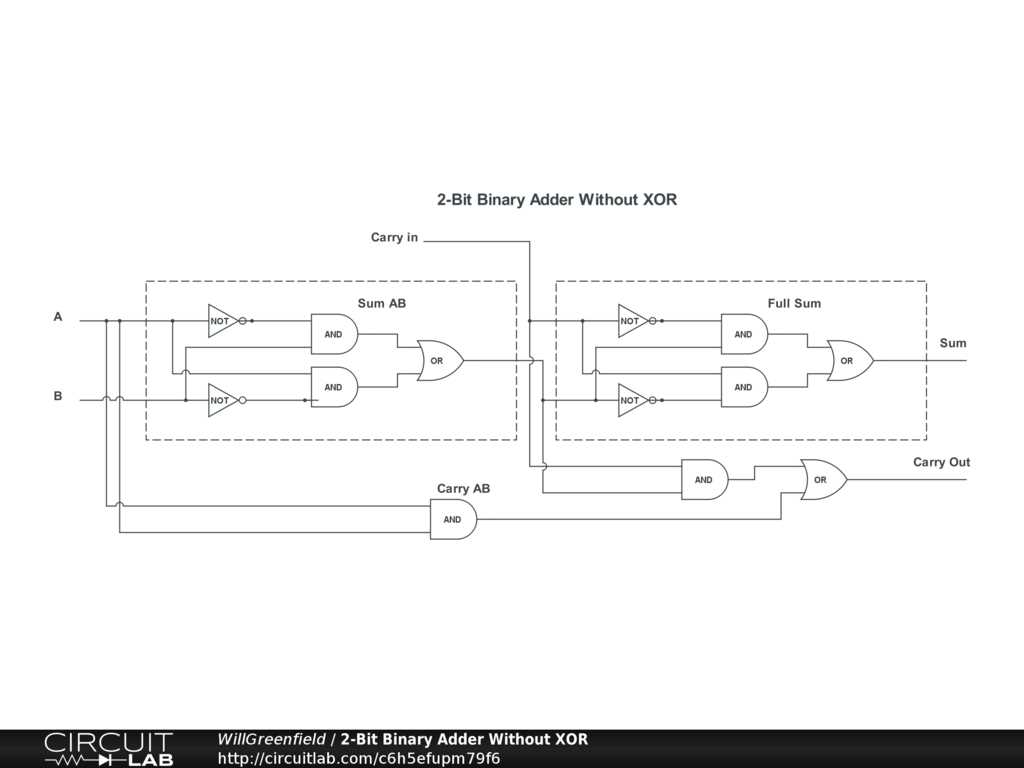
Start by arranging XOR and AND gates in a modular layout to form single-digit addition units. Ensure that each input pair has a clearly defined sum and carry output, and maintain uniform voltage levels across all gates to prevent inconsistencies.
Chain multiple units sequentially for higher-order addition by connecting the carry output of one stage to the next stage’s carry input. This setup allows correct propagation of overflow while keeping the sum outputs isolated, reducing the risk of glitches during simultaneous input changes.
Use decoupling capacitors on power rails for each stage to stabilize voltage and reduce transient spikes. Capacitors of 0.1µF to 1µF are recommended to smooth out minor fluctuations that could affect gate response times.
Verify each stage individually before full integration using logic probes or LEDs to confirm correct sum and carry behavior for all input combinations. This step helps identify faulty gates or miswiring early, preventing errors in the combined multi-stage assembly.
Implement final assembly with a proper ground plane and short interconnections to minimize signal delay. Organize outputs clearly and label each sum and carry line to simplify troubleshooting and future modifications, ensuring reliable operation under various input scenarios.
Understanding Logic Gates for Accurate Sum and Carry Outputs
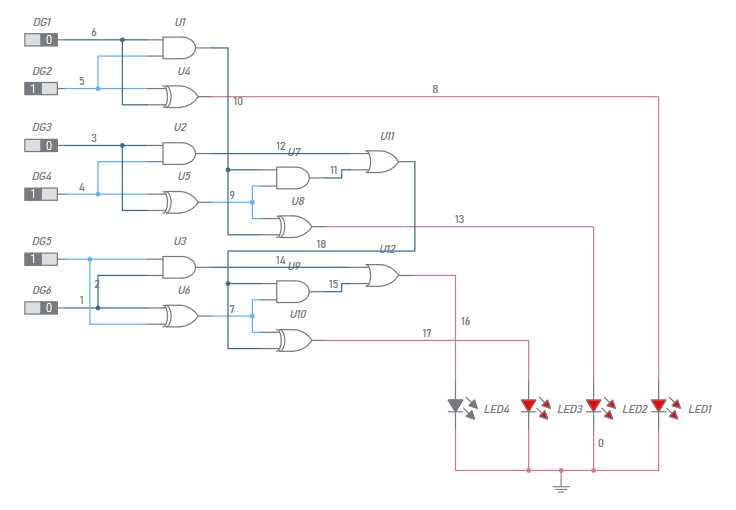
Begin with XOR gates for sum calculation because they produce a high output only when inputs differ. Connect each pair of single-bit inputs to an XOR unit to generate the initial sum value without interference from carry signals.
Use AND gates to generate carry outputs as they activate only when both inputs are high. For multi-stage addition, ensure the carry from each stage is fed into subsequent stages via additional AND or OR gates to maintain proper overflow propagation.
Combine multiple logic gates carefully to create full addition units. A common approach is using one XOR for initial sum, an AND for the first carry, and an OR to merge intermediate carries. Label each output clearly to track sum and carry lines during testing.
Minimize propagation delay by keeping interconnections short and using consistent voltage levels. Long traces or inconsistent supply can introduce glitches where sum and carry outputs briefly produce incorrect values under fast input transitions.
Verify gate functionality individually before assembling multiple stages. Test all possible input combinations with logic probes or indicator LEDs to confirm that each unit produces the expected sum and carry, preventing cascading errors in larger assemblies.
Document each stage layout including gate types, connections, and expected outputs. This record supports troubleshooting and future expansions, ensuring that the logic network continues to deliver accurate sum and carry values across multiple stages and input ranges.