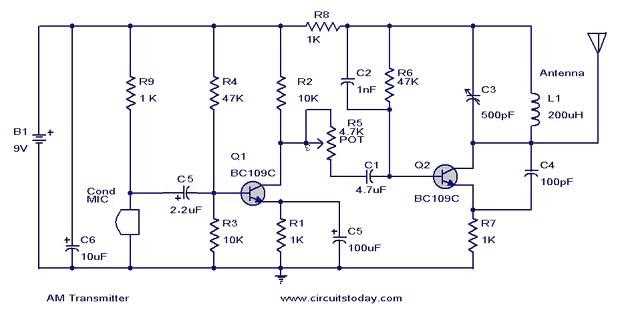
To build an AM transmitter, begin by selecting the right components: an oscillator, amplifier, and modulating stage. These elements work together to create amplitude modulation. The oscillator generates the carrier wave, which is then amplified and modulated by an audio signal. This basic setup is the foundation for any AM transmission system.
The oscillator should be able to produce a stable frequency within the AM broadcast band, typically between 530 and 1700 kHz. A crystal oscillator is often used to achieve frequency stability. Once the carrier signal is generated, it is amplified using a transistor or operational amplifier. Ensure the amplifier can handle the power requirements without distortion or overheating.
In the modulation stage, an audio signal is used to vary the amplitude of the carrier wave. This is done by varying the input to the amplifier in synchronization with the audio signal. The key to achieving clear transmission is ensuring the modulation does not overdrive the amplifier, causing distortion in the broadcast signal.
After the modulating and amplifying stages, the signal is ready for transmission. Antenna design plays a significant role in ensuring that the signal is broadcasted effectively. Use an antenna tuned to the carrier frequency to maximize range and clarity. Check the antenna’s impedance to match the transmitter for optimal performance.
AM Modulator Circuit Guide
Start by selecting a stable oscillator to generate the carrier frequency. A crystal oscillator is typically used for precise control, ensuring that the output signal stays within the AM radio frequency band, which is between 530 kHz and 1700 kHz. The oscillator should be tuned to the desired frequency to avoid interference with other signals in the same range.
Amplifying the Carrier Signal
Next, amplify the carrier wave using a transistor or operational amplifier. The amplifier increases the power of the carrier signal so it can be transmitted over a distance. It is important to use an amplifier that can handle the expected input and output power without causing distortion or overdriving the signal. This helps maintain signal clarity and prevents unnecessary interference.
The modulation stage is where the audio signal is introduced to the carrier. The audio signal can come from a microphone, audio file, or any other source, and it modulates the carrier’s amplitude. A high-quality modulating stage is required to prevent distortion in the transmitted signal. Ensure the audio input is clear and the modulation does not exceed the amplifier’s capacity.
Transmission and Antenna Design
Once the signal is modulated and amplified, it needs to be sent through an antenna for transmission. Choose an antenna that is resonant at the operating frequency to maximize efficiency. The antenna’s impedance must match the transmitter’s output to ensure the signal is transmitted effectively. Pay attention to antenna placement and orientation for optimal range and signal clarity.
Key Components of an AM Modulator and Their Functions
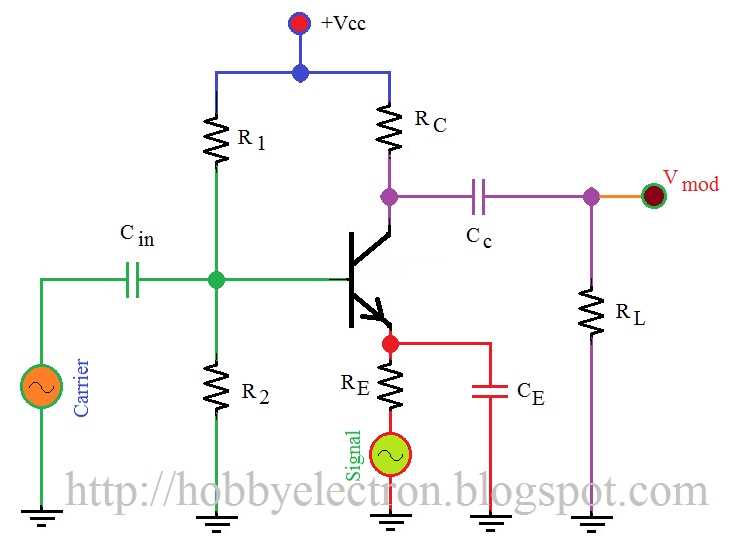
The oscillator is the heart of the system, responsible for generating the carrier wave. Typically, a crystal oscillator is used for precise frequency control, ensuring the signal remains stable within the AM band. This component produces the high-frequency signal that carries the information from the audio source to the transmission antenna.
Amplification Stage
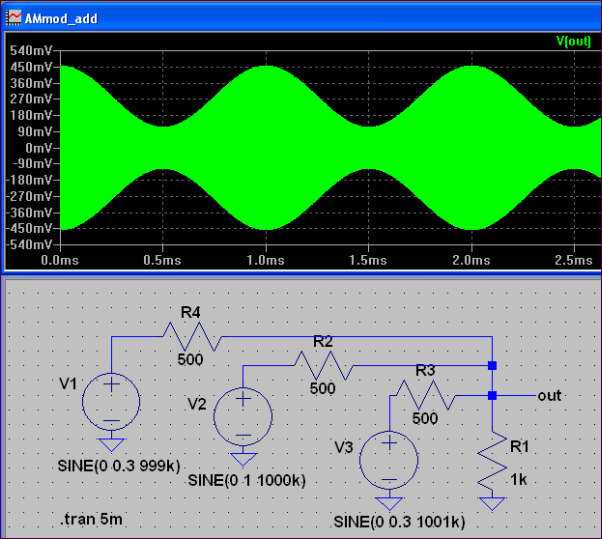
Next, the carrier signal needs to be amplified to a level suitable for transmission. A transistor or operational amplifier is typically used to boost the strength of the carrier. The amplified signal allows for longer range and ensures the signal can be broadcast clearly without distortion, even at high power levels.
The final crucial element is the modulation stage, where the audio input alters the amplitude of the carrier wave. This process is where the actual transmission of the audio information happens. Proper control of the modulation ensures the transmitted signal accurately represents the input audio without overdriving or distortion.